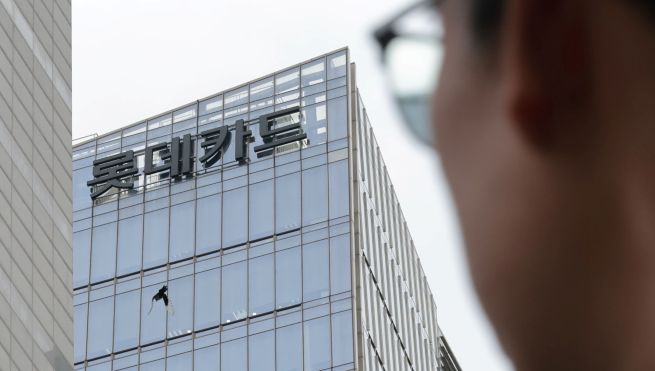
The Lotte Card headquarters building in Jongno District, Seoul (Yonhap)
SEOUL, Oct. 6 (Korea Bizwire) — A massive customer data leak at Lotte Card has reignited debate over a curious corporate reality in South Korea: companies that retain familiar household names long after being sold off.
Following last month’s data breach, online forums buzzed with surprise that Lotte Card is no longer part of the Lotte Group — despite its branding, heavy marketing within Lotte Department Stores, and the shared name that many assumed signaled group affiliation.
In fact, Lotte Card was sold six years ago. When Lotte Group reorganized into a holding company structure in 2017, financial affiliates became off-limits under Korean regulations. In 2019, private equity firm MBK Partners acquired Lotte Card, keeping the “Lotte” name for its brand recognition and customer loyalty.
The arrangement has since created reputational headaches. As the data breach made headlines, consumer anger spilled over toward Lotte Group, prompting clarifications that the card company operates independently.
“Many people still don’t realize Lotte Card is no longer part of the group,” a Lotte official said, adding that the conglomerate fears “substantial reputational damage” despite no involvement.
The group confirmed that while Lotte Shopping still owns a 20 percent stake, the holding is for “cooperation, not management participation.” MBK Partners retains full control, and Lotte Group does not receive any royalties for brand use. The right to use the “Lotte” name was included in the original sale agreement.
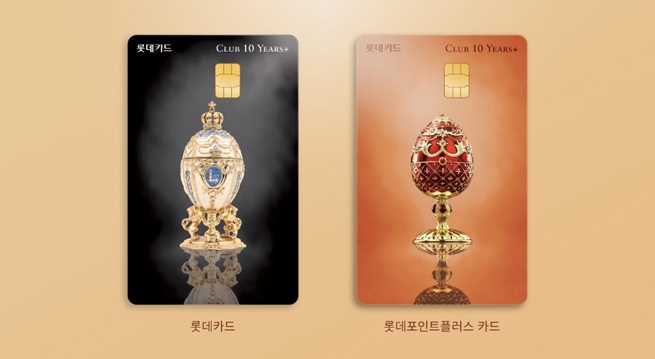
A limited-edition card design previously unveiled by Lotte Card for its 10-year long-term membership program. The plate design, a hallmark of the limited edition, was inspired by the jeweled Fabergé eggs of the Russian Imperial family, traditionally regarded as a way to convey special meaning to a cherished person.
A Broader Pattern of ‘Name Without Ownership’
Lotte Card’s case highlights a broader Korean trend: companies retaining famous names even after foreign or private ownership changes — often to preserve trust and market share.
OB Beer, once part of Doosan Group, was sold to Belgium’s AB InBev in 1998. Despite multiple ownership transfers — including a temporary sale to private equity firm KKR — OB Beer kept its name and iconic brands like Cass and OB Lager, now synonymous with Korean beer.
Similarly, Kumho Tire was acquired by China’s DoubleStar in 2018 after its parent, Kumho Asiana Group, faced financial distress. The Chinese firm kept the “Kumho” name, seen as stronger than its own, to bolster credibility in the global tire market. While it pays a trademark fee for using Kumho’s red wing logo, it does not license the brand name itself.
Why the Name Still Matters
The practice is especially common in construction. Daewoo Engineering & Construction, despite changing ownership three times since the Daewoo Group’s collapse, has never dropped its name — a symbol of reliability for both domestic homebuyers and overseas clients. Middle East contractors, for example, continue to associate “Daewoo” with Korean engineering excellence.
Likewise, Dongbu Construction retained its name after its group was rebranded as DB Group, and Doosan Construction still carries the Doosan mark after its sale to Q Capital Partners in 2021 — aided by Doosan’s remaining 46 percent stake.
Brand experts say the persistence of these legacy names reflects the unique weight of reputation in Korean business culture.
“In sectors like construction or finance, a name is synonymous with trust,” one industry official said. “Changing it can mean starting from zero again — especially in overseas markets where credibility is built over decades.”
The Lotte Card episode, however, also exposes the risks: when a brand’s name outlives its ownership, so too can misplaced blame.
Ashley Song (ashley@koreabizwire.com)