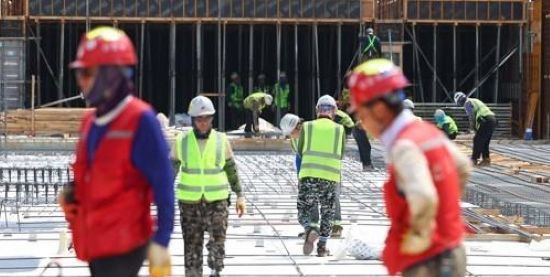
South Korea’s construction industry is ramping up health and safety measures to protect outdoor workers from heat-related illnesses. (Image courtesy of Yonhap)
SEOUL, May 29, 2025 (Korea Bizwire) — With forecasts pointing to another record-breaking heatwave this summer, South Korea’s construction industry is ramping up health and safety measures to protect outdoor workers from heat-related illnesses.
Major construction firms have begun implementing advanced heat-response protocols ahead of new amendments to the Industrial Safety and Health Act, set to take effect next month. The revised law requires employers to include heat- and cold-related illnesses in their mandatory workplace health risk assessments and to establish concrete mitigation plans.
According to the Ministry of Employment and Labor, over half of the 58 reported work-related heat illness cases in 2024 occurred on construction sites, highlighting the sector’s vulnerability to extreme weather.
Companies like DL E&C have adopted guidelines mandating at least 15 minutes of rest every hour when the perceived temperature exceeds 35°C, and are advising workers to avoid outdoor labor during peak heat hours between 2 p.m. and 5 p.m.
The company also monitors temperature alerts from the Korea Meteorological Administration and measures on-site temperatures hourly to activate heat protocols.
GS E&C introduced similar standards, offering cooling products and shorter rest intervals when the temperature rises above 31°C. Work is suspended during peak afternoon hours if temperatures stay above 35°C unless absolutely necessary.
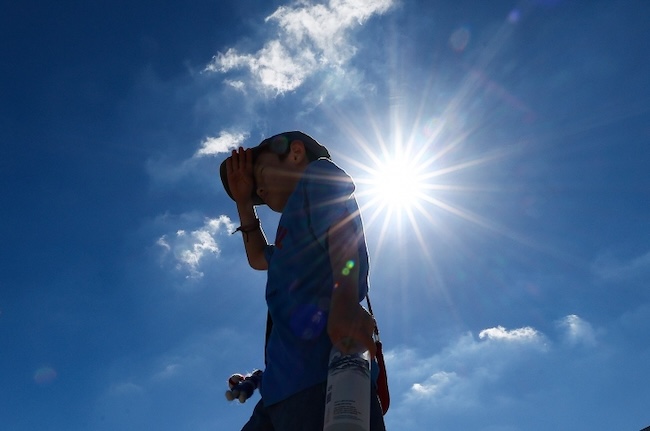
The summer heat (Image courtesy of Yonhap)
POSCO E&C has established a dedicated emergency heatwave response team divided into support, inspection, and rapid-response units. These teams issue regional heat warnings, assess on-site compliance, and respond swiftly to cases of heatstroke or other emergencies, including typhoons and heavy rain.
Hyundai E&C designated June through September as a “special heatwave management period” and rolled out its company-wide “3GO! Program” — a set of safety rules that emphasize hydration (“Mashigo”), shade (“Garigo”), and rest (“Sikhigo”).
Construction firms across the country are enhancing on-site amenities by installing shaded rest zones, air-conditioned shelters, showers, and providing workers with ice vests, cooling sleeves, hydration salts, and electrolyte drinks to combat dehydration and heat exhaustion.
“We’re committed to ensuring that workers can perform their duties safely and comfortably, even in extreme weather,” said a representative from one major builder.
The Korea Meteorological Administration projects that temperatures this June will be average or above average, with July and August — historically the hottest months — carrying a 50% likelihood of exceeding normal seasonal temperatures.
M. H. Lee (mhlee@koreabizwire.com)