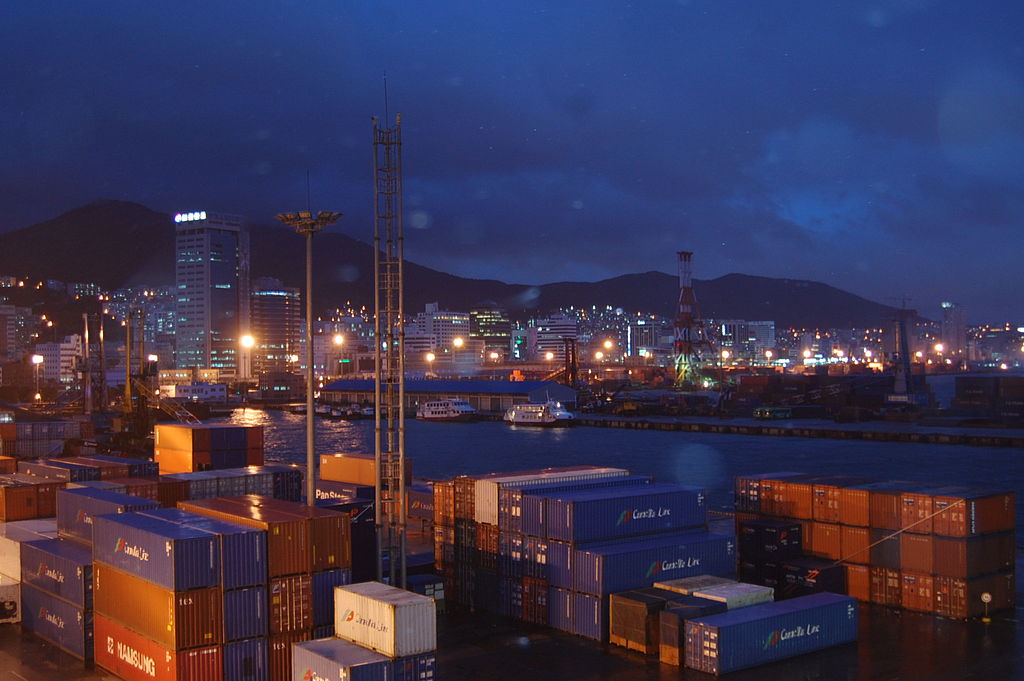
Port of Busan is the largest port in South Korea. (image: Wikimedia)
BUSAN, Sept. 17 (Korea Bizwire) — Thirty years ago, Busan was a place better known for its shipyards and sun-splashed beaches than for cinema. The notion that South Korea’s second-largest city would one day play host to one of Asia’s premier film festivals seemed far-fetched, if not fanciful.
But in 1996, a small band of cinephiles set out to change that perception. With modest resources but an ambitious vision, they launched the Busan International Film Festival (BIFF), determined to make the city a meeting ground for Asia’s emerging filmmakers.
The festival’s first edition was strikingly bold. Over nine days in September, it screened 170 films from 31 countries and welcomed more than 200 international guests — a statement of intent that Busan aspired to be more than a regional showcase. It was an early sign of South Korea’s growing cultural confidence in the years before K-pop and Korean cinema became global phenomena.
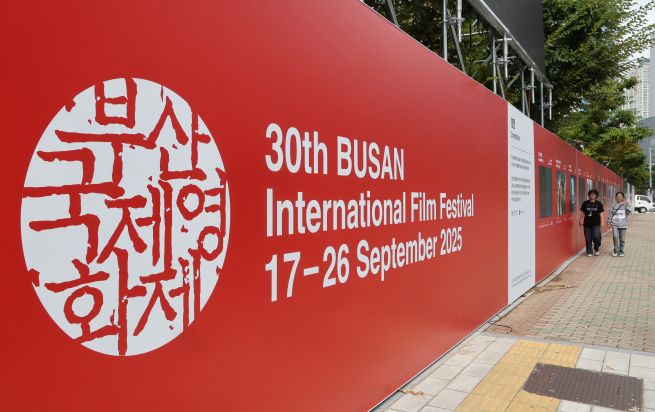
People walk past a signboard for the Busan International Film Festival near the Busan Cinema Center in Haeundae, Busan, southeastern South Korea, on Sept. 15, 2025. (Yonhap)
A Launchpad for Asian Talent
In the decades since, BIFF has become a rite of passage for Asian directors and a marketplace for the region’s film industry. Today’s most celebrated Korean auteurs often trace their early recognition to Busan. Lee Chang-dong opened the 1999 festival with Peppermint Candy, Bong Joon-ho screened his first feature Barking Dogs Never Bite in 2000, and Yeon Sang-ho’s The King of Pigs stormed through the 2011 edition with multiple awards.
The festival’s reach has extended across Asia. Chinese director Jia Zhangke, virtually unknown in 1998, won BIFF’s New Currents Award with Xiao Wu. He would later claim the Golden Lion at Venice and return to Busan as one of world cinema’s most respected voices. Thai filmmaker Apichatpong Weerasethakul debuted his first feature in Busan and went on to win the Palme d’Or at Cannes.
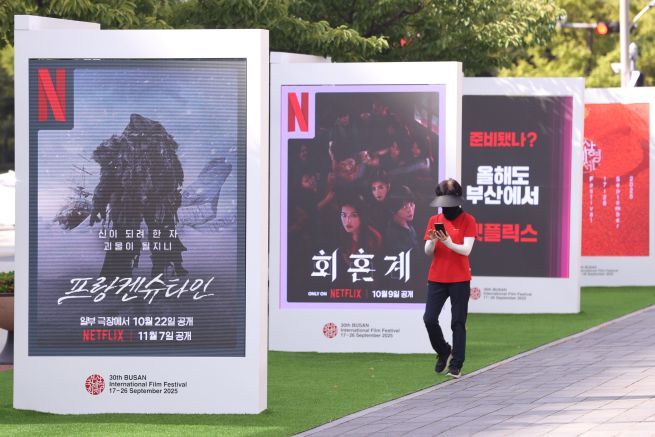
On September 17, ahead of the opening ceremony of the 30th Busan International Film Festival (BIFF), a citizen looks at promotional materials near the Busan Cinema Center in Haeundae District. (Yonhap)
Global Spotlight
As the festival grew, so did its draw. Stars like Juliette Binoche, Oliver Stone and Timothée Chalamet have walked its stages, raising BIFF’s profile beyond Asia. In 2011, Busan inaugurated the striking Cinema Center in Haeundae — a futuristic structure with a vast cantilevered roof — giving the festival a permanent home and the city a landmark of cultural pride.
Trials of Independence
The rise has not been without turbulence. In 2014, BIFF became a flashpoint for free expression after refusing to cancel the screening of The Truth Shall Not Sink with Sewol, a searing documentary about the government’s mishandling of the Sewol ferry disaster. The decision drew fierce political backlash: funding cuts, audits, and a period of institutional crisis. Yet the episode also cemented BIFF’s reputation as a defender of artistic independence and rallied support from filmmakers worldwide.
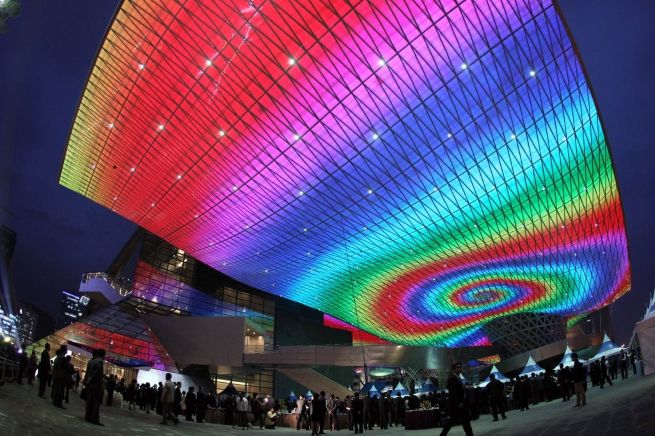
The image shows the Busan Cinema Center in Haeundae, Busan, southeastern South Korea. (Yonhap)
A New Chapter at 30
This autumn, as BIFF marks its 30th anniversary, it is looking ahead with the creation of the Busan Awards — a competitive section designed to spotlight Asian cinema through an Asian lens. Fourteen films will vie for prizes in five categories, from Best Film to Artistic Contribution.
Festival organizers say the new awards honor BIFF’s founding mission: discovering and promoting the region’s finest filmmakers. For Busan itself, the festival’s endurance has become more than a cultural achievement — it is proof that a city once defined by industry has reinvented itself as a capital of cinematic imagination.
Lina Jang (linajang@koreabizwire.com)