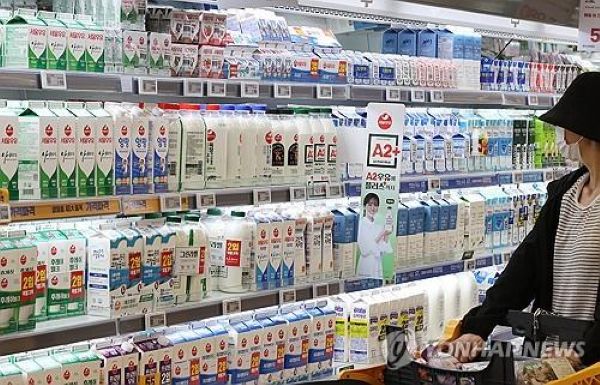
Milk products displayed on the shelves of a large supermarket.
SEOUL, Dec. 31 (Korea Bizwire) — Imports of long-life sterilized milk into South Korea have surged over the past decade, even as overall milk consumption declines and domestic dairy producers struggle with high costs and shrinking demand.
According to data from the Korea Customs Service, imports of sterilized milk rose more than tenfold, from about 4,000 tons in 2018 to 48,000 tons last year. The increase comes as South Korean consumers drink less milk overall, while food manufacturers and retailers increasingly favor imported products that are cheaper and can be stored at room temperature for up to a year.
Nutrition experts say the difference between fresh milk and sterilized milk is marginal. Both contain comparable levels of protein, fat and calcium, and while some B vitamins may decline during ultra-high-temperature processing, the nutritional impact is considered negligible. The key distinction lies not in nutrition but in processing, shelf life and sensory qualities.
Domestic dairy groups, including the Milk Self-Sufficiency Board, argue that freshness and taste clearly favor locally produced fresh milk. Fresh milk in South Korea typically reaches consumers within two to three days of pasteurization, while imported sterilized milk often arrives more than three months after production following overseas shipping and customs clearance.
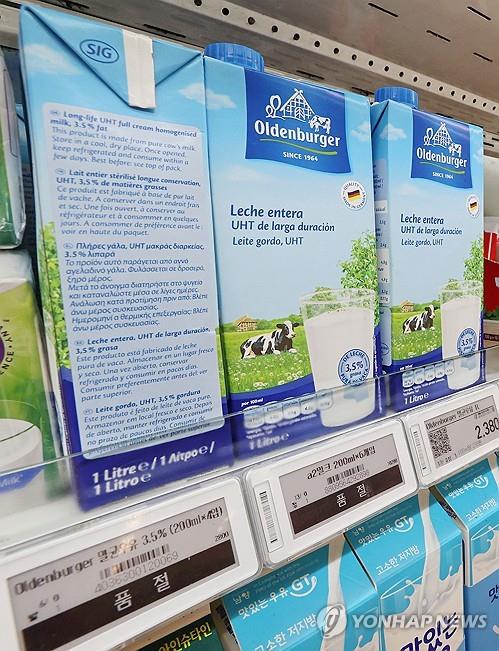
Imported Long-Life Milk Expands in Korea
Sensory tests commissioned by the board in 2023 found domestic fresh milk to have a cleaner appearance and stronger “fresh milk” aroma, while imported sterilized milk showed more pronounced heated or cheese-like notes.
Still, price remains a decisive factor. South Korea’s raw milk prices are among the highest in the world, reflecting small farm sizes, heavy reliance on imported feed and limited economies of scale.
Last year, the average raw milk price in South Korea was roughly double that of the United States. As a result, imported sterilized milk often sells for under 200 won per 100 milliliters, compared with nearly 300 won for domestic fresh milk.
At the same time, demographic shifts are weighing on demand. Milk consumption peaked in 2021 and has since fallen back to levels seen nearly a decade earlier, driven by a declining birth rate, fewer school-age children and growing consumer preference for coffee, soy milk and almond beverages.
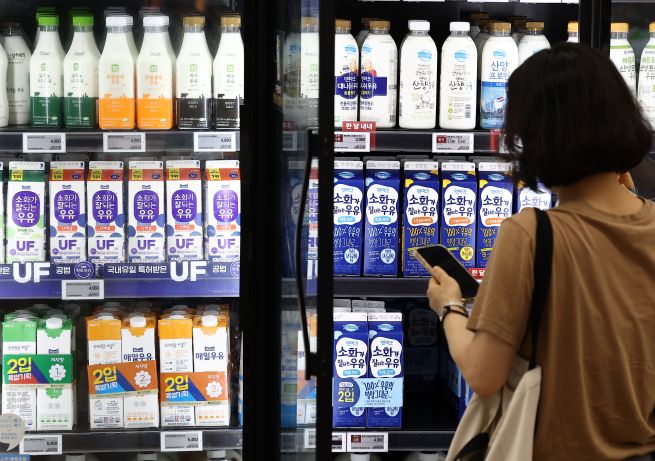
Milk products displayed on the shelves of a large supermarket. (Image courtesy of Yonhap)
Free trade agreements are also steadily lowering tariffs on imported dairy products, further eroding the competitiveness of local producers.
Despite the growth in imports, fresh milk continues to dominate the domestic market, accounting for about 91 percent of offline sales. Surveys show that nearly 60 percent of consumers rank freshness as their top purchasing criterion, far outweighing price considerations.
Industry officials argue that fresh and sterilized milk serve distinct markets and that competing head-to-head with cheaper imports is unrealistic given South Korea’s cost structure.
Officials at the Ministry of Agriculture, Food and Rural Affairs say recent reforms to raw milk pricing — including a system that differentiates prices by usage — aim to better balance producer costs and market demand.
Still, dairy producers warn that without structural changes, mounting imports of long-life milk will continue to pressure an industry already grappling with demographic decline and high production costs.
Lina Jang (linajang@koreabizwire.com)