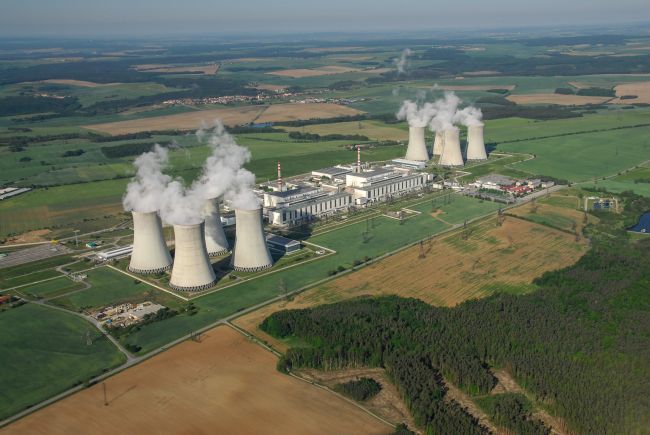
This undated file photo provided by the state-run Korea Hydro & Nuclear Power Co. shows the Dukovany nuclear power plant in the Czech Republic. (Yonhap)
SEOUL, Aug. 21 (Korea Bizwire) — Shares of Doosan Enerbility, South Korea’s leading nuclear power equipment maker, tumbled amid controversy over a contract signed between Korea’s state-run utilities and U.S. nuclear giant Westinghouse Electric Co. (WEC), leaving retail investors bearing the brunt of the losses.
According to the Korea Exchange on Thursday, Doosan Enerbility’s stock fell for four straight sessions, dropping 8.6 percent on August 19 to 59,500 won, before sliding another 3.5 percent the next day.
At one point on August 20, shares plunged more than 14 percent intraday, marking the sharpest volatility since April. The stock recovered slightly on August 21, rebounding 5 percent to just above 60,000 won.
Trading data suggest institutional and foreign investors largely avoided losses, while individuals sold at a loss. On average, foreigners and institutions sold shares at higher prices than they bought, booking modest gains. By contrast, retail investors purchased shares at an average of 56,646 won and sold at 56,504 won, losing about 142 won per share.
The turmoil stemmed from the disclosure of a “global agreement” between Korea Electric Power Corp. (KEPCO), Korea Hydro & Nuclear Power (KHNP), and Westinghouse.
The pact reportedly obliges Korea to pay $175 million in technology fees for each reactor exported over the next 50 years, purchase $650 million in equipment, and refrain from bidding on new nuclear projects in the United States, Europe, the U.K., Ukraine, and Japan.
Critics argue the deal could erode profitability and hinder overseas expansion, while others counter that joint ventures with Westinghouse still allow Korea to compete in major markets. Analysts also note that with nuclear projects like the Czech Dukovany plant estimated at 13 trillion won per reactor, the disputed fees may be manageable.
Despite the rebound, retail investors increased their exposure, net buying 22 billion won worth of shares during the four-day slump. The episode underscores the widening gap between institutional and retail performance in Korea’s volatile nuclear sector.
Ashley Song (ashley@koreabizwire.com)