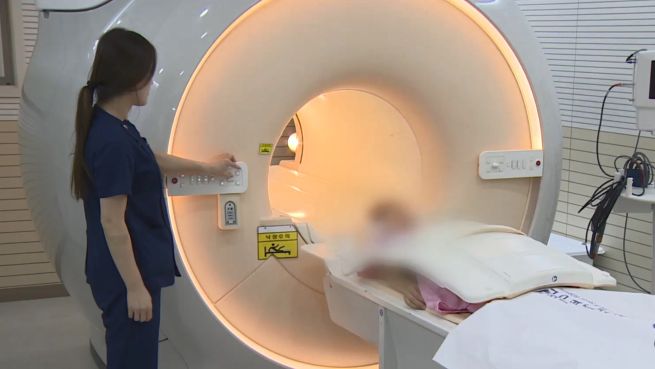
Hospitals Install More MRI and CT Machines (Image courtesy of Yonhap)
SEOUL, Oct. 25 (Korea Bizwire) — South Korea’s health insurance costs for advanced imaging are surging, as hospitals sharply increase MRI and CT scans after acquiring new equipment — a trend raising fresh concerns over unnecessary testing and long-term fiscal strain.
According to data submitted to the National Assembly and released Thursday, hospitals that installed MRI scanners saw their National Health Insurance reimbursements jump by 89 percent — nearly doubling — within two years. Spending rose from an average of 527 million won to 997 million won over the period, driven largely by a 1.84-fold increase in the number of scans performed.
New CT installations showed a similar pattern: insurance payments climbed 35 percent over two years, with scan volume rising 1.36 times.
The findings reflect what health economists call “supply-induced demand” — when the availability of expensive equipment encourages greater use, whether medically necessary or not.
South Korean hospitals have rapidly expanded their diagnostic capacity in recent years, adding a combined 2,835 MRI and CT machines nationwide between 2019 and 2024 — an average of 473 high-end imaging devices installed annually.
Critics warn that while the machines are essential tools, they also offer lucrative returns, incentivizing hospitals to conduct more tests and inflating health-care spending.
“MRI and CT scanners are indispensable, but we are seeing a structural problem where supply creates its own demand,” Rep. Kim Mi-ae of the opposition People Power Party said. She urged tighter oversight to prevent overuse and protect the sustainability of national insurance finances.
Kim called on the government and the Health Insurance Review & Assessment Service to monitor post-installation billing behavior and analyze regional disparities and utilization trends.
South Korea already ranks among the world’s heaviest users of diagnostic imaging. With more machines entering service and spending trending upward, analysts say policymakers face mounting pressure to balance access to advanced care with the discipline needed to control costs.
Lina Jang (linajang@koreabizwire.com)