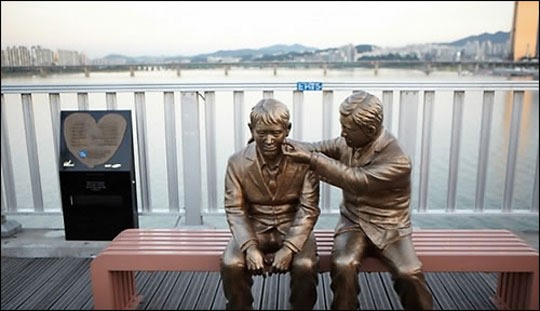
Among the bridges spanning Seoul’s Han River, Mapo Bridge stands out with the highest incidence of suicides. (Image courtesy of Yonhap)
SEOUL, Sept. 17 (Korea Bizwire) — More than one in 10 young South Koreans who rarely leave their homes — so-called “hikikomori” or socially withdrawn youth — reported having contemplated suicide, four times the rate of their peers, according to new government-backed research.
The findings, published Tuesday in the Health and Welfare Forum by the Korea Institute for Health and Social Affairs, underscore growing concern over the scale of youth isolation in a country already facing demographic strain and record-high suicide rates among advanced economies.
Based on a national survey of 15,000 households with residents aged 19 to 34, the study found that 10.4 percent of reclusive young adults considered suicide last year, up from 8.2 percent in 2022. By comparison, only about 2.5 percent of non-withdrawn youth reported such thoughts.
The share of “withdrawn youth,” defined as those who mostly remain at home and venture outside only for basic errands or hobbies, more than doubled in a year — from 2.4 percent in 2022 to 5.2 percent in 2024. Most were in their late twenties, though significant numbers were also in their early twenties and early thirties.
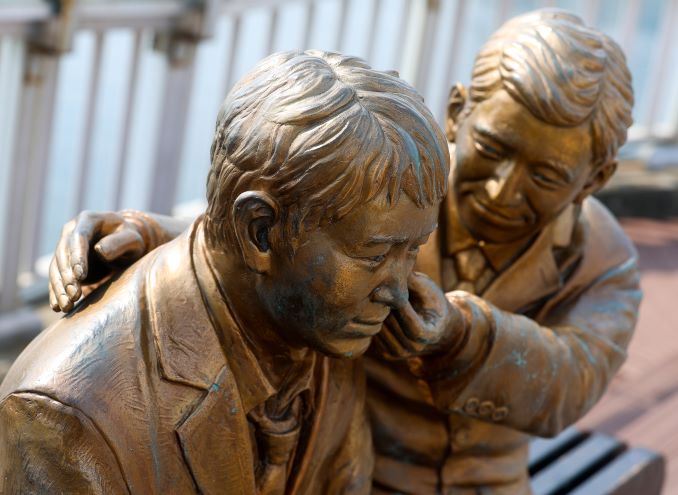
The image shows a statue installed on a bridge over the Han River for the prevention of suicide. (Yonhap)
The reasons for retreating from public life varied: 41 percent cited difficulty finding jobs, while others pointed to struggles with personal relationships or academic failure. Many had been isolated for less than six months, but about one in five reported seclusion lasting more than three years.
Life satisfaction among reclusive youth averaged 5.65 out of 10, markedly lower than their peers’ 6.76. Nearly one in five said they had no hope of realizing their future aspirations, compared with just 7 percent among non-withdrawn youth.
Yet the study suggested that many of these young people still harbor a desire to work. Among the unemployed, 24 percent of the withdrawn reported actively job-seeking, compared with 12.8 percent of their peers.
Researchers stressed that seclusion should be understood less as resignation than as a crisis moment when targeted support could help individuals reintegrate.
“The phenomenon may not only reflect an absolute increase but also a growing willingness among isolated youth to voice their struggles and seek help,” said Kim Sung-ah, a senior researcher who authored the report.
She called for greater awareness of isolation as a social risk, and for programs like the Youth Future Centers — government-backed initiatives to support reclusive young adults — to become more accessible and stigma-free.
The study adds to a mounting body of evidence that South Korea’s economic pressures, academic competition and precarious job market are feeding a generation of young people who feel shut out of society. It also highlights the urgent challenge for policymakers: how to reach these individuals before despair hardens into long-term exclusion.
Lina Jang (linajang@koreabizwire.com)