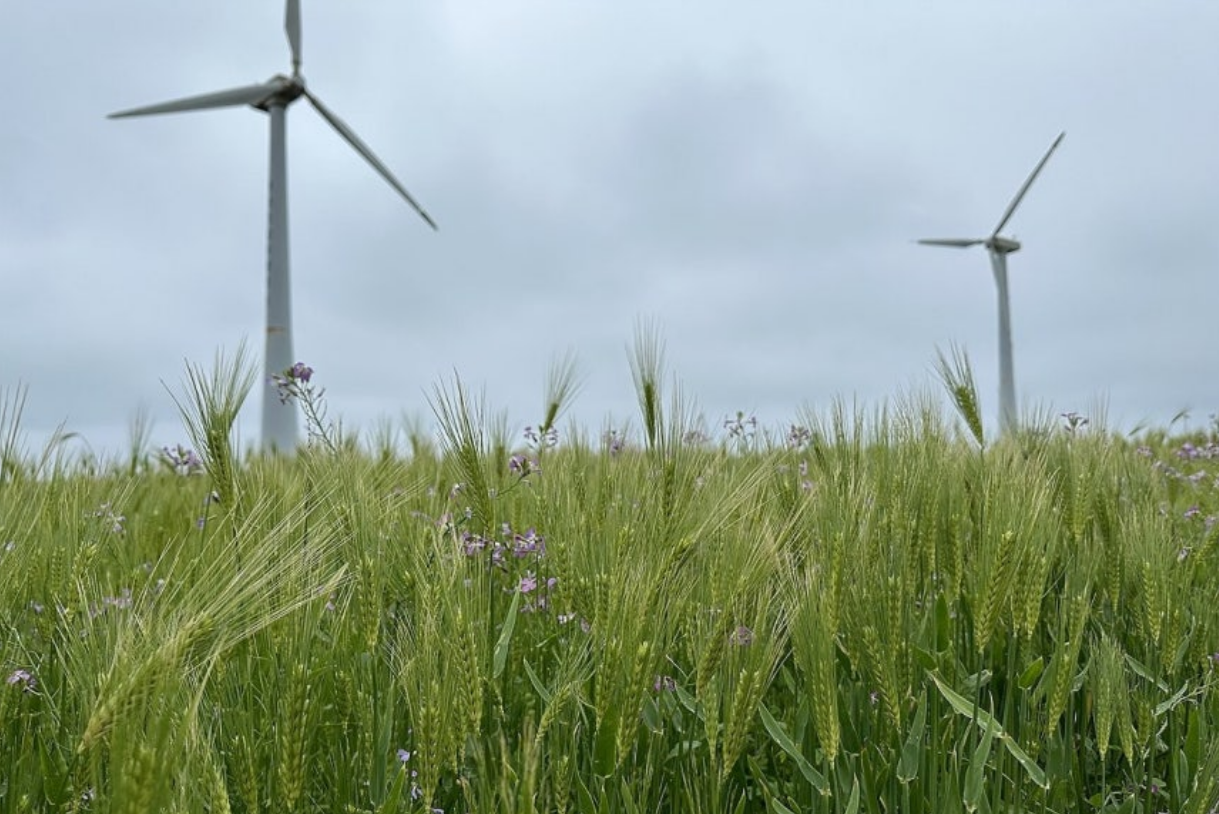
On Gapado, known as the “island within an island” of Jeju, green barley fields create a spectacular view against the backdrop of wind turbines. (Yonhap)
SEOUL, Sept. 23 (Korea Bizwire) — South Korea is revisiting an ambitious plan to transform a small island into a showcase of renewable power, seeking lessons from past failures as the government doubles down on clean energy to meet surging demand from carbon neutrality goals and AI-powered data centers.
The Ministry of Environment said this week it has commissioned a study into why the “Carbon-Free Island” project on Gapado, a 0.84-square-kilometer island southwest of Jeju, collapsed after years of underperformance.
Launched in 2011, the program aimed to meet all local power demand through wind and solar. But undersized storage systems, poor maintenance, and storm damage left most facilities in disrepair, and renewable generation now accounts for just 3 percent of the island’s consumption.
Gapado’s experience has become a cautionary tale. Wind turbines operated for only about 25 days across three years before storage was added, and even then, equipment was crippled by typhoons in 2020 and later abandoned. Solar units also proved too small and weather-dependent to sustain power needs.
The government nonetheless plans to raise renewable energy deployment targets under its upcoming greenhouse gas reduction roadmap and energy strategy. The 11th Basic Plan for Electricity Supply and Demand calls for 78 gigawatts of renewable capacity by 2030, more than double today’s level.
Environment Minister Kim Sung-hwan has said the figure should reach 100 GW by 2030 and 150–200 GW by 2035 if renewables are to serve as the nation’s primary source of electricity.
President Lee Jae-myung has rejected building new nuclear plants, saying solar and wind can be rolled out in “one to two years” to meet soaring demand.
In line with that push, Gapado will once again serve as a testing ground. Next year’s government budget includes 22 billion won ($16 million) for the “Gapado RE100 Village Project,” which aims to replace diesel generators with renewable facilities, install solar and heat pumps, and expand eco-friendly transport — echoing the island’s earlier experiment but with lessons from its shortcomings.
M. H. Lee (mhlee@koreabizwire.com)