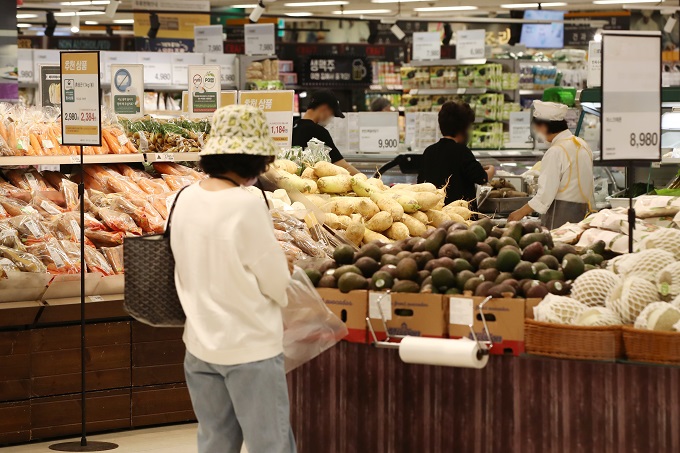
A citizen shopping for groceries at a discount store in Seoul. (Yonhap)
SEOUL, Oct. 8 (Korea Bizwire) — Food prices in South Korea have risen more than 20 percent over the past five years, far outpacing overall inflation and placing a growing strain on household budgets.
According to data released Wednesday by the National Data Office, the consumer price index for “food and non-alcoholic beverages” in September was up 22.9 percent compared with the same month in 2020. The increase is nearly seven percentage points higher than the overall consumer inflation rate of 16.2 percent during the same period.
The steepest gains were seen in fruit (up 35.2 percent) and dairy products including milk, cheese, and eggs (up 30.7 percent). Bread prices have climbed 38.5 percent, while cakes, rice cakes, and instant noodles rose between 25 and 32 percent. Snacks, ice cream, and sugar products increased 27.8 percent.
Among beverages, coffee, tea, and cocoa surged 38.2 percent, while bottled water, soft drinks, and fruit or vegetable juices climbed 22.7 percent. Alcohol and tobacco prices rose a modest 5 percent overall, though alcoholic beverages alone jumped 13.1 percent.
Food and beverage inflation has remained persistently high each year: 4.4 percent in 2020, 5.9 percent in both 2021 and 2022, 5.5 percent in 2023, and 3.9 percent so far in 2024. Over the same period, overall inflation was markedly lower, ranging from 0.5 percent in 2020 to 2.3 percent this year.
Price increases have also spread across other everyday categories. The “food and accommodation” sector rose 24.8 percent, with restaurant meals up 25.1 percent, reflecting higher ingredient costs passed on to consumers. Personal care products such as soap, shampoo, and cosmetics climbed 24.1 percent, and household goods and services — including detergents, cleaning supplies, and domestic help — rose 19.4 percent.
Housing, utilities, and fuel costs gained 16.7 percent, while clothing and footwear prices rose 16.2 percent. Transportation costs, which include fuel, maintenance, and public transit, increased 15.9 percent — slightly below the national average. In contrast, education, health, and entertainment prices grew modestly, and telecommunications costs edged down 0.2 percent, the only category to decline.
Ashley Song (ashley@koreabizwire.com)