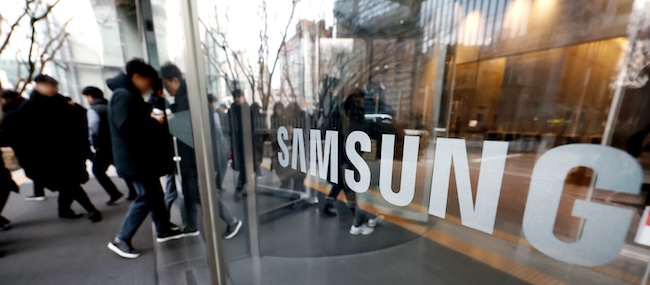
Samsung Electronics headquarters in Seoul’s Seocho District (Image courtesy of Yonhap)
SEOUL, April 1 (Korea Bizwire) — For the first time, a majority of South Korea’s top 100 publicly listed non-financial companies are paying their employees an average annual salary of over ₩100 million, signaling a sharp rise in corporate pay and deepening the wage gap between large conglomerates and smaller businesses.
A comprehensive review of 2024 business reports by Yonhap News found that 55 of South Korea’s top 100 companies by revenue paid their employees an average salary exceeding ₩100 million last year—up from just nine firms in 2019, marking a sixfold increase in five years.
The surge, driven by persistently high inflation and intense competition for talent, underscores a growing disparity in compensation between large corporations and small- and medium-sized enterprises (SMEs), which have not seen similar wage growth.
Among the new entrants to the “₩100 Million Club” are Hyundai Glovis, Hanwha Aerospace, Samsung Electro-Mechanics, and KT&G. All of South Korea’s top 10 revenue-generating companies now belong to this elite group.
Samsung Electronics reported an average annual salary of ₩130 million, while Kia led the field with ₩136 million. Other major players like Hyundai Motor (₩124 million), SK Inc. (₩116 million), LG Electronics (₩117 million), and SK Innovation (₩158 million) also reported high compensation figures.
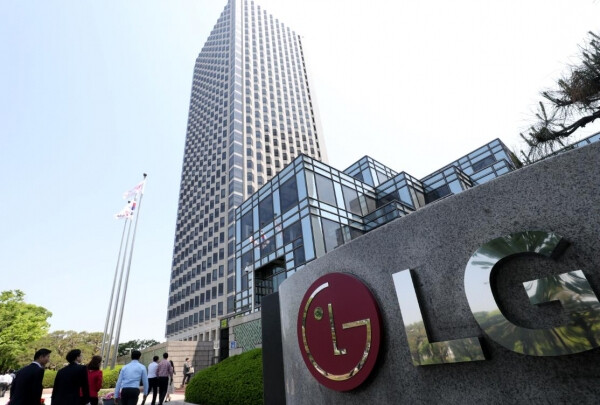
LG Group’s headquarters in Yeouido, Seoul (LG Elecs)
Holding companies, which typically employ fewer people and have a higher proportion of executives, posted even higher averages. LG Corp. topped the list at ₩187 million, significantly outpacing subsidiaries like LG Chem (₩103 million) and LG Energy Solution (₩118 million).
The disparity was especially stark at CJ Corp., which reported an average salary of ₩806 million due to its high executive ratio—20 out of 62 employees were non-registered executives earning over ₩2.1 billion on average. Even excluding those executives, the average employee salary still exceeded ₩200 million.
Across industries, energy firms led in compensation, with S-Oil (₩154 million), SK Innovation, and E1 (₩120 million) among the top payers. In contrast, retail and food companies such as Emart (₩51 million) and Lotte Shopping (₩52.5 million) offered significantly lower average salaries—barely one-third of their energy sector counterparts.
The widening income gap is raising concerns about structural inequality in Korea’s labor market.
“Large companies have continued raising wages to keep pace with inflation, but SMEs haven’t been able to match that pace,” said Lee Sang-ho, head of the Economic and Industrial Policy Division at the Korea Economic Research Institute. “The wage gap will likely continue to grow unless productivity gains accompany pay hikes.”
As South Korea enters 2025 amid ongoing economic reform efforts, the contrast between top-tier corporate compensation and lagging SME wages poses a growing challenge for policymakers seeking inclusive growth.
Ashley Song (ashley@koreabizwire.com)