
A new government-commissioned study has found that three out of four drug addicts in South Korea first used narcotics during their teenage or early adult years. (Image courtesy of Yonhap)
SEOUL, July 8 (Korea Bizwire) – A new government-commissioned study has found that three out of four drug addicts in South Korea first used narcotics during their teenage or early adult years, largely due to pressure or recommendations from people around them.
According to a report released on Sunday by researchers at the Catholic University of Korea and commissioned by the National Center for Mental Health, 75% of drug users began using narcotics before the age of 30.
The study, conducted between February 24 and March 28, involved in-depth interviews with 29 individuals currently undergoing treatment or incarceration for drug-related offenses.
Among those surveyed, 58.6% said they first used drugs in their twenties, and 17.2% in their teens. The overwhelming majority—75.9%—cited peer influence as the primary reason for initial use, followed by curiosity (48.3%), desire for pleasure (17.2%), and emotional or stress relief (10.3%).
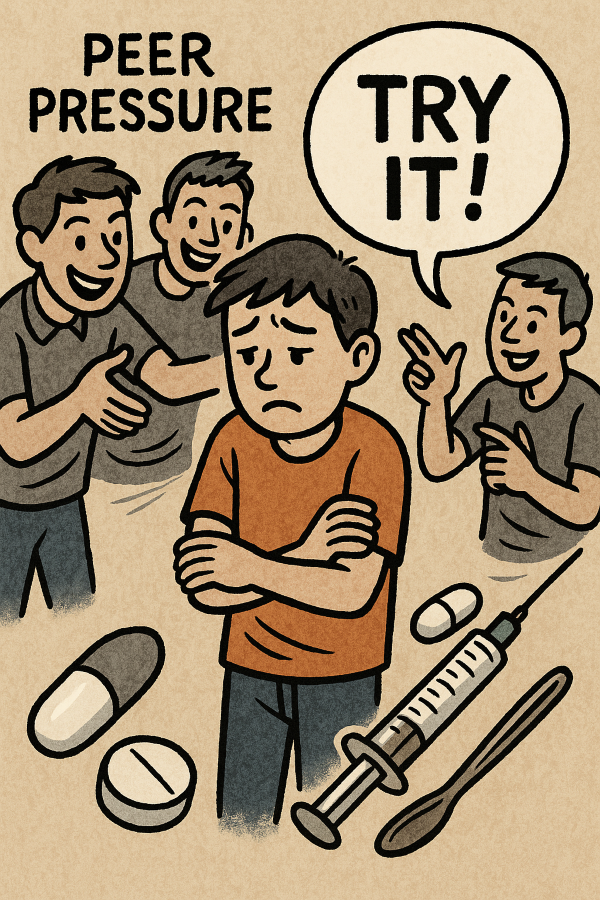
Majority of South Korean Drug Addicts Began Use in Youth Due to Peer Influence, Study Reveals (Image: ChatGPT)
The main channels of drug acquisition were through friends or acquaintances (72.4%), followed by internet sources (10.3%).
Although 69% of respondents self-identified as drug addicts, others denied addiction, saying they believed their use was under control or limited in duration.
The study also highlighted alarmingly high rates of mental health disorders among drug users: 44.8% showed signs of depression—nearly seven times the national average of 6.7%—while 31.1% exhibited symptoms of anxiety, over four times higher than the general population rate of 7.2%.
Crucially, the influence of acquaintances remained strong even beyond first exposure. For most users, the second drug experience came within a month of the first, often again prompted by peer suggestion. While friends remained the most common source, 21.1% reported acquiring drugs via social media platforms, reflecting the rising role of online networks in illegal drug access.
“Peer influence played a decisive role in both the initiation and continuation of drug use,” the research team concluded, urging preventive interventions targeting social and digital environments where early exposure to drugs occurs.
M. H. Lee (mhlee@koreabizwire.com)