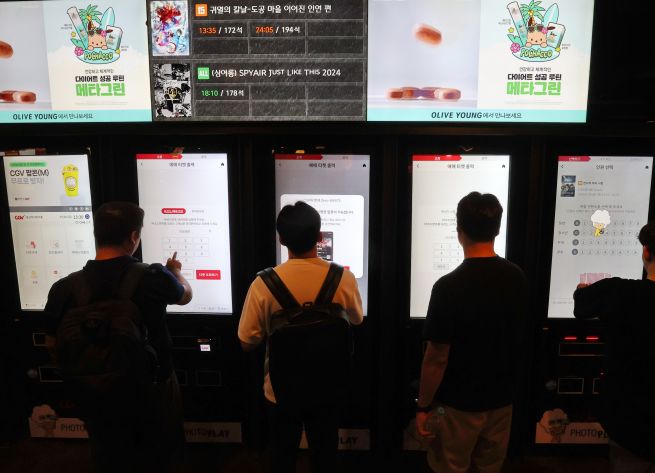
Citizens purchasing movie tickets at a kiosk in a Seoul cinema. (Yonhap)
SEOUL, Oct. 20 (Korea Bizwire) — South Korea’s once-vibrant multiplex cinema industry is facing an unprecedented contraction as leading chains shut down theaters across the country, squeezed by sluggish audience recovery and the unrelenting rise of online streaming platforms.
Two symbolic closures have drawn attention in recent weeks: CGV Myeongdong Station Cine Library — a haven for cinephiles that hosted art films and Korea’s first cinema library — will cease operations on October 29, while Megabox Seongsu, a flagship location opened just six years ago, turned off its lights earlier this month.
“Considering the structural challenges since COVID-19 and the changing dynamics of downtown business districts, we made the difficult decision to close the branch,” a CGV official said. The company added it plans to focus investments on profitable locations and improve service quality to differentiate itself in a contracting market.
CGV has already shut down 12 theaters this year, triple the number from 2024, including locations in Suncheon, Mokpo, Songpa, and Changwon. Megabox’s Seongsu branch, once lauded as a cultural hub featuring premium theaters and brand pop-ups, lasted only six years before succumbing to declining foot traffic.
From Screens to Stages: Theaters Seek Reinvention
In an effort to stay relevant, some operators are transforming movie halls into multipurpose cultural venues. Lotte Cinema has converted select auditoriums into immersive exhibition and performance spaces. Its “Random Square” installations in World Tower and Hapjeong branches draw visitors for interactive art experiences, while “Charlotte the Play,” a theatrical performance staged in Lotte Cinema Sindorim, sold out all seats. The company said it aims to redefine its theaters as entertainment spaces offering “diverse experiences beyond movie viewing.”
So far, Lotte Cinema has closed only four theaters this year — one directly managed and three franchise locations — a smaller reduction compared with its competitors.

Citizens watching movie trailers at a cinema. (Yonhap)
A Structural Shift in Moviegoing Habits
According to the Korean Film Council’s midyear report, box office revenue fell 33.2 percent year-on-year in the first half of 2025 to 407.9 billion won ($295 million), while total attendance dropped 32.5 percent to 42.5 million. Analysts attribute the slump to lingering pandemic effects, lack of major blockbusters, rising ticket prices, and the expanding dominance of OTT platforms.
“Watching a movie in theaters now feels like an energy-consuming process — reserving a time slot, standing in line, and finding good seats,” said cultural critic Park Ji-jong. “Many viewers prefer the convenience of streaming.”
Experts warn that this retrenchment could trigger a vicious cycle: as multiplexes shutter unprofitable locations, access to theaters declines further, reinforcing the shift to streaming. That, in turn, could narrow investment to only commercially safe projects, reducing the diversity and quality of Korean cinema.
“As spaces for cinematic experience disappear, only a few high-profile works will survive,” Park said. “And the more the industry focuses on what sells easily, the more the artistry of Korean film is at risk.”
Lina Jang (linajang@koreabizwire.com)