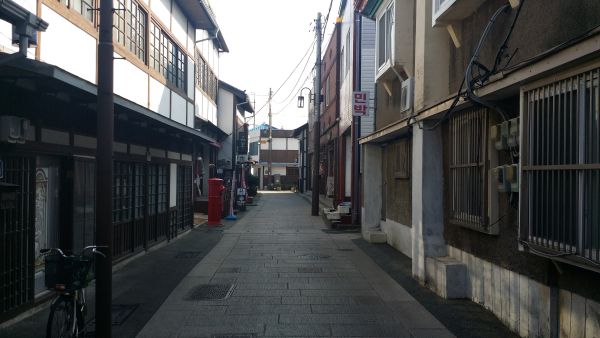
Population Decline Emerges as Existential Threat for Much of Regional Korea. The photo shows an alleyway in a local commercial district outside the capital region. With foot traffic steadily declining, the area has taken on a quiet, desolate atmosphere. (Yonhap)
SEOUL, Jan. 19 (Korea Bizwire) — Nearly eight in 10 local governments outside South Korea’s capital region say they face a serious risk of population decline, underscoring the deepening divide between Seoul and the rest of the country as demographic pressures mount.
In a survey released Monday by the Federation of Korean Industries, 77 percent of local governments outside the greater Seoul metropolitan area reported a high likelihood of population loss, citing weaker job markets and declining living conditions.
The poll covered 100 municipalities nationwide, excluding the administrative city of Sejong and the southern resort island of Jeju.
The findings come as South Korea confronts one of the world’s most severe demographic crises. The country’s total fertility rate — the average number of children a woman is expected to have over her lifetime — fell to 0.81 in October, far below the replacement level of 2.1 needed to sustain a stable population without immigration.
The sense of urgency was strongest in eastern and southern regions. In Gangwon Province, 85.7 percent of local governments said population decline posed a major threat. The figure reached 85.3 percent across the Gyeongsang provinces and 78.6 percent in the Jeolla region.
Even in the Chungcheong area, often viewed as more stable because of its proximity to the capital, nearly six in 10 municipalities expressed similar concerns.
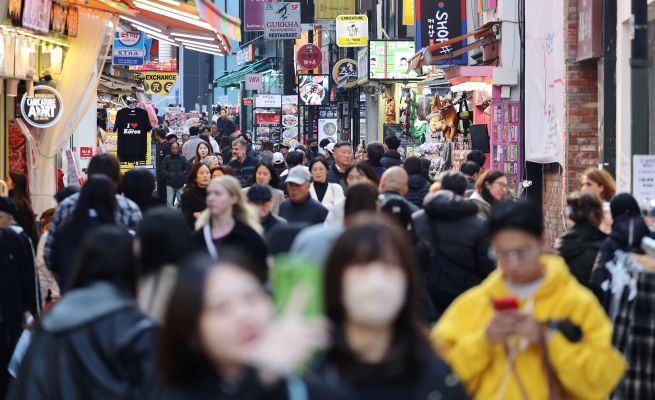
Myeongdong Street in central Seoul is crowded with locals and foreign visitors. (Yonhap)
Officials pointed first to jobs — or the lack of them. More than 44 percent of respondents identified limited employment opportunities as the primary driver of population loss, followed by inadequate housing conditions and insufficient medical infrastructure.
The responses reflect a long-running structural imbalance: younger Koreans continue to migrate toward Seoul and its surrounding cities, drawn by higher wages, denser job markets and better access to education and services, while smaller cities and rural areas struggle to retain residents.
When asked about solutions, local governments emphasized economic revitalization over short-term incentives. Nearly four in 10 said attracting companies and industrial investment was the most urgent task, while others pointed to the need for expanded housing supply and improved living environments.
“The gap in industry and employment between metropolitan and non-metropolitan regions continues to widen,” Lee Sang-ho, head of the federation’s economic and industrial division, said in the report. “That imbalance is accelerating the risk of regional extinction.”
As South Korea’s population ages and shrinks, the challenge facing its provinces is no longer simply how to grow — but how to endure.
M. H. Lee (mhlee@koreabizwire.com)