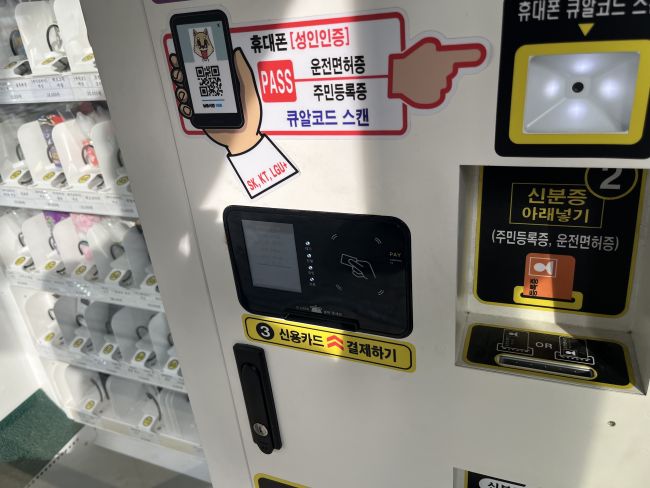
Liquid E-cigarette Vending Machine. (Image courtesy of Yonhap)
SEOUL, Sept. 9 (Korea Bizwire) — South Korea’s latest public health research suggests that smokers who turn to e-cigarettes and heated tobacco products believing them to be safer may in fact be developing stronger nicotine addictions than users of traditional cigarettes.
Commissioned by the Ministry of Health and Welfare, the Korean Association on Smoking or Health surveyed 800 adult smokers nationwide.
The study compared those who smoked only conventional cigarettes, heated tobacco, liquid e-cigarettes, or multiple products.
One key indicator — the time it takes to smoke after waking — showed the highest dependence among liquid e-cigarette users: 30 percent reported lighting up within five minutes of waking, compared with 26 percent for heated tobacco and 18.5 percent for regular cigarettes.

South Korea is grappling with a surge in obesity and e-cigarette use. (Image courtesy of Yonhap)
Daily consumption patterns also varied. More than half of heated tobacco users reported smoking the equivalent of 11 to 20 cigarettes a day, exceeding the rate among conventional smokers.
E-cigarette users typically reported fewer than 10 sessions daily, though researchers cautioned that differences in usage patterns made direct comparisons difficult.
The findings highlight a growing challenge: existing diagnostic tools, such as the widely used Fagerström Test for Nicotine Dependence, were designed for conventional cigarette use and may not accurately measure the complex behaviors of new tobacco products, which vary in frequency, nicotine concentration and delivery method.
The report calls for the creation of new standardized evaluation tools tailored to e-cigarette and heated tobacco users, warning that without them, smoking cessation clinics may be unable to provide effective support.
Despite marketing claims that these alternatives are “less harmful” or helpful for quitting, the study underscores that new tobacco products carry their own risks — and may entrench nicotine addiction rather than alleviate it.
Lina Jang (linajang@koreabizwire.com)