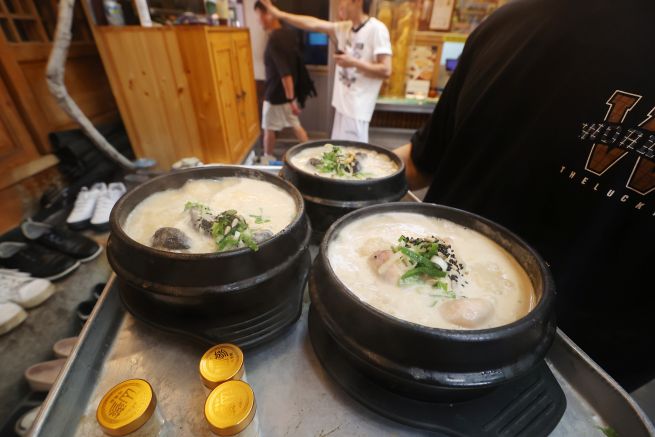
On July 29, the day before Jungbok (the second of the three hottest days in Korea’s summer), a staff member serves samgyetang at a restaurant in Seoul. (Yonhap)
GWANGJU, July 30(Korea Bizwire) — As dining costs continue to climb across South Korea, prices for samgyetang — a traditional Korean ginseng chicken soup favored during the summer heat — have breached ₩20,000 per bowl at many popular restaurants in Gwangju, marking a sharp departure from its status as an affordable seasonal comfort food.
According to local restaurant operators, several well-known samgyetang establishments in Gwangju have raised their base prices by ₩1,000 this year. One chain with branches in Dong-gu and Buk-gu now charges ₩20,000 for a standard herbal samgyetang, while another restaurant in Seo-gu raised its price from ₩19,000 to ₩20,000.
Even restaurants holding base prices steady have taken cost-cutting measures. A local chain with outlets in Gwangju and Jangseong has limited free offerings like ginseng liquor, now serving it only upon request.
Data from the Korea Consumer Agency shows that the average price of dining out for samgyetang in Gwangju reached ₩16,400 as of June, up steadily from ₩14,200 in 2020. The national Consumer Price Index (CPI) for samgyetang hit 131.52 in June — significantly higher than the overall dining-out index of 124.79.
The price surge is being driven by a combination of rising ingredient costs and climate-related disruptions. The Korea Broiler Council reported that the wholesale price of young chickens used in samgyetang now ranges from ₩2,190 to ₩2,890, up from ₩1,500–₂,000 in 2020. Recent heatwaves and heavy rains have contributed to increased livestock deaths, further tightening supply.
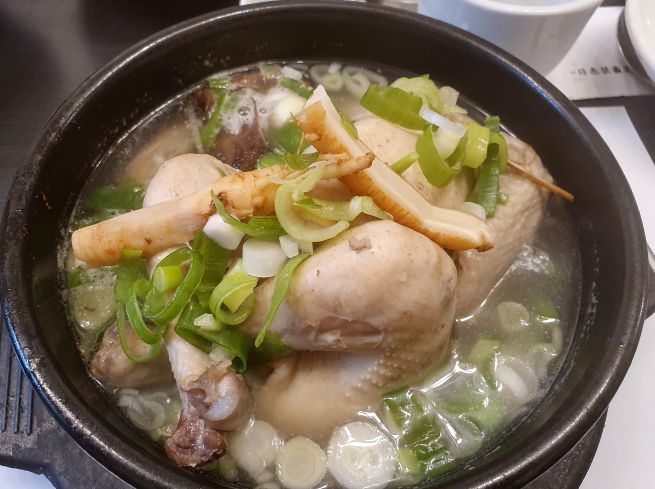
samgyetang
In response, the Ministry of Agriculture, Food and Rural Affairs has activated its Livestock Disaster Response Unit and launched price stabilization efforts, including nationwide chicken discount events at large and small retailers through August 6. It also plans ₩10 billion in direct rebates at 130 traditional markets between August 4 and 9.
As temperatures soar and costs rise, what was once a humble restorative dish is becoming yet another symbol of inflation weighing on everyday Korean households.
Lina Jang (linajang@koreabizwire.com)