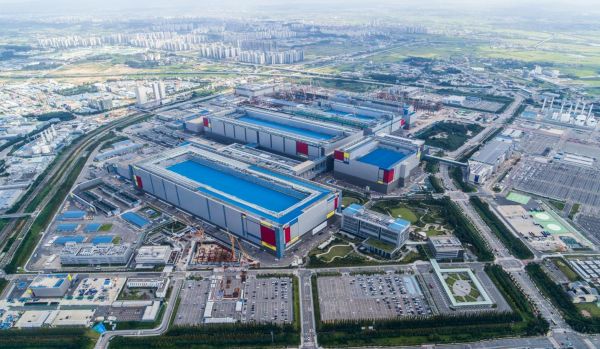
Samsung Electronics Pyeongtaek Campus (Image courtesy of Samsung Electronics)
SEOUL, July 8 (Korea Bizwire) — Samsung Electronics reported a dramatic 56% drop in operating profit for the second quarter of 2025, as its once-reliable semiconductor division faltered under geopolitical pressure and intensifying competition in advanced memory chips.
The South Korean tech giant announced preliminary earnings of 4.6 trillion won ($3.3 billion) in operating profit on 74 trillion won ($53 billion) in revenue — a slight dip in sales but a steep decline in profits compared to a year earlier.
The downturn was largely driven by underperformance in the Device Solutions (DS) division, which includes the company’s memory and foundry businesses and traditionally contributes over half of its earnings.
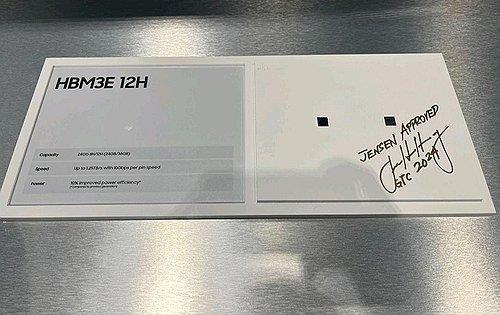
Samsung HBM3E 12-Hi Signed by Nvidia CEO Jensen Huang (Image source: Screenshot from Samsung Electronics Executive Vice President Han Jin-man’s social media)
Analysts cite weakened competitiveness in high-bandwidth memory (HBM) chips and the chilling effect of U.S. export restrictions on AI semiconductors destined for China.
Samsung’s inability to secure supply deals with AI chip leader Nvidia has raised concerns about its position in the increasingly strategic HBM market, where rivals like SK Hynix are gaining ground.
Adding to the pressure, Samsung booked an estimated 1 trillion won in inventory valuation losses, an unusually large provision aimed at clearing out older, less marketable chip stock, including earlier HBM generations and products bound for now-constrained Chinese clients.
U.S.-led export controls — aimed at curbing China’s AI ambitions — have also throttled Samsung’s foundry operations. Reduced orders from Chinese customers caused line utilization rates to plummet, further weighing on profits.
Meanwhile, NAND flash memory, which had bolstered earnings last year, has slumped into potential loss territory due to weak demand and declining prices.
Even Samsung’s logic chip units, such as its system LSI and foundry businesses, failed to offset the shortfall, continuing to post losses amid sluggish global orders.
Still, industry observers believe the worst may be over. Analysts project a rebound in the third and fourth quarters, with DS operating profit expected to recover to the 3–5 trillion won range per quarter. The memory market is showing signs of recovery, aided by rising DRAM prices and seasonal demand in mobile and display segments.
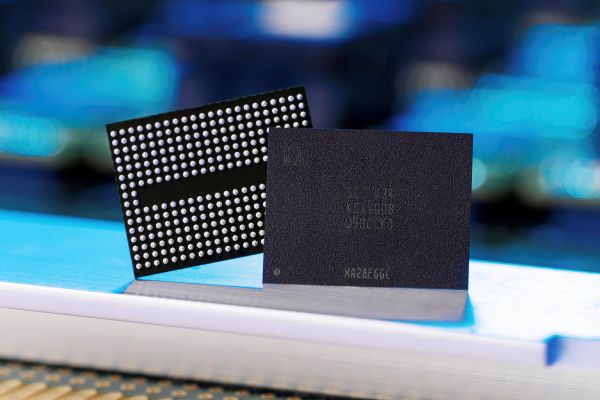
Samsung Electronics’ 9th-Generation QLC V-NAND (Image courtesy of Samsung Electronics)
Samsung is also accelerating efforts to regain footing in the AI chip supply chain. It is pushing to enter Nvidia’s HBM supply network in the second half of the year and fast-tracking production of next-generation HBM4 chips.
The company is also banking on its Exynos 2500 processor to help narrow foundry losses, while increasing focus on high-margin enterprise SSDs and refining its legacy chip processes.
“The sharp drop in Q2 earnings stems largely from geopolitical constraints on China-bound chips and Samsung’s lag in the HBM space,” said Yang-Paeng Kim, a senior researcher at the Korea Institute for Industrial Economics & Trade. “But as inventory risks ease and HBM shipments to non-Nvidia clients grow, the outlook should improve in the coming months.”
Samsung will release full earnings, including divisional breakdowns, on July 31.
Kevin Lee (kevinlee@koreabizwire.com)