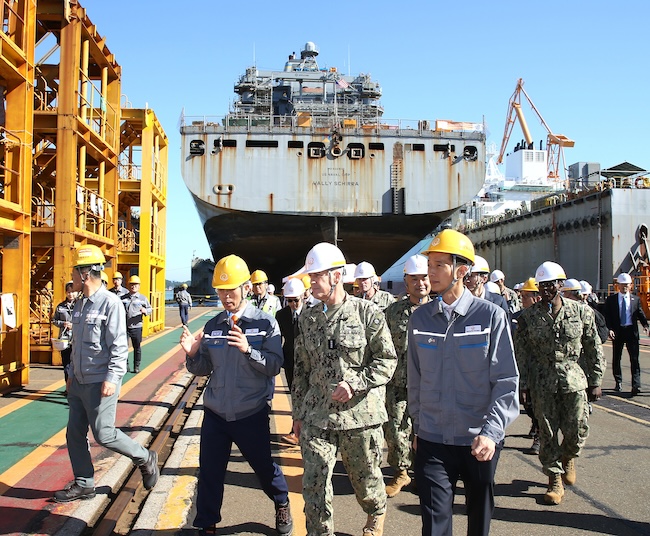
This file photo provided by Hanwha Ocean Co. shows Adm. Steve Koehler (2nd from R, front row), commander of the U.S. Pacific Fleet, visiting the South Korean shipbuilder’s shipyard on the country’s southeastern island city of Geoje on Oct. 24, 2024, where the USNS Wally Schirra, a U.S. Navy cargo ship, has been receiving maintenance, repair and overhaul services since Sept. 2 under a deal between Hanwha and the U.S. Navy. (Image courtesy of Yonhap)
SEOUL, June 27 (Korea Bizwire) — South Korea’s semiconductor, display, shipbuilding, and biotech industries are expected to lead the country’s economic performance in the second half of 2025, while other key sectors face continued headwinds, according to a new outlook released Thursday by the Korea Chamber of Commerce and Industry (KCCI).
The KCCI’s semiannual “Industrial Weather Forecast” survey, conducted in partnership with 11 industry associations, categorized the latter half of 2025 into two broad camps: those under “mostly sunny” skies—indicating favorable conditions—and those under “cloudy” ones, signaling sluggish prospects.
Semiconductors top the list of positive forecasts, buoyed by sustained global investment in artificial intelligence infrastructure, particularly in high-bandwidth memory (HBM) chips.
Display manufacturers are also set for recovery, with demand projected to climb 6.5% year-over-year to $10.5 billion, fueled by the rollout of AI-optimized, low-power smartphone displays using LTPO technology.
Shipbuilding, meanwhile, is expected to gain momentum from new liquefied natural gas (LNG) carrier orders tied to U.S. energy projects and policy support from South Korea’s new administration. In the pharmaceutical sector, bio-similar exports are projected to grow amid easing U.S. regulatory hurdles and continued demand despite drug pricing pressures.
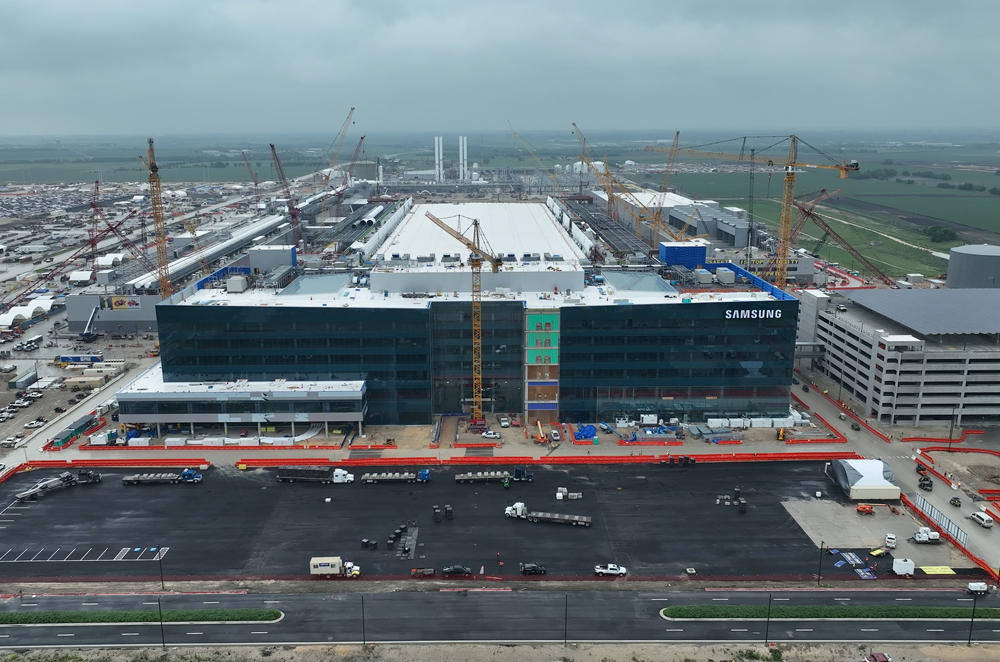
A view of Samsung Electronics’ semiconductor plant under construction in Taylor, Texas. (Image provided by Samsung Electronics)
In contrast, industries such as steel, automobiles, petrochemicals, batteries, textiles, machinery, and construction face more challenging terrain. Steel exports are faltering due to weak demand from China and the U.S., while Korea’s automotive sector is bracing for a decline in exports as tariffs increase the price of new vehicles in North America and new overseas plants offset domestic production.
Petrochemicals and batteries are struggling under the weight of global oversupply and aggressive pricing from Chinese rivals. Machinery exports are also threatened by a slowdown in capital investment across key markets like the U.S. and Europe, driven by geopolitical uncertainty and tariff risks.
The construction industry is expected to perform slightly better than in the first half of the year, but new order volume—a leading indicator—fell 8.1% year-on-year through April to 53.2 trillion won.
“The outlook remains mixed, with global trade pressures and China’s pricing strategies weighing heavily on several of our core industries,” said Lee Jong-myung, head of industrial innovation at KCCI.
“Yet we also see great potential if the new administration follows through with aggressive deregulation and economic stimulus measures. Now is the time for bold reform to resolve long-standing structural challenges.”
M. H. Lee (mhlee@koreabizwire.com)