New Electronic Attack Aircraft to Strengthen Korea’s Air Combat Capabilities (Image courtesy of the Defense Acquisition Program Administration)
SEOUL, Jan. 21 (Korea Bizwire) — South Korea has formally begun development of a new electronic warfare aircraft designed to disrupt enemy air defenses and command systems from long range, marking a significant step in strengthening its modern combat capabilities.
The Defense Acquisition Program Administration said Tuesday that it held a kickoff meeting for the Electronic Warfare Aircraft Block-I development program at LIG Nex1’s Pangyo facility, bringing together officials from the Joint Chiefs of Staff, the Air Force and the Agency for Defense Development.
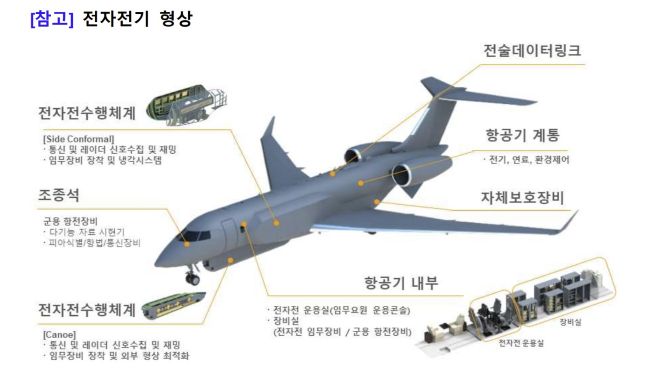
The project aims to field a large, specialized aircraft capable of collecting and analyzing hostile signals and conducting electronic attacks — known as jamming — to paralyze enemy air defense networks and wireless command-and-control systems at the outset of combat.
The aircraft will be developed by modifying a Bombardier Global 6500 business jet airframe and equipping it with domestically developed electronic warfare mission systems. Officials said the platform will allow South Korea to conduct long-range, wide-area electronic attacks, significantly enhancing the survivability of allied air assets and the effectiveness of joint operations.
The program carries a total budget of 1.92 trillion won, or about $1.4 billion, with deployment targeted for 2034 following development and testing.

The aircraft will be developed by modifying a Bombardier Global 6500 business jet airframe (Image courtesy of Bombardier)
Electronic warfare aircraft are increasingly viewed as a core component of modern conflict, capable of blinding an adversary’s “eyes and ears” before kinetic operations begin. Recent U.S. military operations abroad have underscored their role in maximizing operational effectiveness while reducing risks to frontline forces.
Defense officials said the experience and technologies gained through the Block-I program will also serve as the foundation for a more advanced Block-II version, which is planned as a separate follow-on project.
The initiative reflects Seoul’s broader push to strengthen high-end military capabilities amid growing regional security challenges.
Kevin Lee (kevinlee@koreabizwire.com)