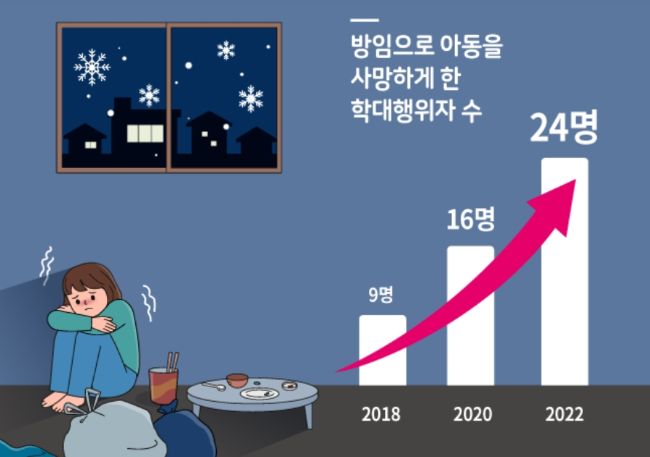
South Korea’s presidential office on Thursday called for a comprehensive review of nighttime child neglect and stronger countermeasures to address systemic care gaps. (Image courtesy of Ministry of Health and Welfare)
SEOUL, July 5 (Korea Bizwire) – Following a tragic fire in Busan that claimed the life of a young child, South Korea’s presidential office on Thursday called for a comprehensive review of nighttime child neglect and stronger countermeasures to address systemic care gaps. New data shows that children from low-income households are 1.5 times more likely to experience neglect compared to their peers in higher-income families.
According to the Korea Institute for Health and Social Affairs and the Ministry of Health and Welfare’s 2023 National Child Survey, 26.5 percent of primary caregivers reported having neglected their children at some point.
Among households receiving basic livelihood assistance, the rate climbed to 38.9 percent—substantially higher than the 26.1 percent among general households. Families earning below 50 percent of the median income also showed higher neglect rates at 30.7 percent.
Dual-income households reported more cases of neglect (28.7 percent) than single-income families (24.1 percent), underscoring what experts say is a structural issue: caregivers forced to prioritize employment over supervision due to financial necessity.
While the government operates programs like evening childcare and emergency caregiver services, experts argue they fall short of meeting growing demand.
“Working parents, especially those with early or late shifts, have difficulty accessing flexible care options,” said Seok Jae-eun, a professor of social welfare at Hallym University. “The government needs to expand customized, user-centered childcare services.”
The report’s authors also urged stronger policy responses, including universal income support and targeted housing assistance, to reduce the root causes of neglect and ensure that poverty or employment pressures do not jeopardize children’s safety.
M. H. Lee (mhlee@koreabizwire.com)