Visitors to Seoul’s Namsan Observatory look out over a cityscape packed with apartment buildings. (Yonhap)
SEOUL, Jan. 27 (Korea Bizwire) — South Korea’s housing market grew sharply more polarized last year, as soaring apartment prices in Seoul collided with prolonged stagnation in regional cities, pushing the price gap between the nation’s most expensive and cheapest homes to its widest level in years.
According to data released Monday by the Korea Real Estate Board, the nationwide price ratio between the top 20 percent and bottom 20 percent of apartments — known as the quintile ratio — reached 14.45 in December 2025. That means the average price of high-end apartments was more than 14 times higher than that of lower-priced homes.
The average price for apartments in the highest quintile stood at 1.34 billion won ($1 million), while those in the lowest quintile averaged just 92.9 million won.
The gap has steadily widened throughout the year. The quintile ratio rose from 12.80 in January and climbed almost continuously, expanding by 1.65 points over the year. After easing from earlier peaks in 2022 and 2023, the divide surpassed its previous high again in late 2024 and continued to grow in 2025.
In Seoul, the imbalance was also pronounced. As of December, apartments in the city’s top quintile averaged 2.93 billion won, compared with 397 million won for those in the bottom quintile, producing a ratio of 7.38.
Private-sector data from KB Real Estate showed a similar trend, with the nationwide quintile ratio rising to 12.8 in December, while Seoul’s stood at 6.9.
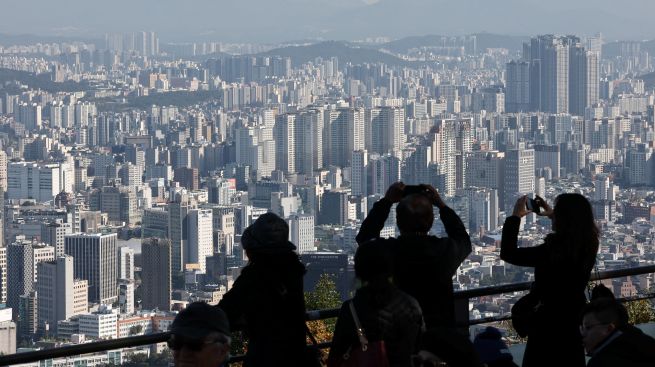
A view of apartment buildings in downtown Seoul as seen from Namsan. (Yonhap)
Analysts attributed the widening gap to a sharp rebound in housing prices in select Seoul districts — particularly the affluent Gangnam area and neighborhoods along the Han River — while most regional markets remained mired in decline.
Apartment prices in Seoul rose 8.98 percent over the year, led by Songpa District, which surged more than 22 percent, followed by Seongdong, Seocho, Gangnam and Mapo districts. Outside the capital region, however, prices fell an average of 1.08 percent, with only a handful of cities, such as Ulsan, posting gains.
“The 2025 housing market represents an era of extreme polarization,” said Nam Hyuk-woo, a real estate researcher at Woori Bank. “Price gains were concentrated in the most desirable neighborhoods — places like Apgujeong and Jamsil — before spreading to surrounding districts and the broader Han River corridor, sharply widening the national gap.”
The data underscore growing concerns that South Korea’s housing recovery has been uneven, benefiting a narrow set of high-demand areas while leaving much of the country behind — a divide policymakers face increasing pressure to address.
Ashley Song (ashley@koreabizwire.com)