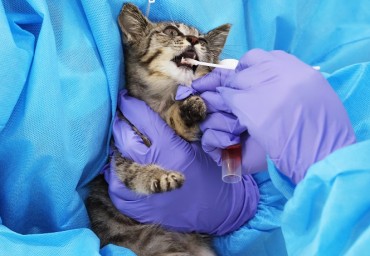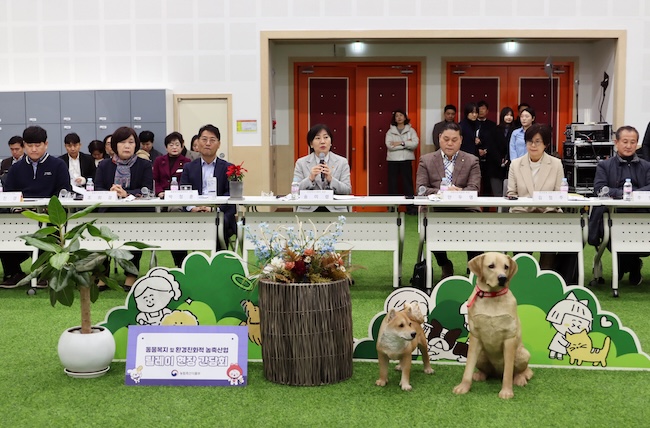
The South Korean Ministry of Agriculture, Food, and Rural Affairs announced an ambitious five-year animal welfare plan. (Image courtesy of Yonhap)
SEOUL, Feb. 28 (Korea Bizwire) — The South Korean Ministry of Agriculture, Food, and Rural Affairs announced an ambitious five-year animal welfare plan on February 27 that includes banning convicted animal abusers from owning pets and increasing fines for animal abandonment to 5 million won, marking a significant shift in the country’s approach to animal protection.
Under the new regulations, set to take effect in 2027, courts will have the authority to prohibit convicted animal abusers from keeping pets for a specified period. The ministry plans to establish detailed criteria for the pet ownership ban in consultation with the Ministry of Justice, courts administration, local governments, and experts.
The comprehensive plan includes several other significant reforms. The fine for abandoning pets will increase from the current maximum of 3 million won to 5 million won. The definition of abandonment will be expanded to include leaving pets at veterinary clinics or pet hotels for extended periods without retrieval.
The government also plans to overhaul the veterinary care system by introducing specialized veterinary practices — such as ophthalmology for dogs — and establishing a two-tier system of advanced pet hospitals. These changes aim to provide more sophisticated medical care for the country’s growing pet population.
To address the issue of stray cats, the ministry will establish social consultative bodies comprising local governments, residents, and cat caregivers (known as “cat moms”). The initiative includes expanding surveys of stray cat populations and implementing neutering programs in high-density areas.
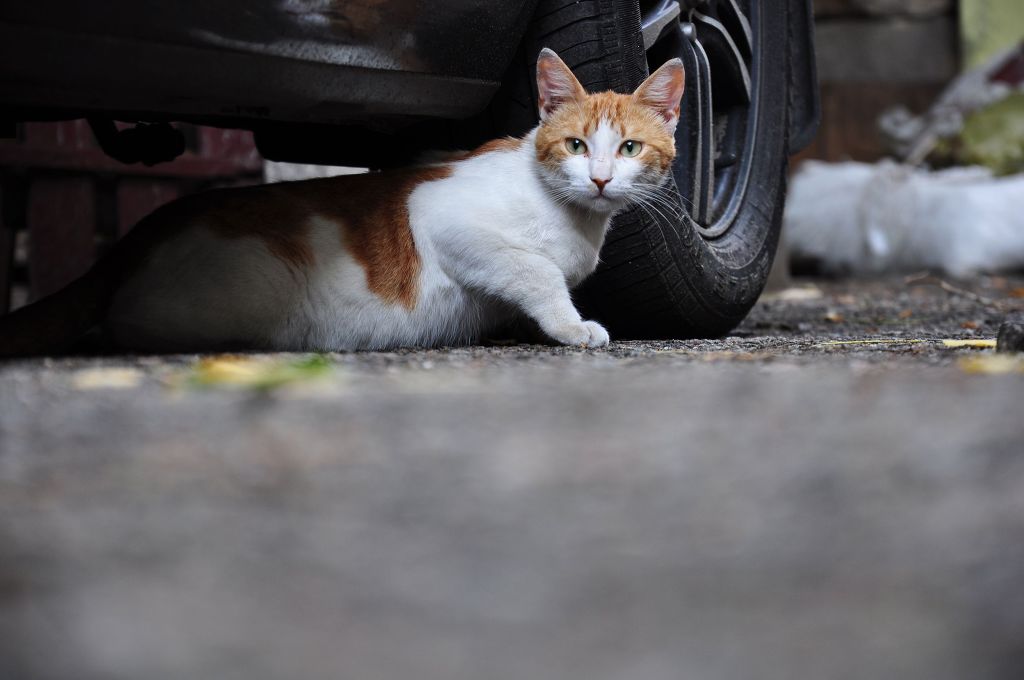
Cats typically have a lifespan of 10 to 15 years, with some living up to 20 years or more. However, the average life expectancy of a stray or feral cat is only 3-5 years due to various factors such as road accidents, human cruelty, malnutrition, illnesses, and injuries from territorial conflicts.
Stray (or Street) cats often rely on consuming human waste as a source of food, which can have high levels of salt that are detrimental to their health. Additionally, access to clean water is limited, especially during the winter months when water sources freeze, making it more challenging for them to survive and increasing the risk of contracting diseases. (Image credit: Kobiz Media)
The plan mandates pet registration for all dogs nationwide, gradually eliminating exceptions currently in place for rural and island regions. To facilitate easier registration, the system will be expanded to include biometric data such as nose prints.
Educational initiatives form another key component of the reforms. Animal welfare education, already introduced in elementary and middle schools this year, will be extended to high schools in 2026. Additionally, prospective pet owners will be required to complete mandatory education before adoption starting next year.
The ministry also announced plans to improve regulations for pet-related businesses. These include stricter animal management standards for breeding facilities and the introduction of a license renewal system. To prevent illegal pet trading and adoption fraud, breeders will be required to maintain linked registration numbers for parent dogs and their puppies.
The government aims to reduce the number of abandoned and lost animals from 113,000 in 2023 to 60,000 by 2029. Local animal protection centers will be permitted to add facilities such as dog training areas, outdoor playgrounds, and cafes.
The reforms extend to the pet service industry as well. Mobile pet-sitting and grooming services will be permitted, and regulations for pet funeral facilities will be relaxed. The ministry also plans to introduce woodland burial options for pets and establish guidelines for supporting local communities affected by these facilities.
A separate comprehensive plan for animal medical care development will be announced in June, and the government plans to enact a new law to foster pet-related industries, including pet food and pet technology sectors.
Lina Jang (linajang@koreabizwire.com)