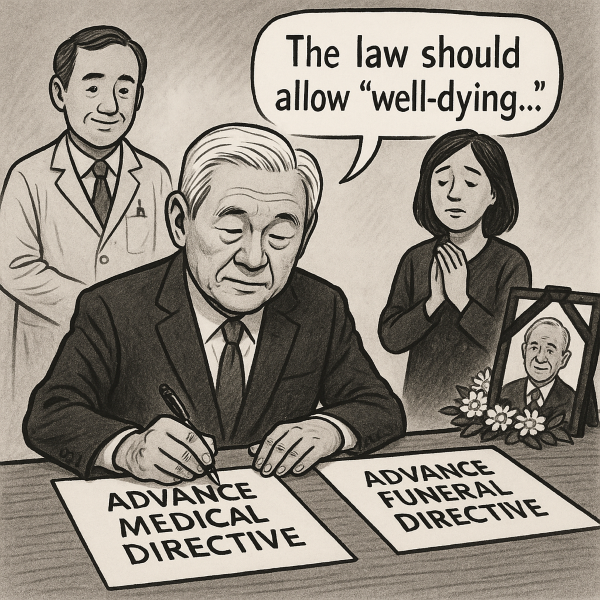
South Korea Considers Expanding End-of-Life Rights with National Directive Reform (Image supported by ChatGPT)
SEOUL, May 24 (Korea Bizwire) — South Korea is weighing major reforms to its end-of-life care system, with calls mounting to expand the legal window for halting life-sustaining treatment and to formally institutionalize advance funeral directives at the national level.
At a policy roundtable hosted by the Ministry of Health and Welfare on Thursday, medical and legal experts urged the government to broaden the current “life-sustaining treatment decision system,” which allows terminal patients to decline futile medical interventions.
Under existing law, such decisions are only permitted in the final stages of dying, but critics argue this restriction undermines patient autonomy in the earlier stages of terminal illness.
“Separating end-of-life from the dying process is an artificial distinction that curtails patient rights,” said Dr. Ko Yoon-seok, a respiratory medicine specialist at Asan Medical Center. “The law should allow patients in the final stages of life—not just those moments before death—to decline intensive treatment.”
Lee Il-hak, professor of medical law and ethics at Yonsei University, echoed the sentiment, emphasizing the need for legally supported self-determination. “Patients must be empowered to make informed choices based on their values and treatment goals,” he said, adding that advance directives must be regularly updated and supported by trained medical counseling.
Another key reform discussed was the formal recognition of “advance funeral directives,” documents that allow individuals to specify their preferred funeral rites and designate key roles in advance. Currently overseen by local governments or private organizations, these directives lack legal backing, creating conflict and confusion for bereaved families.
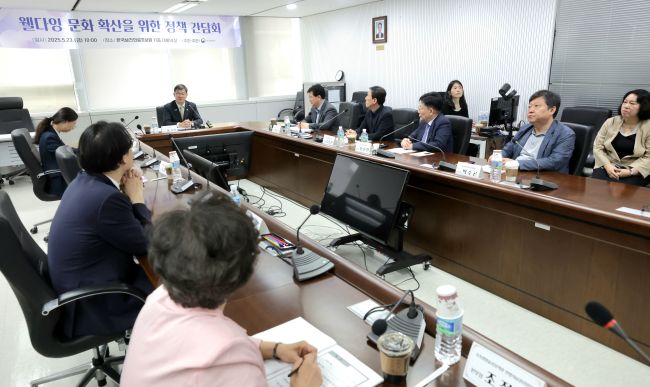
Vice Minister Lee Ki-il of the Ministry of Health and Welfare is holding a policy discussion on the promotion of a well-dying culture at the conference room of the Korea Health and Medical Information Institute in Jung-gu, Seoul, on May 23, 2025. (Image courtesy of the Ministry of Health and Welfare)
“The legal ambiguity makes it difficult to enforce a deceased person’s wishes,” said Park Soo-gon, a law professor at Kyung Hee University. “A centralized system managed by the national government is urgently needed, especially to address logistical issues like verifying next of kin and handling funeral costs.”
Experts also advocated for a cultural shift in funeral practices, calling for more meaningful rituals that promote reflection on mortality. Yoo Jae-chul, director of the Korea Institute for Funeral Culture, proposed introducing “living farewells” — pre-death gatherings with loved ones — and memorial events that focus on sharing the stories of the deceased.
Vice Minister of Health and Welfare Lee Ki-il, who attended the forum, pledged government support for fostering a more compassionate and autonomous end-of-life culture. He personally signed both an advance medical directive and a funeral directive at the event, signaling a symbolic step toward broader adoption.
The proposals come as South Korea grapples with a rapidly aging population and growing public interest in dignified death and patient-centered care. If enacted, the reforms would mark a significant evolution in how the nation addresses mortality.
M. H. Lee (mhlee@koreabizwire.com)