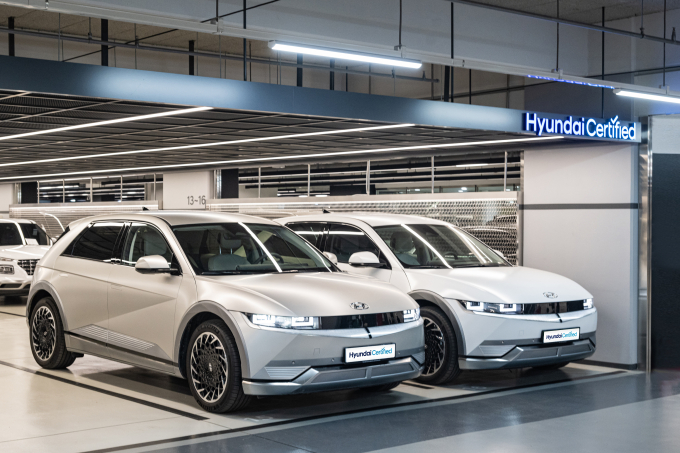
A certified pre-owned IONIQ 5 is displayed at the Hyundai Certified Used Vehicle Center. (Image courtesy of Hyundai Motor)
SEOUL, Feb. 5 (Korea Bizwire) — Automakers in South Korea, both domestic and foreign, are slashing electric vehicle (EV) prices this month in response to slowing demand and the entry of Chinese manufacturers into the market.
Industry analysts suggest that established players, including Hyundai and Kia, are defending their market share against price-competitive models from China’s BYD.
Hyundai and Kia, the country’s top two automakers, have announced price reductions of up to 5 million won ($3,500) on their EV models, including the Ioniq 5, Ioniq 6, and EV6.
With additional government subsidies and dealer incentives, some models’ final purchase prices are expected to drop by as much as 10 million won ($7,000), making certain EVs available in the 30 to 40 million won ($20,800–$27,100) range.
Commercial EVs are seeing even steeper discounts, with the Kia Bongo EV now priced in the mid-20 million won range after an approximate 19 million won ($13,200) reduction.
KG Mobility, formerly SsangYong, is offering its own subsidies on the Torres EVX, lowering its base price to around 39 million won ($27,100).
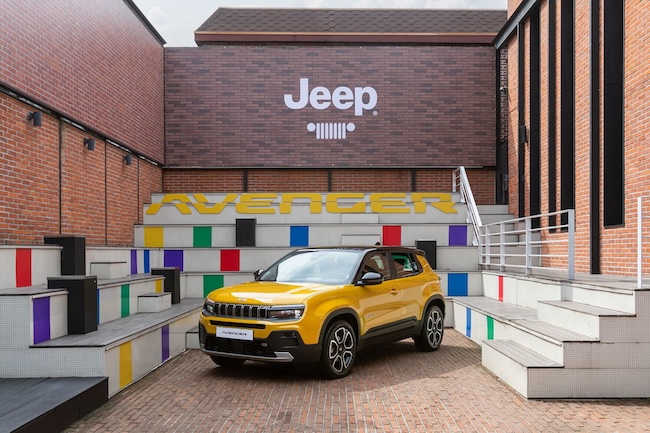
Jeep Avenger (Image courtesy of Stellantis Korea)
International brands are also joining the price war. Stellantis Korea has preemptively deducted the value of government subsidies from the retail prices of Jeep Avenger and Peugeot e-2008, reducing costs by 2.1 million won ($1,460) and 2.09 million won ($1,450), respectively.
Meanwhile, Volkswagen ID.4, Audi e-tron, and BMW iX are seeing discounts of 15–28%, with Mercedes-Benz reducing prices on its EQE model by 7%.
The sharp price cuts come amid signs of weakening EV demand. In January, EV registrations in South Korea fell 6% year-over-year to 2,378 units, while imports saw a steeper 22.7% decline.
The market downturn follows a trend from late 2024 when sales had already been slowing. Despite an early confirmation of national subsidies this year, consumer interest has yet to rebound.
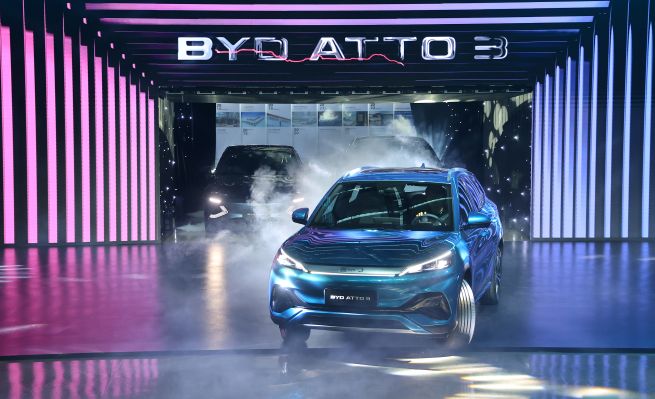
BYD is entering the South Korean market with the Atto 3, priced in the low 30 million won range, prompting automakers to reconsider their pricing strategies in response. (Image courtesy of BYD)
Compounding concerns for local manufacturers, China’s BYD officially entered the South Korean passenger EV market last month with its compact SUV, the Atto 3.
The vehicle has already secured over 1,000 preorders, a figure that rivals BYD’s total sales in Japan last year. Industry experts view this as a potential game-changer, prompting Hyundai to lower the price of its competing Kona Electric to match the Atto 3’s starting price in the low 30 million won range.
“BYD’s performance in South Korea is turning heads,” said Lee Ho-geun, a professor at Daedeok University. “Hyundai and Kia’s aggressive price cuts reflect their efforts to stay competitive in the face of this new challenge.”
As competition intensifies, automakers may need to adopt further price adjustments and promotional strategies to sustain EV sales in South Korea’s rapidly evolving market.
* Note to editor: The KRW-to-USD exchange rate referenced in the article is based on the rate applicable on the date of publication.
Kevin Lee (kevinlee@koreabizwire.com)