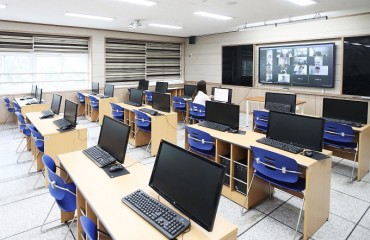
University students studying in a campus library.
SEOUL, Sept. 10 (Korea Bizwire) — South Korea’s young adults remain the most highly educated in the developed world, according to new data released Tuesday, but the wage premium for advanced degrees is growing even as public spending on higher education lags international peers.
The OECD Education at a Glance 2025 report showed that 70.6 percent of Koreans aged 25 to 34 had completed tertiary education in 2024, the only country among 49 surveyed to surpass the 70 percent mark. Canada ranked second at 68.9 percent and Ireland third at 66.2 percent. Korea has held the top spot since 2008.
Across the broader adult population aged 25 to 64, 56.2 percent had higher education, far above the OECD average of 41.9 percent.
Growing Wage Divide
The study also found widening pay disparities by education level. Using high school graduates’ wages as a baseline, associate degree holders earned 109.9 percent, bachelor’s graduates 132.5 percent, and those with graduate degrees 176.3 percent. While smaller than the OECD average gaps, the spread has increased compared with a year earlier.

University students studying in a campus library (Photo provided by Konkuk University)
Spending Trends
Korea’s public expenditure per student rose sharply in 2022, reaching $19,805, higher than the OECD average. But at the tertiary level, spending remained just 68.6 percent of the OECD average, highlighting persistent underinvestment in universities. Public education spending accounted for 5.6 percent of GDP, above the OECD’s 4.7 percent, with both government and private contributions exceeding international norms.
Classrooms and Teachers
Class sizes in Korea are still larger than average. Elementary schools had 21.6 students per class and middle schools 25.7, both above OECD levels despite slight declines from the year before. Teacher salaries begin below OECD averages — about $37,700 at entry level — but rise sharply with seniority, surpassing $100,000 at the highest pay grade.
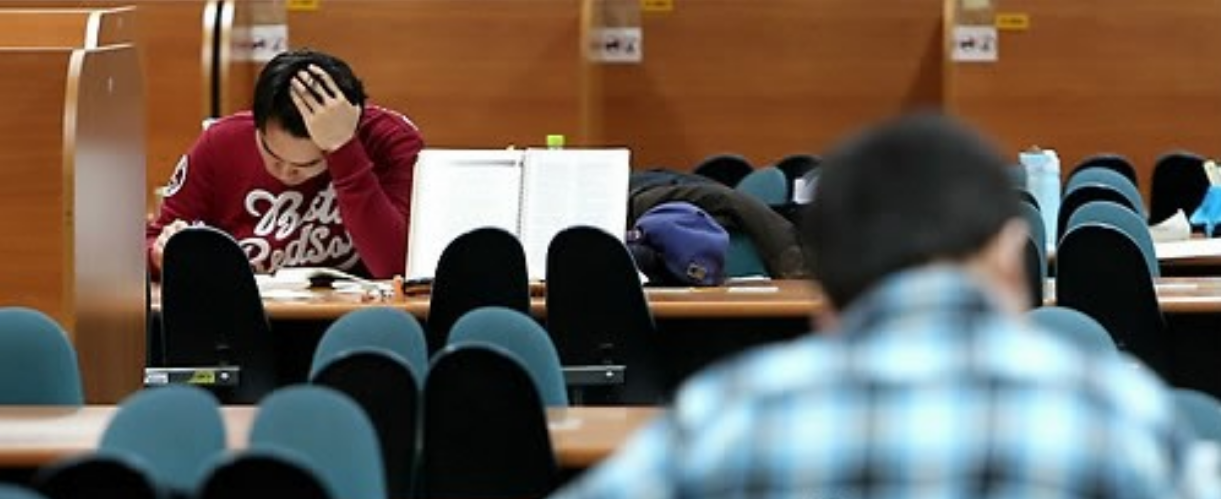
University students studying in a campus library (Yonhap)
Access and Globalization
Enrollment rates for children aged 3 to 19 outpaced OECD averages at nearly every age. However, internationalization remains limited: only 4.6 percent of tertiary students in Korea were from abroad, compared with an OECD average of 7.4 percent, with the overwhelming majority coming from other Asian countries.
The findings underscore Korea’s paradox: a youth population with the world’s highest education attainment, but widening inequality by degree, persistent resource imbalances, and limited international diversity in its universities.
Lina Jang (linajang@koreabizwire.com)