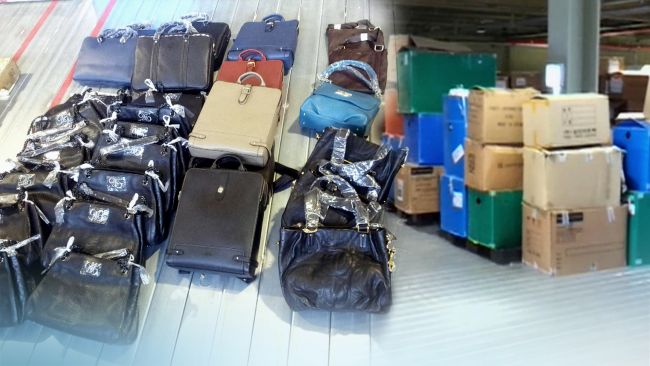
Counterfeit Items (CG) (Image courtesy of Yonhap)
SEOUL, Aug. 20 (Korea Bizwire) – More than half of South Korean consumers who unknowingly purchase counterfeit goods online do not seek refunds, citing complicated procedures and small amounts of money at stake, according to a survey released Tuesday by the Korea Consumer Agency.
The survey, conducted among 1,000 consumers across eight major platforms — including Naver Smart Store, Coupang, Gmarket, 11st, AliExpress, Temu, Naver Band, and Instagram — found that 58.6 percent of those who mistakenly bought fake products did not request a refund.
Among them, 60.4 percent said the process was too complex or time-consuming, while others pointed to low purchase values or little perceived difference from authentic goods.
Bags were the most common counterfeit item purchased intentionally (38.8 percent), while shoes topped the list of accidental purchases (43.8 percent).
Many consumers who knowingly bought counterfeits showed little awareness of intellectual property concerns, with nearly half responding that they “did not know” or “did not feel” any problem.
(Image courtesy of Korea Consumer Agency (KCA))
When asked who bears responsibility, 45.4 percent of respondents pointed to sellers, followed by online platforms (37.3 percent) and consumers themselves (17.3 percent).
The agency also analyzed 1,572 consumer complaints filed between 2022 and February 2025. Handbags accounted for the largest share at 21 percent, followed by shoes, cosmetics, audio devices, and apparel. Complaints often involved luxury brands, as well as Dyson hair dryers and Apple earphones.
Price comparisons further highlighted risks: on AliExpress and Temu, 72.5 percent of sampled products sold for less than 20 percent of official retail prices.
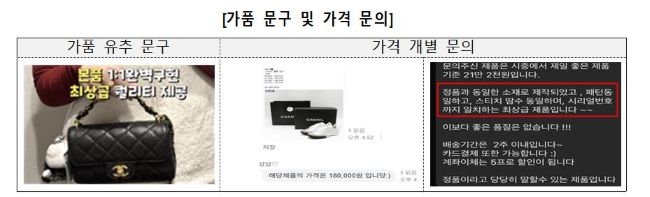
More than half of the items on Instagram and Naver Band displayed similar deep discounts, often with descriptions such as “mirror-grade leather” or “authentic-level.” Many sellers operated through private or external channels, making monitoring more difficult.
The agency criticized several platforms, including Naver Band, AliExpress, Coupang, and Temu, for failing to provide clear guidance on reporting counterfeit goods, instead requiring case-by-case inquiries.
It urged authorities and companies to strengthen measures to block counterfeit sales, restrict use of misleading terms on social media, and improve transparency in reporting procedures.
Ashley Song (ashley@koreabizwire.com)