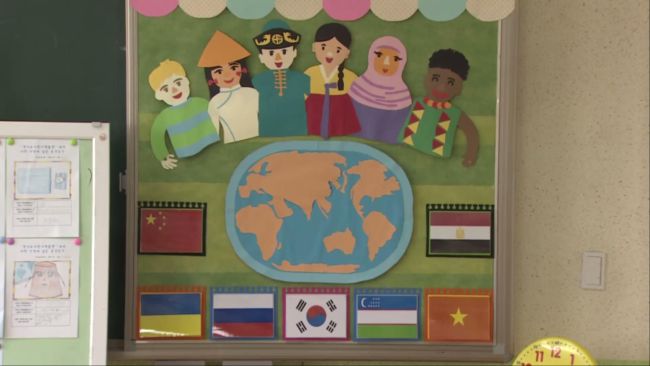
Classroom Bulletin Board.(Image courtesy of Yonhap)
SEOUL, July 19 (Korea Bizwire) — Despite growing awareness of multiculturalism in South Korea, a new national survey reveals that while a significant portion of Koreans are open to having immigrants as neighbors or coworkers, far fewer are willing to accept them as close family members.
According to a report released Friday by the Korea Institute for Health and Social Affairs, only 8.4% of respondents said they would accept immigrants as a spouse or family member. In contrast, 38.7% were willing to have immigrants as neighbors, 30.5% as coworkers, and 18.4% as close friends.
The study, based on a survey of 3,011 adults aged 19 to 74, found generational divides in attitudes toward immigrants. Younger Koreans (ages 19–34) showed more openness, with 30.2% saying they could accept immigrants as close friends — well above the national average. However, even among this group, willingness to accept immigrants as family remained low at 8.6%.
Older adults (65 and above) were more likely to accept immigrants as neighbors (57.9%) but the least likely to accept them as family (5.0%) or in any intimate capacity. They also had the highest rate of outright refusal to accept immigrants in any role (7.5%).
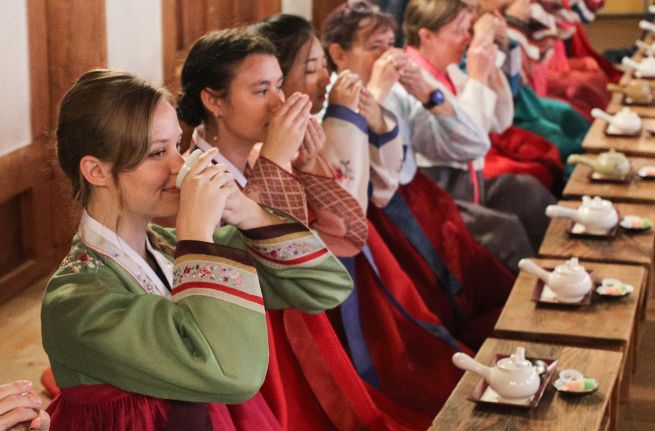
On the afternoon of July 13, 2023, at HanHakChon in Keimyung University, Dalseo-gu, Daegu, foreign students participating in the ‘2023 Korean Language and Culture Camp’ learned traditional tea ceremony etiquette while dressed in Hanbok. (Yonhap)
Attitudes varied significantly depending on the type of immigrant. Permanent residents were generally more accepted, while refugees faced substantial resistance. Only 1.8% of young respondents said they could accept a refugee as a family member, with even lower rates among middle-aged (2.4%) and elderly (0.6%) groups.
Even when presented with scenarios of labor shortages caused by low birthrates and an aging workforce, generational gaps persisted. Among young adults, 17.7% supported unrestricted foreign labor intake in certain industries, compared to just 9.4% of older respondents.
The researchers emphasized the need for generationally tailored immigration policies, calling for legal and institutional frameworks that treat immigrants as equal members of society. “To build a more inclusive society, it’s essential to account for differences in generational acceptance and exposure to immigrants,” the report stated.
M. H. Lee (mhlee@koreabizwire.com)