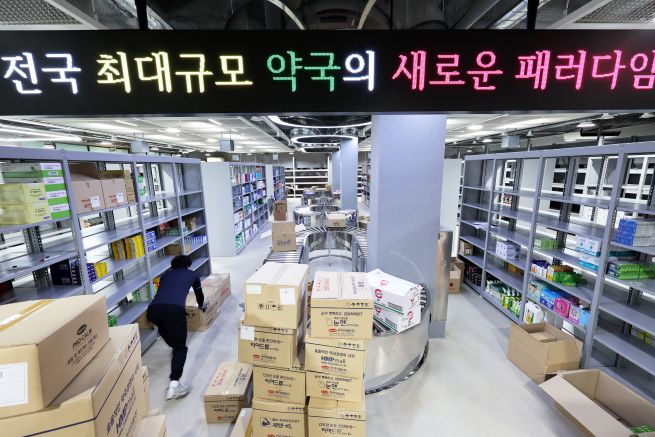
Warehouse-style pharmacies that display and sell medicines in a big-box retail format are drawing both positive reactions for expanding consumer choice and concerns over potential disruption to the pharmaceutical distribution system. The photo shows a warehouse-style pharmacy preparing to open in Suwan-dong, Gwangsan District, Gwangju, on Sept. 19. (Yonhap)
SEOUL, Sept. 22 (Korea Bizwire) — South Korea is witnessing the rapid spread of so-called “warehouse-style pharmacies,” large outlets that display and sell medicines and health supplements in bulk, fueling a heated debate over public health and market fairness.
The trend began earlier this year in Seongnam, south of Seoul, and has since spread to Gwangju, where two large-format pharmacies—one measuring 262 square meters and another slated to open at 760 square meters—are set to launch this month. Current registration rules mean local governments cannot block openings as long as legal requirements are met.
Pharmacist groups have reacted sharply, warning of risks to both patients and small community pharmacies. The Gwangju Pharmaceutical Association issued a statement calling for the suspension of new openings, stressing that medicines are not consumer goods but bioactive substances requiring strict management and professional counseling.
“If drugs are treated like household items in big-box stores, misuse and abuse will inevitably rise,” the group said, adding that more than 700 neighborhood pharmacies could face collapse.
Statistics underscore the concern: daily per-capita drug use in Korea has grown from 1,123 in 2021 to 1,432 in 2023, while drug-related deaths climbed 1.7 times over the past decade.
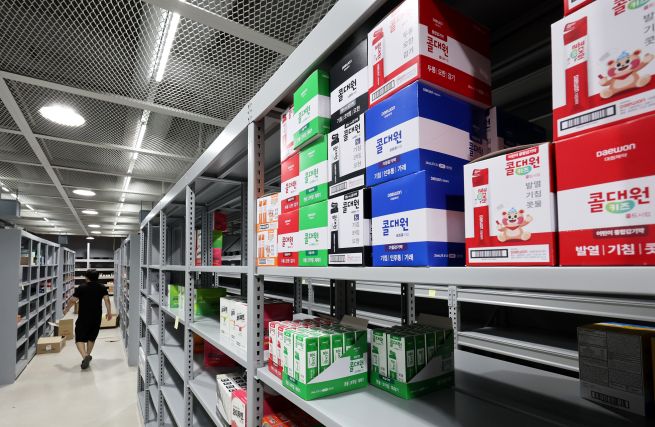
As Warehouse Pharmacies Spread, Pharmacists Warn of Drug Misuse Risks (Yonhap)
Pharmacists also warn that without personalized guidance, patients with chronic conditions could face dangerous side effects from common painkillers or allergies triggered by certain ingredients.
Consumers, however, see advantages. Bulk display and price competition promise cheaper medicines and greater convenience. “Prices vary too much from pharmacy to pharmacy.
If competition drives them down, it will be good for everyone,” said one resident of Gwangju’s Seo District. Others welcomed the chance to shop for a wider range of vitamins and supplements under one roof.
The controversy echoes earlier disputes over the sale of basic over-the-counter medicines at convenience stores in 2012, and more recently, the growth of online supplement sales.
Local governments say they cannot restrict the openings under current law but pledged close monitoring. “We will prioritize citizen safety by inspecting facilities, staffing, and compliance while seeking cooperative solutions with local pharmacist groups,” a Gwangju official said.
The debate highlights a growing tension between consumer demand for convenience and affordability and the health sector’s warnings about safety and social costs.
M. H. Lee (mhlee@koreabizwire.com)