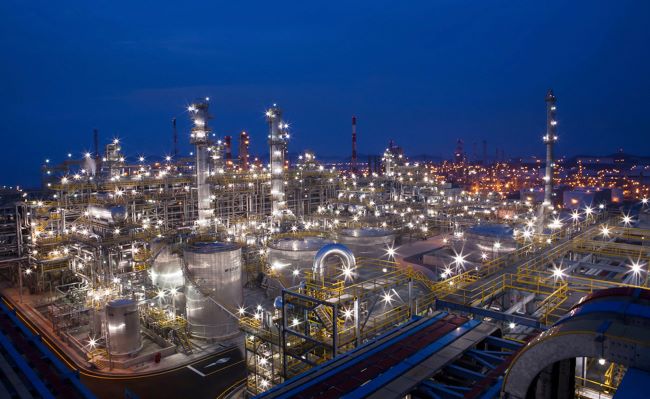
A panoramic view of the Daesan Petrochemical Industrial Complex in Seosan.(Image courtesy of Seosan city)
SEOUL, April 12 (Korea Bizwire) — As South Korea’s petrochemical sector grapples with a historic downturn, the government is expected to unveil new support measures in the coming months, following the completion of a strategic industry consulting project commissioned to address deep structural challenges.
The Korea Petrochemical Industry Association recently submitted a final report to the Ministry of Trade, Industry and Energy, based on an industry restructuring study conducted by Boston Consulting Group (BCG).
The study underscores an urgent need for reform but stops short of recommending direct government-led restructuring—raising questions about whether the proposed steps will be enough to restore long-term competitiveness.
Industry Faces Structural Headwinds Through 2030
According to the report, the downturn in Northeast Asia’s petrochemical market is expected to persist until at least 2030, with a return to a more normalized environment projected no earlier than 2035. The report warns that relying on endurance alone is no longer viable and that delaying action risks missing a critical window for optimal restructuring.
South Korea’s petrochemical exports remain heavily reliant on China, which accounted for 35% of outbound shipments as of last year. With China ramping up domestic production, Korean firms face shrinking market share alongside increased competition from low-cost producers in the U.S. and Middle East, particularly in high-volume products such as polyethylene (PE) and polypropylene (PP).
The report recommends prioritizing competitiveness in high-margin products and cost-effective facilities, with additional focus on feedstock sourcing, in-house power generation, and utility integration.
As a short-term relief measure, it proposes industrial electricity rate reductions, though implementation may prove politically and administratively complex due to fairness concerns across sectors.
In 2023, the chemical sector consumed 41,210 GWh of electricity—15.8% of total industrial usage—making energy one of the key cost burdens, especially for major producers.
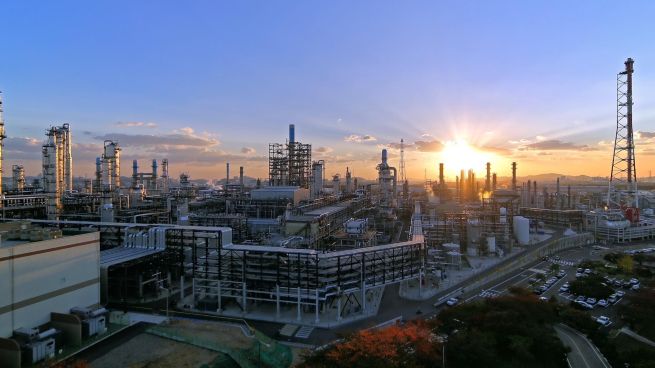
A panoramic view of SK Incheon Petrochem. (Image provided by SK Incheon Petrochem)
Call for Tax Credits, Export Support — but No Government-Led Restructuring
The report also outlines potential tax credits for R&D facilities and enhanced export support for high-value, eco-friendly products. However, it notably excludes any government-led restructuring initiatives, such as direct intervention in corporate mergers or plant closures.
While such options were discussed during the consulting process—including financial and workforce support for restructuring firms—they were ultimately excluded due to the complex interplay of corporate interests and potential social repercussions.
The absence of a government-driven roadmap drew mixed reactions, with critics pointing to Japan’s proactive approach in the 1980s as a model. Back then, Japan used temporary regulatory exemptions and joint ventures to restructure its petrochemical sector, including the formation of limited liability partnerships (LLPs) among leading firms to reduce overcapacity.
Although the LLP model was explored during Korea’s consultation, its legal feasibility under the current Fair Trade Act remains a hurdle. A government official acknowledged that regulatory reform would be required to implement such cooperative structures domestically.
Industry Already Taking Steps
Despite the policy ambiguity, some Korean firms have already moved to scale back operations. Lotte Chemical, for instance, liquidated its Malaysian synthetic rubber subsidiary in late 2024 and sold its PTA business in Pakistan earlier this year. LG Chem has shuttered several production lines for key petrochemical inputs, including styrene monomer (SM) and alcohol.
Last December, the government announced a limited support package including regulatory easing under the Act on the Promotion of Corporate Vitalization and 3 trillion won in policy finance. However, the approach has been largely reactive, favoring corporate autonomy over centralized direction.
The Ministry of Trade, Industry and Energy is expected to release follow-up measures in the first half of 2025 based on the consulting report. Whether these will include bolder, structural reforms remains to be seen.
Ashley Song (ashley@koreabizwire.com)