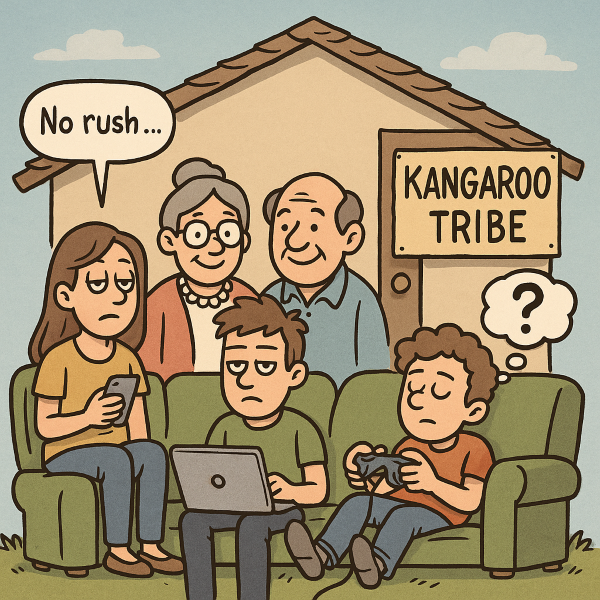
‘Kangaroo Tribe’ Youth Make Up 17% of Inactive Population, Says Labor Institute (Image supported by ChatGPT)
SEOUL, , July 8 (Korea Bizwire) — A growing number of young South Koreans are remaining out of the labor force well after graduation, many continuing to live with their parents — a phenomenon known locally as the “Kangaroo Tribe.”
A new government-funded study has found that this group accounts for nearly 17% of all economically inactive youth, and their willingness to participate in the job market is steadily declining.
According to a report released on Sunday by the Korea Labor Institute, 77% of economically inactive youth between the ages of 19 and 39 reported having no intention to seek work. An additional 22% expressed interest in employment but had not actively searched for a job in the preceding four weeks.
The analysis, based on 10 years of data from Statistics Korea’s Economically Active Population Survey (2015–2024), highlights shifting patterns in youth inactivity. While the share of young people in full-time education remained stable, those citing “resting” as their current status doubled over the past decade—from 10.5% in 2013 to 20% in 2023.
Meanwhile, the proportion of young people not working due to childrearing fell from 26.8% to 13.8% over the same period.
The report identifies three dominant demographic groups within the inactive youth population: unmarried university students living with parents (21.7%), married women living with spouses after graduation (23.9%), and unmarried graduates living with parents (16.8%). Combined, they make up around 60% of all economically inactive youth.
Critically, the share of unmarried graduates living with parents who expressed willingness to work declined from 55% in 2016 to 50% in 2024. More strikingly, the portion of this group who said they would accept a job if offered fell from 54% to just 31%.
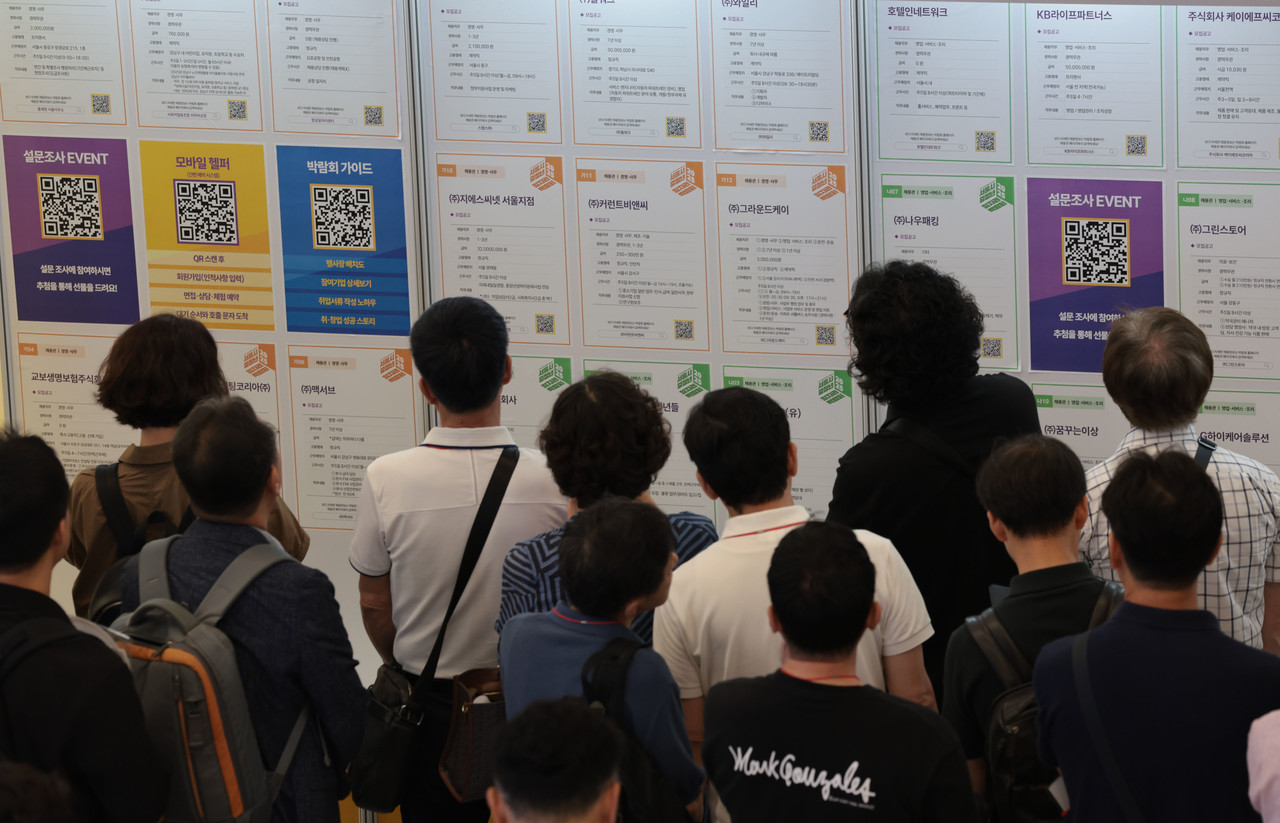
Study Shows Rising Youth Inactivity, With Majority Not Seeking Work (Image courtesy of Yonhap)
The percentage of youth with both job-seeking intent and readiness to work has plummeted from over 56% in 2015 to 31% in 2024, particularly following the COVID-19 pandemic.
The study also found that youth employment patterns tend to solidify by age 26. While many experience intermittent unemployment in their early twenties, a split emerges by the mid-to-late twenties between those who stabilize in jobs and those who drift into long-term economic inactivity. By age 28, the likelihood of transitioning between economic states diminishes significantly.
“The key issue is not simply the number of young people currently ‘resting,’ but how long their inactivity may last,” the report stated, urging the government to develop a more precise system to identify and support at-risk youth.
The findings underline the growing urgency to address the economic disengagement of a generation facing not just job scarcity, but deepening discouragement.
M. H. Lee (mhlee@koreabizwire.com)