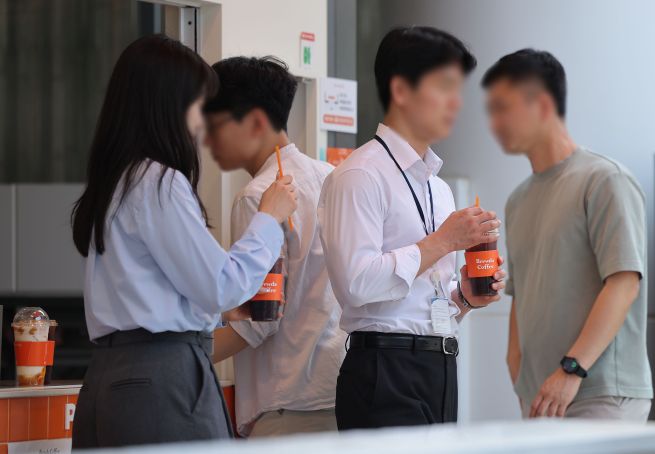
Office workers take a brief respite from the demands of labor during a coffee break. (Image courtesy of Yonhap)
SEOUL, Sept. 6 (Korea Bizwire) – In a nation often described as a “coffee republic,” South Koreans are increasingly reaching for decaffeinated brews, reshaping menus and fueling new debates about caffeine’s role in daily life.
On a busy avenue in central Seoul, a café recently advertised only decaf coffee on a large signboard — a scene emblematic of a broader shift.
Owners say orders have surged in recent months, with many regulars opting for a standard coffee in the morning and switching to decaf in the afternoon.
Decaf drinks generally cost 500 to 900 won more than their caffeinated counterparts, but operators say customers are undeterred.
The trend comes as caffeine consumption sparks controversy in workplaces. Last month, a company notice banning office coffee after 4 p.m. to “improve sleep quality” triggered an online uproar, drawing tens of thousands of views and hundreds of comments.
Some employees complained they could not stay alert without afternoon coffee, while others welcomed the measure as a step toward healthier routines.
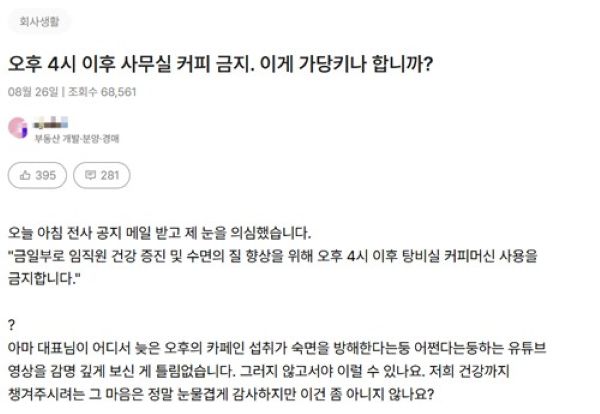
An office worker lamenting the inability to use coffee in the office after 4 p.m. ( Image from the professional community ‘Remember’)
Medical experts warn that caffeine’s effects vary by individual but typically last four to eight hours, potentially disrupting sleep when consumed after mid-afternoon.
Excess intake can also elevate heart rate and blood pressure. Yet coffee retains benefits: boosting focus, enhancing exercise endurance, and delivering antioxidants that may aid in diabetes prevention.
Decaf, which contains less than 10 milligrams of caffeine per serving compared with more than 80 in standard coffee, offers a compromise.
Demand has risen so sharply that major chains now highlight decaf options, often with a small surcharge. Starbucks even offered evening discounts on decaf and caffeine-free beverages this spring.
For many, the choice reflects both lifestyle and necessity. “More customers are coming in after health checkups telling them to cut back,” said one café operator in Jongno. “At night, they’ll ask for decaf because they can’t sleep otherwise — and they say it tastes almost the same.”
South Korea’s growing appetite for decaf underscores a broader cultural reckoning: balancing the country’s love of coffee with mounting concerns about health, rest, and work-life balance.
Lina Jang (linajang@koreabizwire.com)