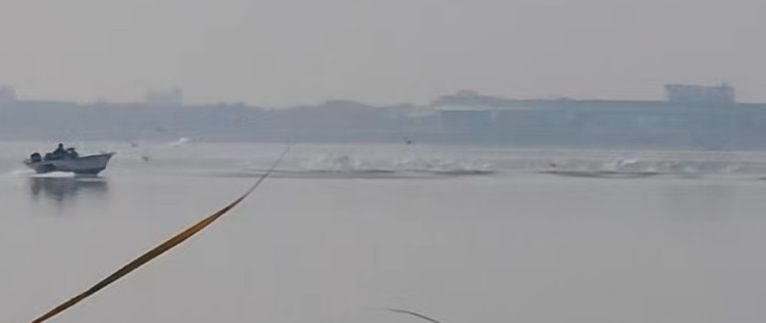
A fishing boat approaches a whooper swan at rest.
BUSAN, Dec. 2 (Korea Bizwire) — A flock of whooper swans — a protected natural monument and winter migratory species — was again seen being driven off its habitat by a fishing boat and leisure vessels in the Nakdong River estuary in Busan, a designated cultural heritage protection zone and major bird sanctuary.
According to the environmental group Wetlands & Birds KOREA, a fishing boat sped toward a resting flock near Samnak Ecological Park on Nov. 25, forcing the startled birds to flee the area. The group said the approach appeared intentional and requested a police investigation by the Gangseo Police Station.

whooper swans
While livelihood fishing boats are allowed limited access during migration season, disturbing or harassing migratory birds can constitute a violation of cultural heritage protection laws.
On Nov. 30, the group’s volunteer monitoring team also recorded multiple illegal activities, noting that water leisure sports — technically prohibited during the winter migration season — were taking place openly.
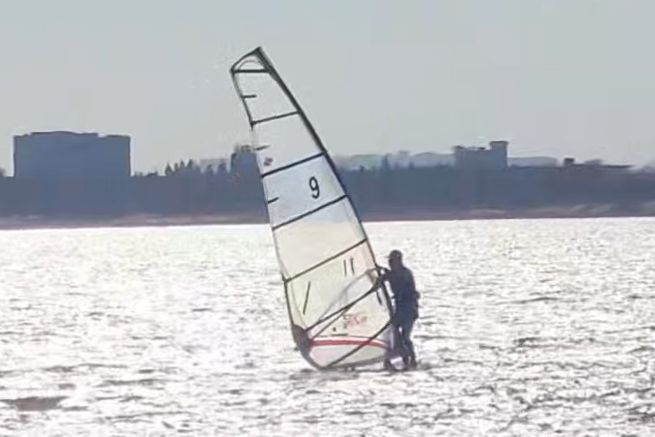
Illegal water leisure activities in the Nakdong River estuary are putting protected migratory birds, such as whooper swans, at risk.
Windsurfers and motorboats were seen operating in the estuary, with one leisure boat veering abruptly after approaching the swans’ habitat. Some birds had already fled in alarm at the noise of its engine.
Such incidents are not new; environmental groups documented similar disturbances in 2017 and 2019. Activists say the problem persists because government agencies have shown little willingness to enforce regulations, and legal frameworks governing leisure activities in cultural heritage protection areas remain poorly defined.
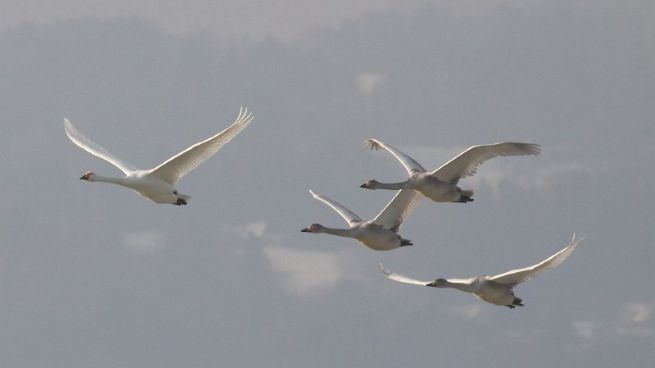
whooper swans in flight
In principle, recreational activities in these zones require authorization from the Korea Heritage Service, and local governments — which are delegated enforcement authority — are responsible for monitoring unauthorized activity. But environmental groups say enforcement capacity is virtually nonexistent.
“This has gone on for years,” a Friends of Wetlands and Birds representative said. “There is effectively an administrative vacuum — no officials monitoring, guiding, or enforcing rules against these illegal activities.”
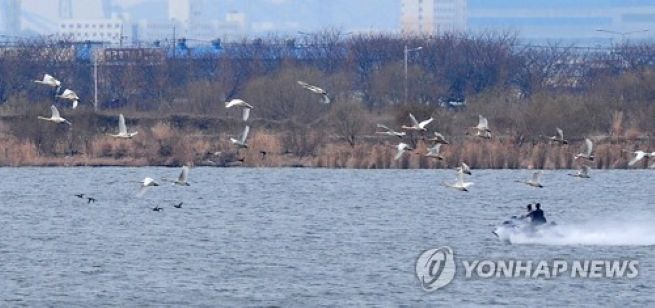
Water leisure boats chasing away whooper swans
Image credit: Wetlands & Birds KOREA, Korea Heritage Service, Wikimedia Commons, Yonhap / photonews@koreabizwire.com