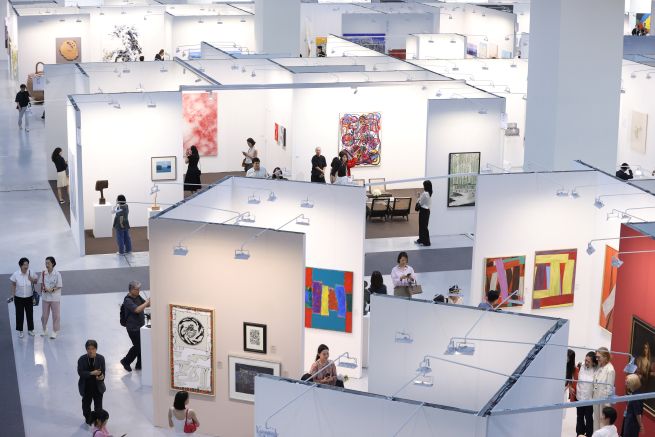
KIAF Seoul 2025 (Image courtesy of Yonhap)
SEOUL, Dec. 29 (Korea Bizwire) — South Korea’s art market is expected to close 2025 still mired in a prolonged slump, as weak consumer sentiment continues to weigh on galleries and art fairs, according to a new industry survey.
A year-end report released by the Arts Management Support Center found that nearly half of art market participants said their sales declined from a year earlier, while just under 10 percent reported growth.
The survey, conducted among 154 galleries, art fairs and related businesses, suggests that the downturn has been especially severe for smaller operators: more than half of those reporting falling sales recorded annual revenues of under 100 million won (about $75,000).
Respondents overwhelmingly cited the broader economic slowdown and subdued consumer spending as the main reasons for weaker performance.
Looking ahead, expectations remain cautious, with a majority forecasting flat sales next year and more than a quarter anticipating further declines, again pointing to lingering macroeconomic headwinds.
The report also highlights a structural shift in the market. Transactions are increasingly concentrated in lower-priced, smaller works, while demand for high-end pieces has softened.
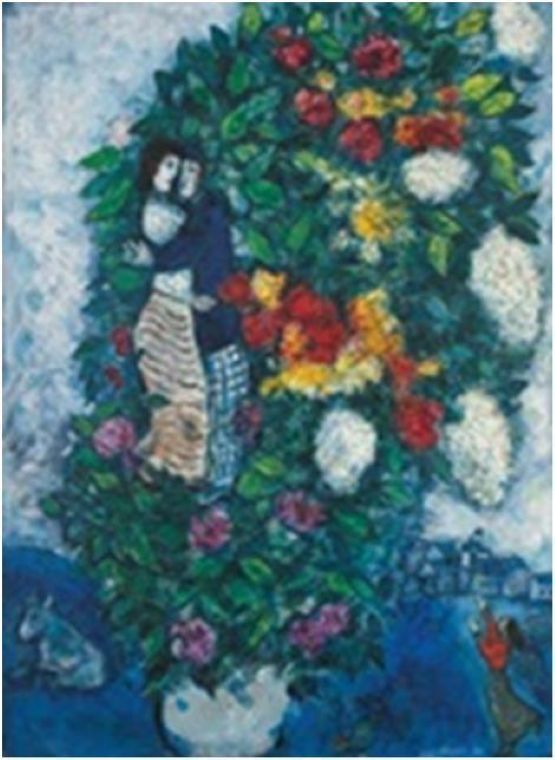
Marc Chagall’s Bouquet de Fleurs (Image courtesy of Seoul Auction).
South Korea’s total art transaction value peaked in 2022 before sliding to 615.1 billion won in 2024, underscoring the depth of the downturn.
Yet amid the broader malaise, the auction market has shown tentative signs of recovery. Combined sales at eight domestic auction houses rose 16.6 percent year on year through November, marking the first increase in four years, even as the number of lots sold fell sharply.
Fewer works changed hands, but at higher average prices, driven by blockbuster sales of blue-chip pieces.
This year saw eight artworks sell for more than 10 billion won, including a Marc Chagall painting that fetched a record 9.4 billion won at auction in Korea. Analysts caution, however, that many of these sales occurred near the lower end of estimated price ranges, suggesting collectors remain selective and risk-averse.
“The auction market often leads broader trends, so this could be an early signal of stabilization,” said Kim Sang-hoon, a professor at Seoul National University and president of the Korean Association for Arts Management.
Others warn that a sustained recovery will depend on whether improved auction results translate into wider confidence across the art market in the coming year.
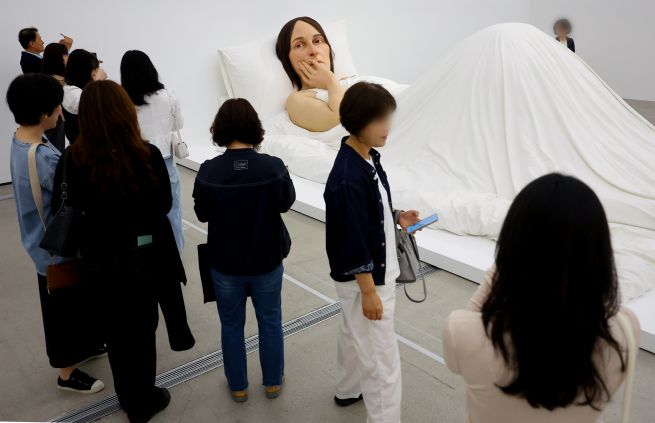
The Ron Mueck solo exhibition held at the National Museum of Modern and Contemporary Art. (Yonhap)
Lina Jang (linajang@koreabizwire.com)