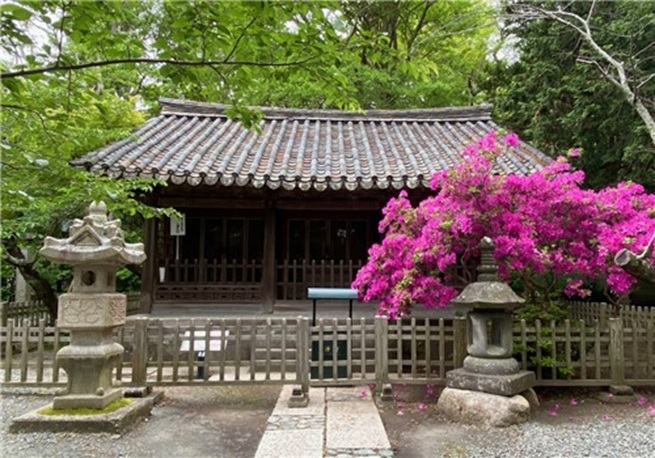
This image, provided by the Korea Heritage Service, shows Gwanwoldang in Kotoku-in, a Buddhist temple in Kamakura, Japan, before it was disassembled. (Yonhap)
SEOUL, June 24 (Korea Bizwire) — Nearly a century after it was taken to Japan, a wooden building believed to be a royal shrine from the Joseon Dynasty has returned to its homeland—marking an unprecedented moment in Korea’s effort to reclaim its cultural heritage.
The Korea Heritage Service (KHS) and the Overseas Korean Cultural Heritage Foundation confirmed Tuesday that Gwanwoldang, a traditional structure dating back to the late 18th or early 19th century, has been officially repatriated from Japan’s Kotoku-in Temple in Kamakura. The announcement followed a formal agreement reached just one day earlier with the Buddhist temple.
At the heart of the return is Takao Sato, the chief priest of Kotoku-in, who made the personal decision that the shrine rightfully belonged in Korea. Sato not only initiated the repatriation but also paid for the dismantling and transport of the shrine’s components. His gesture included plans to create a dedicated fund to support future research in cooperation with the Korean foundation.
“This shrine held meaning for us for the past 100 years,” Sato said, “but I hope it now regains its original value in its rightful place in Korea.”
This marks the first time an entire Korean architectural structure located overseas has been returned intact. The last notable case occurred in 1995, when 110 tons of stone fragments from Jaseondang Hall of Gyeongbok Palace were retrieved from the garden of Tokyo’s Okura Hotel. But those were pieces—cornerstones and stylobates. Gwanwoldang is different. It is whole.
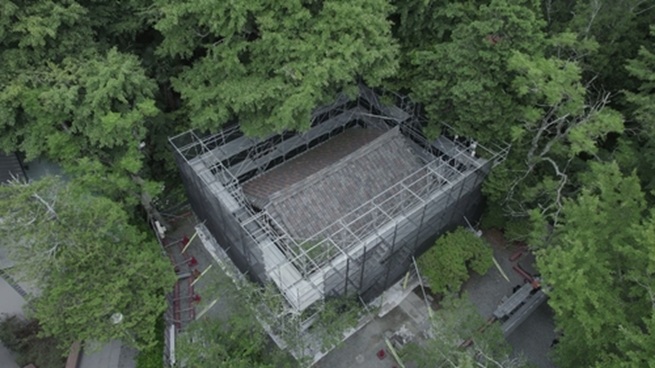
This image, provided by the Korea Heritage Service, shows Gwanwoldang in Kotoku-in, a Buddhist temple in Kamakura, Japan, after it was partly disassembled. (Yonhap)
The building, modest in scale but rich in detail, spans three bays in width and is adorned with signature Joseon-era design elements: roof tiles featuring dragons, spider webs, and bats—motifs traditionally symbolic of protection, wisdom, and fortune. Experts believe it may have served as a private shrine for a grand prince or royal family member.
How the building ended up in Japan tells a familiar story of Korea’s colonial past. In 1924, the Joseon Siksan Bank, a financial institution under Japanese rule, transferred the structure to Kisei Sugino, the first president of Yamaichi Securities. Sugino later donated it to Kotoku-in, where it was likely repurposed as a prayer hall. Over the decades, subtle modifications were made to its structure to accommodate its new setting.
Now safely back on Korean soil, the dismantled pieces of Gwanwoldang are being housed at the Korea Foundation for Traditional Architecture and Technology in Paju, just north of Seoul. Restoration work will soon begin, accompanied by further research into its original name, location, and the royals it once served.
“This is more than a physical return,” said Choi Eung-chon, head of the Korea Heritage Service. “It is a powerful expression of cultural respect and empathy. We hope Gwanwoldang becomes a symbol of solidarity and forward-looking cooperation between Korea and Japan.”
As the carved beams and roof tiles of Gwanwoldang await reassembly, they carry not only the legacy of Joseon craftsmanship but also the promise of a new chapter—where historical reckoning and cross-cultural understanding can coexist, one building at a time.
Lina Jang (linajang@koreabizwire.com)