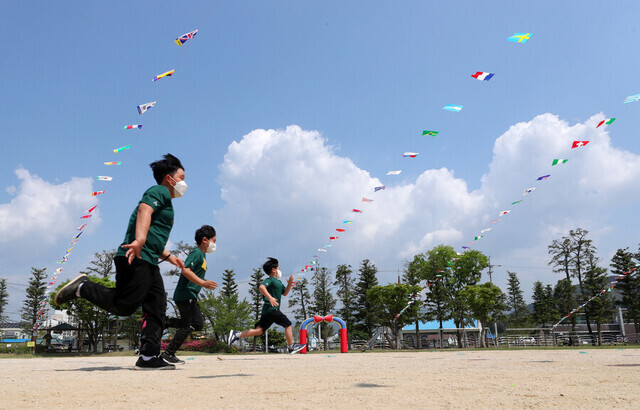
Children wearing face masks take part in physical activities at an elementary school in Chuncheon, Gangwon Province, in May 2022. (Yonhap)
SEOUL, Dec. 24 (Korea Bizwire) — Replacing screen time with traditional outdoor games has led to measurable improvements in weight and eating habits among South Korean elementary school students, according to government data released Tuesday.
The Ministry of Health and Welfare and the Korea Health Promotion Institute said the “Healthy Care Playground” program, designed to promote physical activity and nutrition among younger elementary students, produced notable gains in 2025. The initiative encourages children to engage in active play such as tag and kickball instead of spending time on smartphones and other digital devices.
An analysis of 5,200 students who completed both physical measurements and surveys showed that the share classified as overweight or obese fell to 26.7 percent, down 2.2 percentage points from last year. Average body mass index also edged lower, declining to 17.54 from 17.58.
Behavioral changes were more pronounced. The proportion of children exercising for at least an hour a day rose by 10.7 percentage points, while the share spending more than an hour a day on smartphones or other smart devices fell sharply, to 41.4 percent from 50.1 percent.
Dietary habits improved as well. A composite “healthy eating score,” which tracks consumption of fruits, vegetables, dairy products and healthier snacks, rose to 80 out of 100 from 74.2, suggesting that children were translating play-based nutrition lessons into daily practice.
The program was introduced as childhood obesity rates climbed alongside rising television viewing and smartphone use. Of the 8,800 children who participated nationwide this year, officials said the results demonstrate that structured, play-centered interventions can help reverse those trends.
Kim Heon-ju, head of the health promotion institute, said the government plans to expand and revise the program’s materials so they can be used through the upper elementary grades, with updated resources to be distributed in the first half of next year.
Lina Jang (linajang@koreabizwire.com)