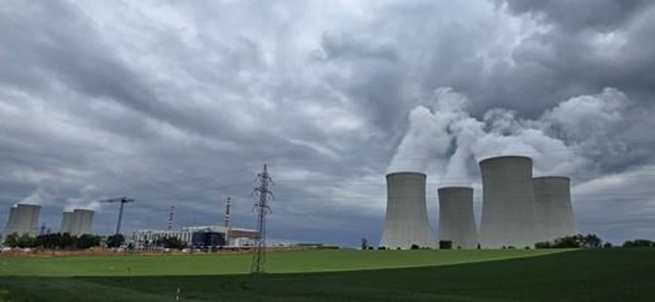
This file photo, taken May 6, 2025, shows the Dukovany nuclear power plant, located about 170 kilometers southeast of Prague. (Yonhap)
PRAGUE/SEOUL, June 4 (Korea Bizwire) — It was a deal nearly derailed by courtroom drama — but now, South Korea is officially back on the global nuclear stage.
Following a months-long legal impasse, Korea Hydro & Nuclear Power Co. (KHNP), South Korea’s state-run nuclear energy firm, has signed a final agreement to build two nuclear reactors in the Czech Republic — a multibillion-dollar milestone marking the country’s first overseas nuclear contract in over 15 years.
Czech Prime Minister Petr Fiala confirmed this week that KHNP and the Czech state-controlled company Elektrarna Dukovany II (EDU II) formally inked the deal after the Czech Supreme Administrative Court overturned a lower court’s injunction that had blocked the finalization of the contract. The ruling cleared the way for South Korea to deliver on a long-anticipated promise: exporting its advanced nuclear technology to Europe.
The project — valued at approximately 26 trillion won ($18.6 billion) — involves the construction of two 1,063-megawatt reactors at the Dukovany nuclear power plant, located some 170 kilometers southeast of Prague.
KHNP had originally planned to sign the agreement on May 7, but proceedings were halted when French energy giant EDF, a losing bidder in the Czech government’s tender, requested an injunction. A local court granted the request, pausing the final stages of the contract until EDU II successfully appealed the decision last month.
For South Korea, the deal is more than just a commercial win. It is the first such international nuclear contract since 2009, when KHNP secured the landmark Barakah nuclear project in the United Arab Emirates. Coming at a time when nuclear energy is regaining global interest as a low-carbon power source, the Czech deal offers a strategic foothold for Korea in Europe’s energy transition landscape.
With the ink now dry, the focus shifts from legal hurdles to engineering timelines — and to South Korea’s ambitions of becoming a nuclear export powerhouse once again.
M. H. Lee (mhlee@koreabizwire.com)