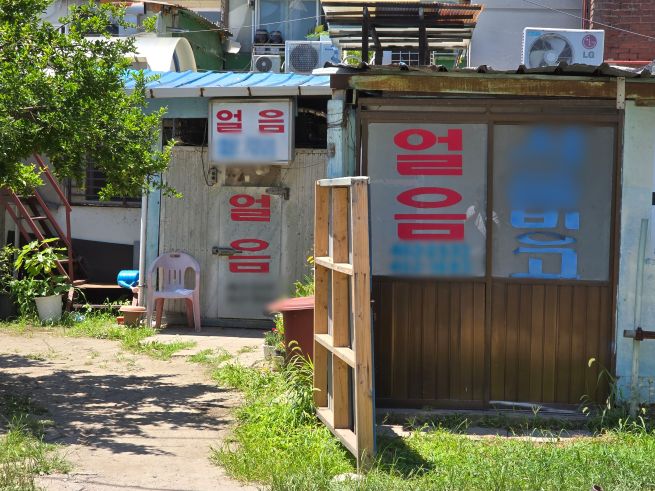
Yoon’s (88) ice shop located at the entrance of Ttukdo Market in Seongdong District, Seoul (Photo courtesy of Choi Won-jeong, Yonhap News)
SEOUL, July 14 (Korea Bizwire) — In a narrow alleyway of Ttukdo Market, as a heatwave grips the city, 88-year-old Yoon loads bags of ice onto his scooter. For over five decades, he’s been running one of Seoul’s last remaining traditional ice shops — and now, he may be the very last.
Once a thriving business with over a dozen ice vendors in the neighborhood, Yoon’s small store — no larger than half a pyeong (about 1.6 square meters) — is all that remains. “You won’t find another ice shop like this in Seoul anymore,” he says with a faint smile. “Who would take on a job like this when even the rent is hard to cover?”
Since the early 1970s, Yoon has served market vendors and local businesses, delivering ice by motorbike from dawn to late evening — even on holidays. On a recent afternoon, he had already delivered 30 kilograms of edible ice to three cafés in nearby Seongsu-dong. Most of his customers, he says, are small businesses that have run out of ice unexpectedly or whose machines have broken down.
The 1970s were the golden era of ice retailing in Korea. Back then, more than 30 ice factories in Seoul produced over 1,000 tons daily, supplying some 900 retail outlets — yet demand still exceeded supply. At the height of summer, the term “ice panic” wasn’t uncommon.
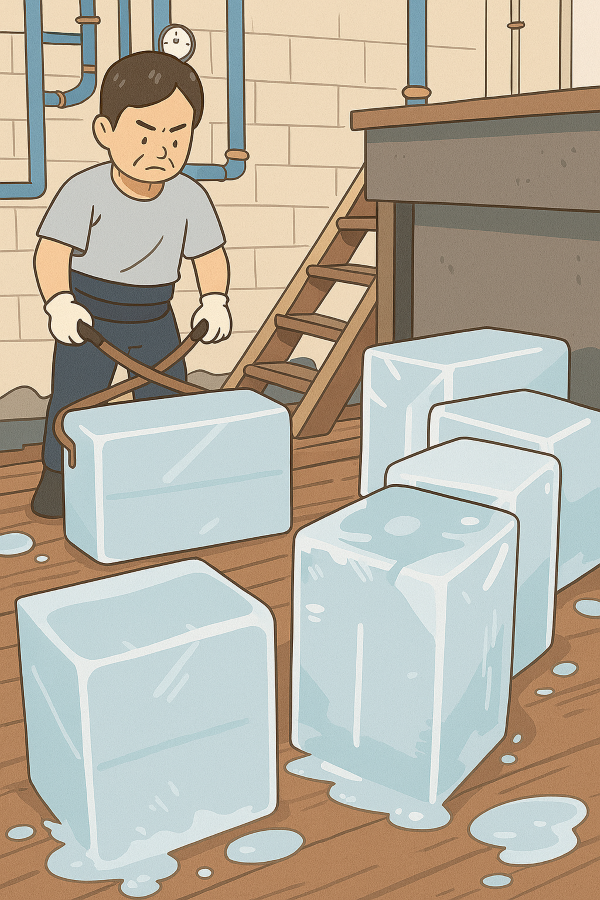
Legacy of Ice Retailers Melts Away in Seoul’s Modern Marketplace (Image supported by ChatGPT)
“During the boom years, I even drove to a factory in Uljin and sold five truckloads of ice a day,” Yoon recalled. “Now look at this—business is so quiet. It’s like a different world.”
The local ice trade began its slow decline in the 1990s as refrigeration technology improved and household ice makers became widespread. According to the Korea Small Enterprise and Market Service, only 23 ice retailers remained in Seoul as of March this year — and a number of them have since shuttered.
Jo, 66, who runs a similar shop in Majang-dong’s meat market, says his revenue has dropped to one-fifth of what it was two decades ago. “This used to be the busiest cattle market in Korea, but now there’s not even foot traffic,” he laments.
Yoon sells a 25-kilogram bag of ice for 5,000 won (about $3.60), with a modest 35 percent profit margin. After subtracting rent and overhead, he barely breaks even — and with little to no slaughtering on Fridays, he effectively works only four days a week.
Despite the dwindling income and rising age, both Yoon and Jo say it’s not easy to walk away. There’s no one to carry on the trade, and they feel a deep sense of responsibility to their loyal customers.
“I make about the same in four days as most people do in a day. How could a young person live on that?” Jo says. “I’ve thought about quitting for years, but I’ll keep going as long as I can.”
When asked if the work has become too hard, Yoon simply smiled. “It’s all I know — like a thief who only knows how to steal,” he joked. “I should probably quit soon, but if I do, who will run a shop like this again? I keep going because I know some customers would miss it.”
Lina Jang (linajang@koreabizwire.com)