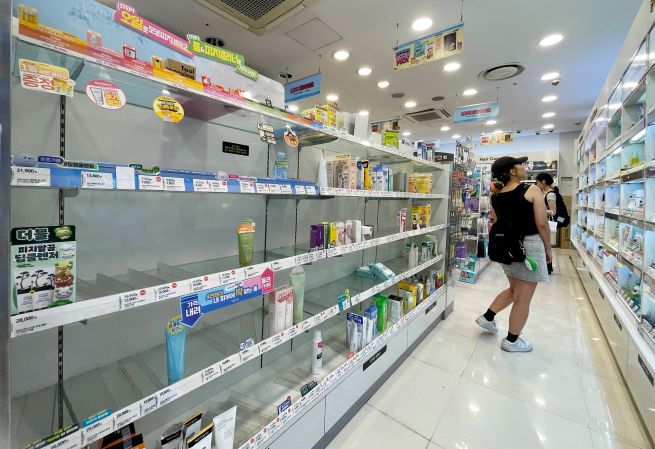
On July 27, the display shelves at an Olive Young store in Seoul, one of the retailers accepting the “Livelihood Recovery Consumption Coupons,” are seen empty. (Yonhap)
SEOUL, July 30 (Korea Bizwire) — South Korea’s credit card spending rose sharply in the second quarter of 2025, buoyed by recovering consumer sentiment and optimism over potential economic stimulus measures in the second half of the year.
According to data released Wednesday by the Credit Finance Association, total card-approved transactions reached 313 trillion won ($242 billion) in Q2, marking a 3.7% increase year-over-year. The number of transactions also rose 1.7% to 7.51 billion cases.
The growth in spending outpaced the 3.3% increase recorded both in the second quarter of last year and the first quarter of this year.
The association attributed the upswing to eased domestic uncertainties, rising expectations for economic stimulus, and improved consumer confidence. Additionally, a rise in new car sales and stronger corporate earnings contributed to the overall increase in card usage.
By card type, corporate card spending climbed 5.9% to 58.3 trillion won, while personal card spending grew 3.3% to 254.8 trillion won—rebounding after dipping into the 2% range over the previous two quarters.
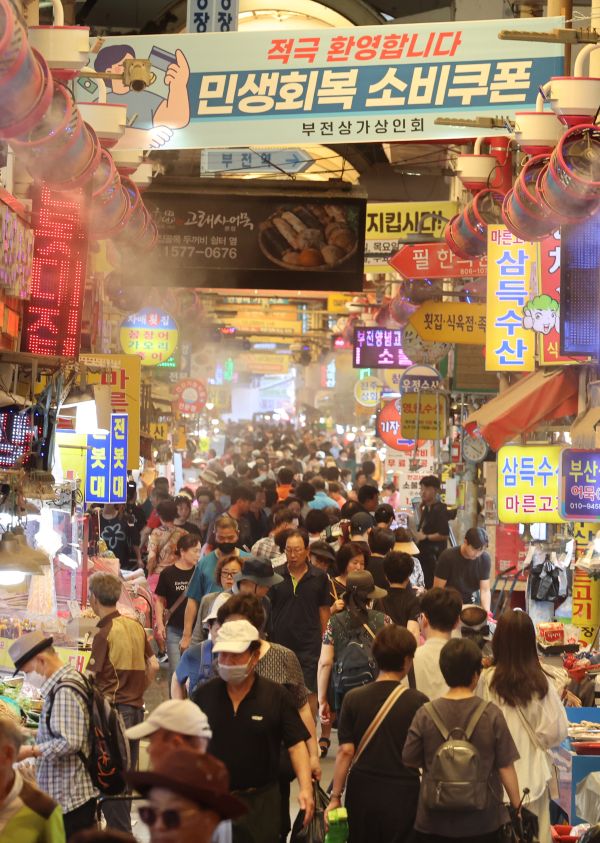
On July 30, during the sweltering heat of Jungbok (the second of Korea’s three hottest summer days), a banner reading “Welcome Livelihood Recovery Consumption Coupons,” along with cooling mist, greets visitors at Bujeon Market in Busanjin District, Busan. (Yonhap)
Among sectors, healthcare and social welfare services posted the highest growth, up 9.4%, driven by increased hospital and clinic visits. Education services (3.5%) and personal and repair services (2.3%) also saw moderate gains.
However, transportation and hospitality sectors experienced a decline, with both air travel-related services and lodging/food services down 2.6%, reflecting a cooling in post-pandemic travel-related spending.
The data suggest a cautious yet notable recovery in consumer activity as South Korea looks to bolster growth amid lingering economic challenges.
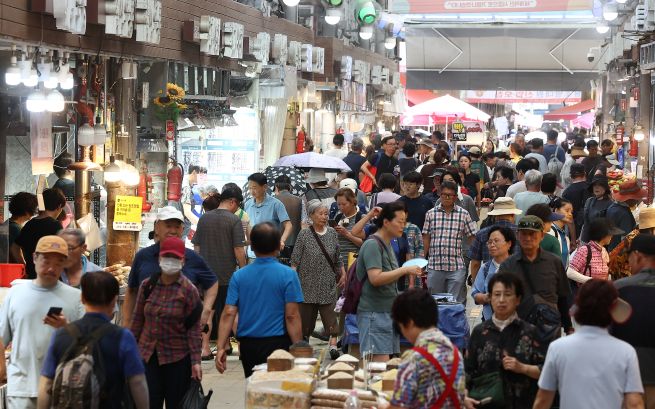
On July 27, the first weekend following the distribution of livelihood recovery consumption coupons, a sign indicating that coupons are accepted is posted at a shop in Cheongnyangni General Market, Dongdaemun District, Seoul. (Yonhap)
Ashley Song (ashley@koreabizwire.com)