

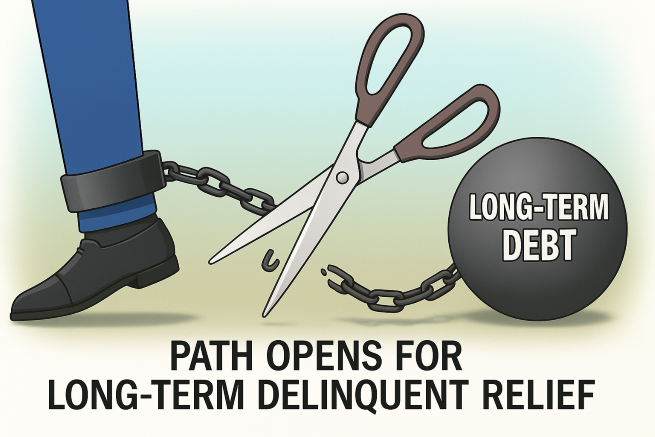
Millions of Koreans Get Lifeline as Government Launches Debt Relief Program (Image supported by ChatGPT)
Government Kicks Off “New Leap Fund” to Wipe Out Old Debts for Over 1 Million Borrowers
SEOUL, Oct. 8 (Korea Bizwire) — The South Korean government has launched a new debt relief initiative aimed at helping long-term defaulters rebuild their financial lives, but officials face a key hurdle in securing cooperation from private lenders that hold a sizable share of delinquent loans.
The “New Leap Fund,” officially launched this month, will purchase and either write off or restructure delinquent debts of up to 50 million won ($36,000) that have been overdue for seven years or longer. The fund expects to clear or adjust 16.4 trillion won in debt, benefiting an estimated 1.13 million people.
Under the program, borrowers deemed unable to repay their debts after income and asset reviews will have their obligations fully canceled. The fund’s total contribution of 440 billion won will come mainly from the banking sector, which will shoulder 3.6 trillion won, or about 80 percent of the total.
Insurers will contribute 400 billion won, credit card and lending companies 300 billion won, and savings banks 100 billion won.
The fund plans to begin purchasing eligible debts from public institutions and financial companies in stages this month. However, roughly 2 trillion won of the debt is held by private lending firms—around a quarter of the total eligible amount—making their participation crucial to the program’s success.
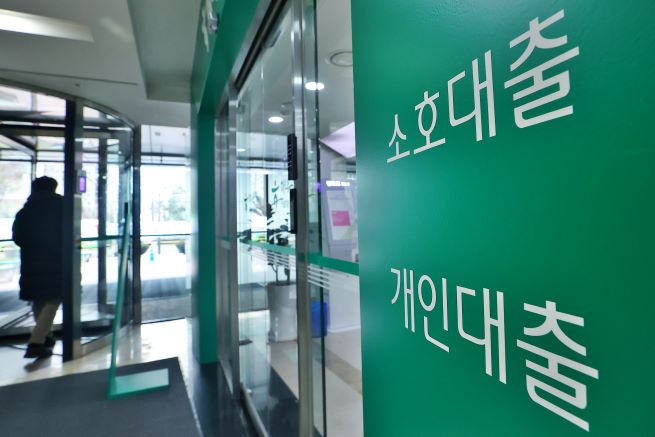
A Loan Information Notice at a Bank in Seoul (Yonhap)
A Second Chance for the Indebted: Korea’s “New Leap Fund” Offers Fresh Hope
Because many private lenders operate as individual businesses, rather than regulated corporations, officials worry the buyback process could face delays. Industry representatives also argue that the government’s proposed purchase prices are too low.
“You can’t force these firms to sell,” one lending industry source said. “There need to be stronger incentives—such as easier access to bank financing or expanded participation in other debt programs.”
The initiative has also drawn criticism over potential moral hazard and perceptions of unfairness among borrowers who have consistently repaid their debts. To address this, the government plans strict eligibility screening and will exclude debts tied to gambling, nightlife businesses, or foreign borrowers.
The Financial Services Commission (FSC) said the effort is designed to provide “a social restart mechanism,” acknowledging that “anyone can fall into long-term delinquency.”
Experts stress that debt forgiveness alone will not ensure lasting recovery. The FSC said it will link fund beneficiaries with job placement and welfare services to support long-term rehabilitation.
“Tailored support for younger debtors with longer working lives is essential if this program is to achieve real economic impact,” said Kim Jung-sik, an economics professor at Yonsei University. “The system must be structured to minimize moral hazard while turning debt relief into renewed economic participation.”
M. H. Lee (mhlee@koreabizwire.com)


Why do I feel half of the story is missing? Do add an overview of the decisive facts in this matter: the various previous loan debt and credit card cancellations granted over the past 50yrs in Korea. It would be interesting to see how people fared then after debt relief; and what percentage are repeat offenders. Also needed is information on what kind of debts are causing people to fall into payment delinquency: self-employment/business owners, consumption/shopping, addictions (gambling, substance abuse), medical costs for self/relatives, debts inherited from family members deceased or missing, debts through extortion by family/acquaintances/religious sects, etc.