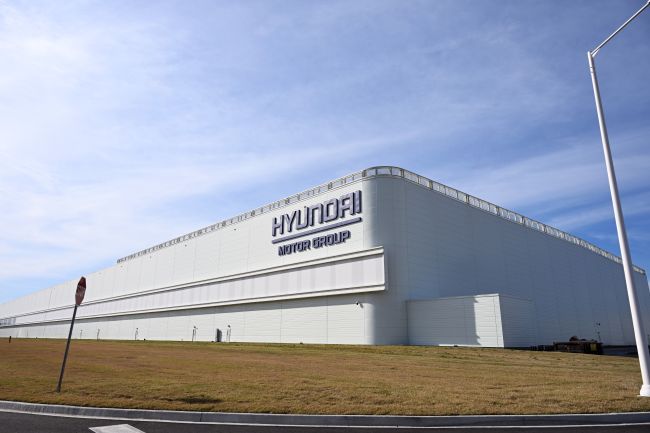
Hyundai Motor Group Metaplant America (HMGMA) located in Ellabell, Savannah, Georgia, USA. (Image courtesy of Hyundai Motor)
SEOUL, Sept. 15 (Korea Bizwire) — Hyundai Motor Group is grappling with twin challenges in the U.S. market: the imminent end of federal tax credits for electric vehicles and a delay in the completion of its joint battery plant with LG Energy Solution.
The Biden administration’s Inflation Reduction Act incentives, which offered up to $7,500 in tax credits per EV, are set to expire on September 30. Analysts warn the move could sap demand and slow supply chain investments across the U.S. EV sector.
Compounding the challenge, a $4.3 billion Hyundai–LG battery plant in Georgia has been forced to push back its launch by at least two to three months after a federal immigration raid disrupted construction. The facility was expected to start supplying lithium-ion cells next year.
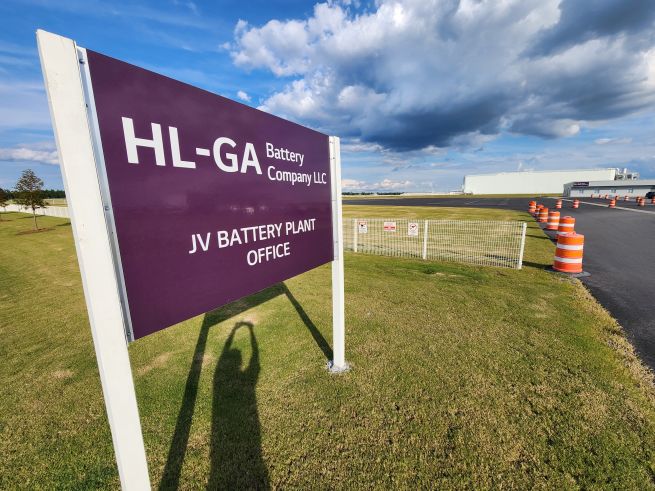
The construction site of the Hyundai Motor–LG Energy Solution battery plant in Ellabell, Bryan County, Georgia, on September 11 (local time). The site has remained deserted since construction was halted following a Department of Homeland Security crackdown on undocumented workers on September 4. (Yonhap)
Hyundai and Kia are now leaning on hybrid vehicles to fill the gap. U.S. sales of their hybrids jumped nearly 48 percent year-on-year in the first eight months of 2025, reaching almost 200,000 units. But the vast majority of these cars are exported from South Korea, leaving them exposed to a steep 25 percent import tariff.
That tariff burden could grow more costly as Japan, Hyundai’s biggest hybrid rival in the U.S., prepares to secure a reduced 15 percent tariff under its trade terms with Washington. Toyota and Honda already dominate the U.S. hybrid market with a combined 68 percent share, while Hyundai and Kia trail at 12.3 percent.
Industry analysts warn the risk of a price reversal is real: Kia’s Sportage Hybrid, priced at $30,290, could overtake Toyota’s $32,850 RAV4 Hybrid if tariffs raise its sticker price to nearly $38,000, leaving Hyundai at a competitive disadvantage.
Hyundai is expected to outline a revised North America hybrid strategy at its upcoming CEO Investor Day. Market watchers say the company must emphasize durability, parts distribution, and service networks to reassure investors — and to fend off Japanese rivals poised to consolidate their lead in a post-subsidy market.
Kevin Lee (kevinlee@koreabizwire.com)