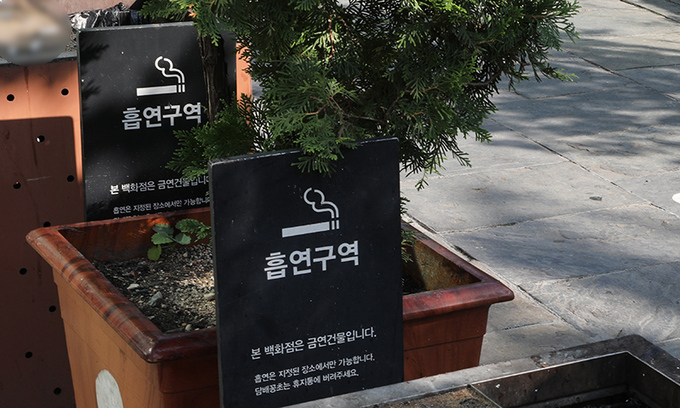
A view of a designated smoking area in downtown Seoul. (Yonhap)
SEOUL, Jan. 16 (Korea Bizwire) — South Korea’s National Health Insurance Service (NHIS) has again lost a high-profile lawsuit seeking damages from tobacco companies, as an appellate court rejected its claim that cigarette makers should reimburse public health costs linked to smoking-related diseases.
In a ruling handed down Thursday, the Seoul High Court upheld a lower court decision dismissing the NHIS’s damages suit against KT&G, Philip Morris Korea and BAT Korea. The case, filed in 2014, sought 53.3 billion won (about $40 million) in medical costs the insurer paid for 3,465 patients diagnosed with lung or laryngeal cancer after decades of heavy smoking.
The court concluded that while statistical studies show a strong correlation between smoking and cancer, such epidemiological evidence is insufficient to establish a direct, individualized causal link between smoking and disease in specific patients.
It also ruled that the NHIS’s medical payments were made as part of its statutory obligation under the national insurance system, not as damages arising from unlawful conduct by tobacco companies.
The decision marks the second straight defeat for the insurer after a similar loss at the trial court level, and follows a long line of unsuccessful tobacco-related lawsuits in South Korea.
Courts have consistently held that cancers are “non-specific diseases” influenced by multiple factors, including genetics and lifestyle, making it difficult to assign legal responsibility to cigarette manufacturers.
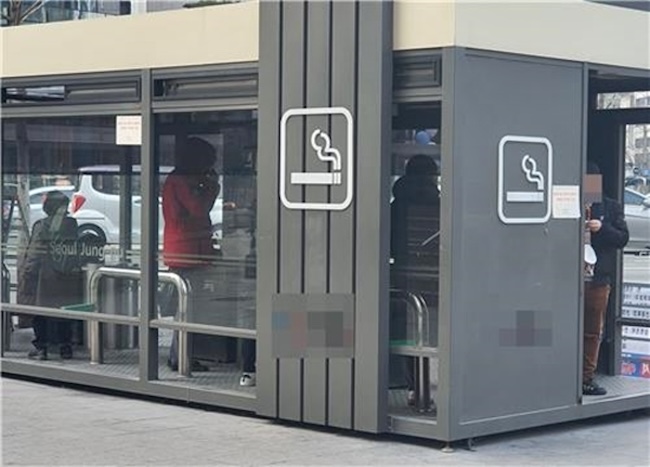
Users of electronic cigarettes exhibit weaker intentions to quit smoking compared to traditional cigarette users. (Image courtesy of Yonhap)
The ruling contrasts sharply with outcomes overseas. In the United States, a wave of litigation in the 1990s—sparked by the disclosure of internal industry documents—led to a landmark 1998 settlement under which major tobacco companies agreed to pay U.S. states more than $200 billion over 25 years.
Canadian courts have also approved massive compensation settlements, including a court-sanctioned agreement last year totaling 32.5 billion Canadian dollars.
The NHIS criticized the ruling as overly cautious and said it was reviewing whether to appeal to the Supreme Court. “This case shows the limits of resolving smoking-related harm through the courts alone,” the insurer said in a statement, arguing that tobacco-related illnesses continue to impose a heavy financial burden on the public health system.
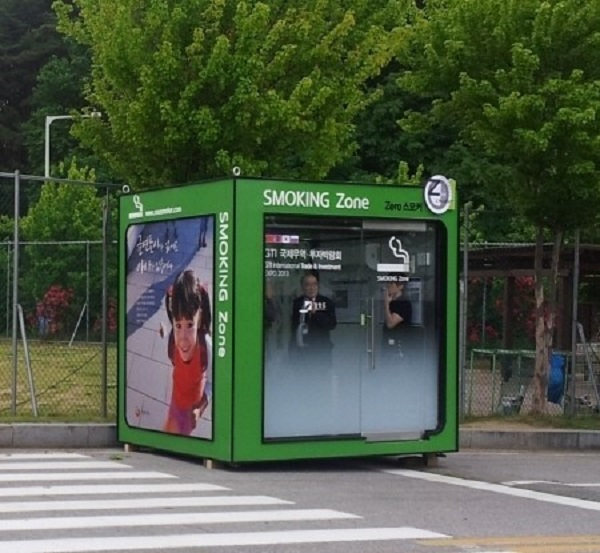
A smoking booth installed in Euljiro, Seoul (Photo courtesy of Seoul Metropolitan Government).
NHIS President Jung Ki-seok said the decision reflected a widening gap between medical science and legal standards. “Smoking may not cause cancer in every case, but it is a scientific fact that it dramatically increases the risk,” he said, noting that smoking-related diseases account for nearly 4 trillion won a year in insurance payouts.
With the insurer signaling a possible appeal and citing foreign precedents, the legal battle over tobacco liability in South Korea appears far from over, even as domestic courts continue to set a high bar for proving causation and corporate responsibility.
M. H. Lee (mhlee@koreabizwire.com)