

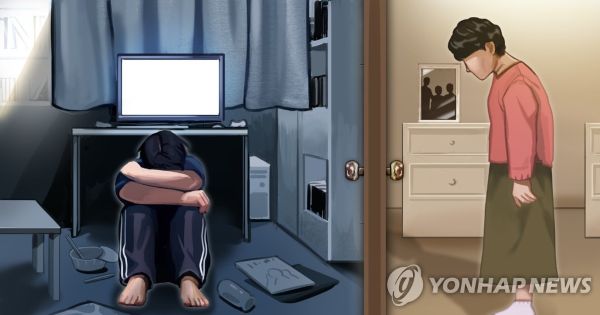
Nearly 1 in 20 South Koreans Classified as Socially Isolated, New Data Show
SEOUL, Dec. 29 (Korea Bizwire) — Nearly one in 20 South Koreans has limited monthly social interaction through mobile communications, highlighting a growing segment of the population at risk of social isolation, according to a government-backed data analysis released on Monday.
The findings, published by the National Data Agency, mark the first nationwide statistical attempt to quantify so-called socially isolated individuals, often referred to as “reclusive” or “low-interaction” groups.
The study analyzed anonymized telecommunications, credit card, credit bureau and television usage data from the first quarter of 2025, combining public and private datasets.
About 4.9 percent of the population fell into the “low-interaction” category, defined as having fewer than 20 people contacted or fewer than 500 outgoing calls or messages per month. On average, individuals in this group communicated with just 11 people a month, roughly one-fifth of the national average.
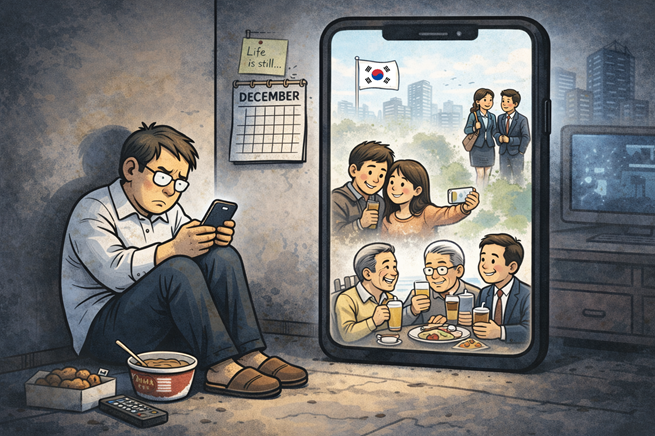
New Analysis Finds Millions in South Korea Have Limited Social Contact (Image supported by ChatGPT)
Only 26 percent of this group was engaged in economic activity, far below the national average of 64 percent, with a higher share working as day laborers or self-employed rather than in stable, full-time jobs.
Their average monthly card spending stood at about 646,000 won, concentrated largely in retail purchases, while social activity outside the home was minimal.
The study also identified a sizable financially excluded population. Roughly 13 percent of adults had no credit card or loan history over the past three years, classifying them as “thin filers.”
Women and residents outside the Seoul metropolitan area were more likely to fall into this category. While their social interaction levels were higher than those of the socially isolated group, their access to formal financial services remained limited.
At the same time, the data underscored the persistence of labor participation among older South Koreans. More than 43 percent of people aged 65 and older were still economically active, including over 20 percent of those aged 80 and above.
Despite their continued participation in the workforce, older adults spent significantly more time watching television than younger generations, reflecting differences in daily routines and social engagement.
Younger adults, aged 19 to 34, showed the highest levels of employment, mobility and social interaction, but spent less time on traditional media such as television.
Officials said the analysis could provide a foundation for more targeted social welfare and inclusion policies, particularly as South Korea grapples with rapid aging, shifting household structures and rising concerns over loneliness and social disconnection.
“This study offers an empirical basis for identifying vulnerable groups that may otherwise remain invisible,” a National Data Agency official said, adding that the findings could help shape future social and economic policy interventions.
Lina Jang (linajang@koreabizwire.com)




Um, “defined as having fewer than 20 people contacted or fewer than 500 outgoing calls or messages per month” …20 ple? including colleagues, family, and the neighbours, all do not amount to 20; and 500 msg/txts a month is 16 per day: how?… Guess I am a social recluse as well, then ㅎㅎㅎ.