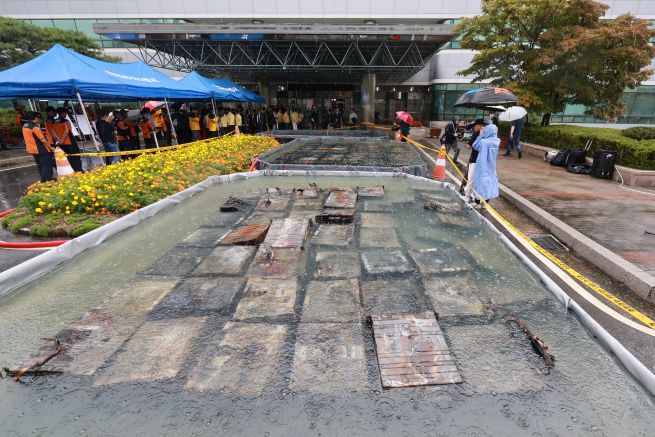
A lithium-ion battery burned in the Sept. 28 fire at the National Information Resources Service in Yuseong District, Daejeon, is seen placed in a fire suppression water tank. (Yonhap)
SEOUL, Sept. 30 (Korea Bizwire) — The fire that crippled South Korea’s National Information Resources Service last week is being traced to an aging lithium-ion battery, sharpening scrutiny of the country’s battery sector at a time when the industry is already grappling with slowing electric vehicle demand, expiring U.S. subsidies and intensifying competition from China.
Authorities said the Sept. 26 blaze at the Daejeon data center erupted as 13 workers were moving uninterruptible power supply (UPS) batteries underground. One lithium-ion unit, supplied in 2014 using cells from LG Energy Solution, caught fire more than a decade into service—past its recommended 10-year lifespan and out of warranty. The model had no prior fire record and passed a safety inspection as recently as June, officials said.
Industry insiders insist the cause was more likely mishandling than a fundamental flaw. Lithium batteries, they noted, face elevated risks once they exceed their service life. LG CNS had previously advised replacing the unit last year, but the government agency kept it in use after inspections showed no irregularities.
With few viable alternatives, lithium-ion batteries remain the backbone of South Korea’s push into energy storage systems (ESS), seen as critical to stabilizing renewable energy output. Sodium-based batteries are still in development, while hydrogen options face cost and infrastructure hurdles.
The fire, however, risks fueling public skepticism toward large-scale storage. Domestic manufacturers—LG Energy Solution, Samsung SDI and SK On—have turned to the ESS market as electric vehicle growth slows and U.S. Inflation Reduction Act subsidies wind down at the end of this month. South Korea plans to install more than 2 gigawatts of long-duration ESS capacity by 2029 as part of a strategy to cut carbon emissions.
“The three major battery makers secured ESS orders earlier this year, showing resilience despite the EV slowdown,” one industry official said. “But there are fears this incident could trigger a ‘battery phobia’ and weaken confidence in the very market that was supposed to be their next lifeline.”
Ashley Song (ashley@koreabizwire.com)