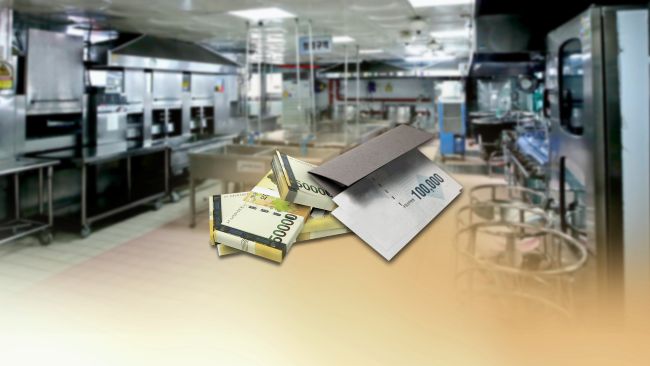
South Korea’s pharmaceutical industry is once again under fire as a string of illegal rebate scandals have surfaced in 2025. (Image courtesy of Yonhap)
SEOUL, July 8 (Korea Bizwire) — South Korea’s pharmaceutical industry is once again under fire as a string of illegal rebate scandals have surfaced in 2025, reigniting calls for structural reform and stronger support for new drug development.
Prosecutors recently indicted three mid-sized pharmaceutical companies and their employees in connection with the so-called “residents’ rebate” scheme, involving illegal kickbacks to doctors at more than 380 hospitals and clinics.
Authorities also reopened investigations into major firms, including Daewoong Pharmaceutical, and arrested over 340 individuals in a probe tied to rebate transactions at Korea Pharma, among them two physicians who were formally detained.
Other companies, such as JW Pharmaceutical and Kyungbo Pharmaceutical, have been penalized for disguising rebates as employee benefits to evade corporate taxes. And officials warn that further revelations are likely, as the National Police Agency has launched a four-month nationwide crackdown on medical and public-sector corruption.
Despite the government’s adoption of the dual punishment law in 2010—targeting both bribe-giving pharmaceutical firms and bribe-taking doctors—illegal rebates remain a stubborn issue. Experts say the core of the problem lies in the over-saturation of the generic drug market.
“Too many companies are competing with identical products, and promotional options are severely limited,” said one industry official. “Unlike consumer goods, pharmaceutical marketing is tightly regulated, making rebates the only remaining competitive tool.”
Calls are growing for a systemic overhaul. Critics argue that further tightening regulations alone won’t solve the problem. Suggestions include the use of contract sales organizations (CSOs) to externalize sales efforts and the promotion of “generic name prescriptions” to reduce physicians’ influence over brand selection. However, concerns persist that CSOs could simply act as scapegoats, and that shifting power to pharmacists could expand the scope of unethical practices.
Industry leaders say the long-term solution lies in shifting the focus from generics to innovation. The 2021 revision of South Korea’s Pharmaceutical Affairs Act introduced a “1+3 rule” to curb generic proliferation by limiting the number of companies allowed to use the same bioequivalence study data. While the regulation has had some effect, it has also disproportionately impacted smaller firms that lack the resources to conduct their own studies.
What’s needed, insiders say, is a policy environment that incentivizes the development of original drugs. “New drug development is high-risk, high-reward,” said a senior pharmaceutical executive. “Government support is essential if we want companies to pivot away from generics.”
Industry groups are urging President Lee Jae-myung’s administration to increase R&D funding for late-stage clinical trials and commercialization. According to the Korea Pharmaceutical and Bio-Pharma Manufacturers Association, only 13.5% of public R&D funding in the sector is directed toward industry, a figure far lower than that for information technology.
“With massive funding gaps between Korean firms and global pharma giants, government support is not just helpful—it’s vital,” said one biotech executive. “Without it, we’ll continue to treat symptoms, not the disease.”
M. H. Lee (mhlee@koreabizwire.com)