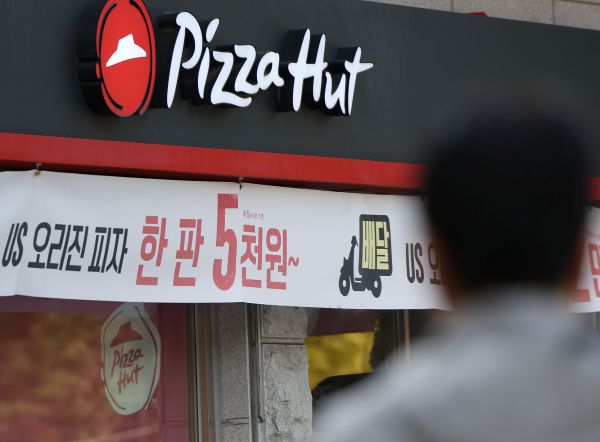
A Pizza Hut Case That Could Change How Franchises Make Money (Image courtesy of Yonhap)
SEOUL, Jan. 15 (Korea Bizwire) — South Korea’s franchise industry is bracing for wider legal and financial fallout after the Supreme Court of Korea finalized a ruling ordering Pizza Hut Korea to refund billions of won in improperly collected fees to franchise owners—a decision that could open the door to a wave of similar lawsuits across food, retail and service chains.
The court this week upheld lower-court judgments requiring Pizza Hut to return 21.5 billion won ($16 million) in so-called “margin franchise fees” collected from 94 franchisees between 2016 and 2022.
The fees—markups embedded in the prices of ingredients and supplies sold by the franchisor—were deemed unlawful because they were not explicitly agreed to in franchise contracts, even as Pizza Hut charged separate royalties and advertising fees.
Legal experts and industry officials say the ruling could have sweeping implications. Roughly 20 brands—including major fried chicken, burger and coffee chains—are already facing lawsuits by franchisees seeking refunds of similar margin-based charges, and more cases are expected as store owners reassess older contracts signed before disclosure rules were tightened.
The court found that Pizza Hut collected a fixed royalty equal to 6 percent of gross revenue, plus advertising fees of about 5 percent, while also earning undisclosed margins on required supplies. Because the franchise agreements lacked provisions authorizing those margins, the court concluded the company had been unjustly enriched.
A view of a branch of the popular franchise brand Mom’s Touch. (Yonhap)
Pizza Hut began disclosing margin rates in its information statements starting in 2020, but courts determined that disclosure alone did not establish consent. For years without clear disclosure, judges accepted estimated rates based on later data, citing Pizza Hut’s failure to fully comply with document production orders.
Franchise operators warn against a blanket application of the Pizza Hut precedent. Some argue that other brands do not charge royalties or have different contractual structures, and that the facts of each case should be judged individually.
Others note that South Korea revised its franchise law in 2024 to require explicit disclosure of margin-based fees in contracts, potentially insulating newer agreements from challenge.
Still, industry groups fear a surge of retroactive claims targeting older contracts—especially since many franchisors historically relied on supply margins rather than transparent royalties for profit. According to a government survey last year, more than 60 percent of franchisors either relied solely on margin fees or combined them with royalties.
Critics say the ruling exposes long-standing opacity in the sector. “Discontent over hidden cost structures has been building for years,” said Hwang Yong-sik, a business professor at Sejong University, calling for a gradual shift toward clearer royalty-based models, more common in the United States.
For now, the decision has heightened uncertainty across South Korea’s franchise landscape, as companies weigh potential liabilities and franchisees consider whether the Pizza Hut verdict offers a roadmap to reclaim past payments.
Ashley Song (ashley@koreabizwire.com)