The iPhone 16 series models are on display. (Yonhap)
SEOUL, Aug. 7 (Korea Bizwire) — Samsung Electronics has secured two major deals with global tech giants Tesla and Apple, signaling a potential turnaround for its long-struggling System LSI and foundry divisions.
The company recently landed a record-breaking 23 trillion won ($16.5 billion) order from Tesla, followed by confirmation that it will begin supplying image sensors for future iPhone models.
These back-to-back wins are seen as a major boost to Samsung’s goal of becoming the world’s top system semiconductor manufacturer by 2030—a vision long championed by Executive Chairman Lee Jae-yong.
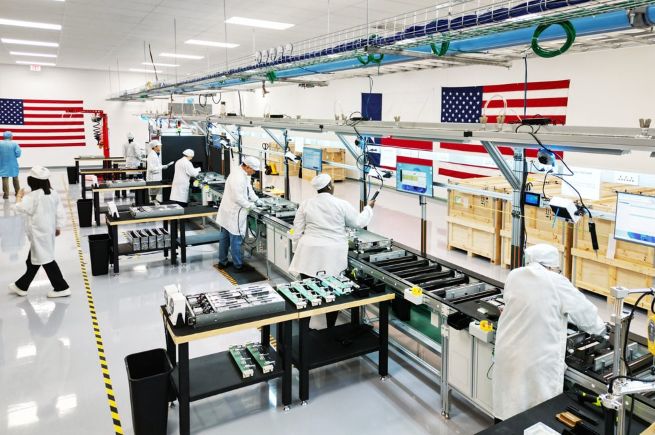
Apple emphasized that it “plans to manufacture chips using innovative new technologies in collaboration with Samsung at the Austin facility,” adding that “these will be used to optimize power efficiency and performance in Apple products.” (Image courtesy of Apple)
Apple Partnership Raises Stakes in Image Sensor Market
Samsung is expected to produce chips for Apple’s next-generation devices at its Austin, Texas foundry. Apple announced Wednesday that it is working with Samsung to develop “innovative new chip manufacturing technologies” aimed at improving power efficiency and performance across its product lineup.
Industry insiders believe the collaboration involves Samsung’s ISOCELL image sensors, potentially incorporating advanced 3D stacked hybrid bonding techniques—cutting-edge technology already commercialized by rival Sony.
If confirmed, Samsung could begin supplying these sensors for iPhones as early as 2027, marking a significant inroad into Apple’s supply chain and intensifying competition with Sony, which currently dominates the global image sensor market with a 51.6% share. Samsung, with 15.4%, ranks second.
Apple’s shift toward Samsung is seen as both a strategic diversification move and a vote of confidence in the Korean tech giant’s advancements in ultra-high-resolution pixel and optical design.
Samsung’s ISOCELL sensors are already used in Galaxy devices, as well as smartphones from Xiaomi, Vivo, and Motorola. The company recently introduced a 200-megapixel sensor and applied nano-prism technology for enhanced image capture.
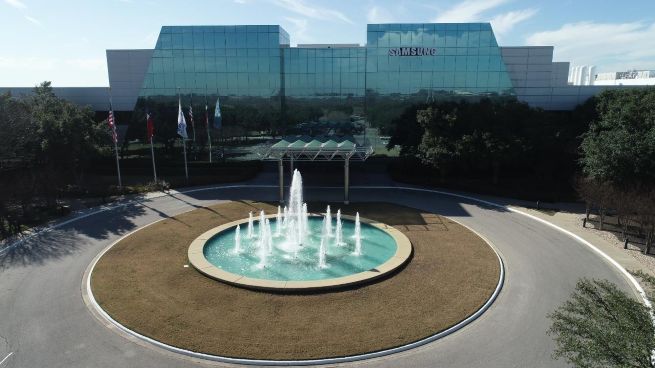
Samsung Electronics’ Austin facility in the United States (Image courtesy of Samsung Electronics)
System LSI and Foundry Turnaround in Sight
The new contracts come as Samsung’s System LSI and foundry businesses—plagued in recent quarters by declining yields and weak demand—struggle to recover. Analysts estimate the two divisions recorded a combined operating loss of nearly 2.9 trillion won in Q2 2025.
System LSI has suffered from low adoption of its Exynos processors and stagnant sensor sales, while the foundry division has faced production issues and a slowdown in customer orders.
Now, the Apple and Tesla deals are expected to provide a much-needed revenue stream. In particular, the image sensor collaboration with Apple and the anticipated mass production of the next-gen Exynos 2600 chip using 2nm process technology later this year are raising hopes for improved profitability.
According to Omdia, the CMOS image sensor market is projected to grow from $20.8 billion in 2024 to $26.5 billion by 2029, positioning Samsung for a strong recovery if it can continue to gain market share.
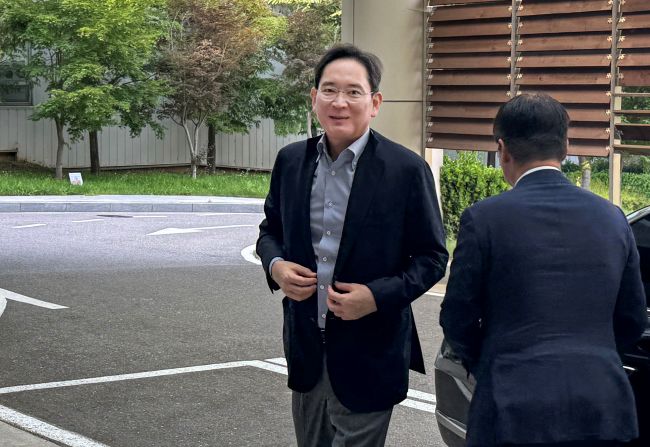
Samsung Electronics Chairman Lee Jae-yong departs for Washington. (Image courtesy of Yonhap)
Lee Jae-yong’s Global Push Pays Off
Industry observers attribute much of the recent momentum to Chairman Lee Jae-yong’s hands-on leadership. Lee has been actively engaging global partners, attending this year’s Sun Valley Conference and reportedly extending his U.S. trip to meet with business leaders and support South Korea’s ongoing tariff negotiations with Washington.
These latest deals also reaffirm the strategy Lee outlined in 2019 under the “Semiconductor Vision 2030,” which pledged 133 trillion won in investment to make Samsung the global leader in system semiconductors, including logic chips and foundry services.
Some industry experts believe that with Apple and Tesla now in the fold, Samsung’s credibility as a premium chip supplier is further solidified—potentially paving the way for future contracts with major players like Nvidia. Market watchers are particularly eyeing Samsung’s progress in qualifying its HBM3E and upcoming HBM4 memory chips for AI workloads.
“Securing back-to-back deals with Tesla and Apple could mark a turning point for Samsung’s foundry business,” said Lee Jong-hwan, professor of semiconductor engineering at Sangmyung University. “It could also open the door for entry into Nvidia’s next-gen HBM supply chain.”
With momentum now building across multiple fronts, Samsung appears poised to reassert itself in the highly competitive semiconductor landscape—just as global demand for advanced chips hits an inflection point.
Kevin Lee (kevinlee@koreabizwire.com)