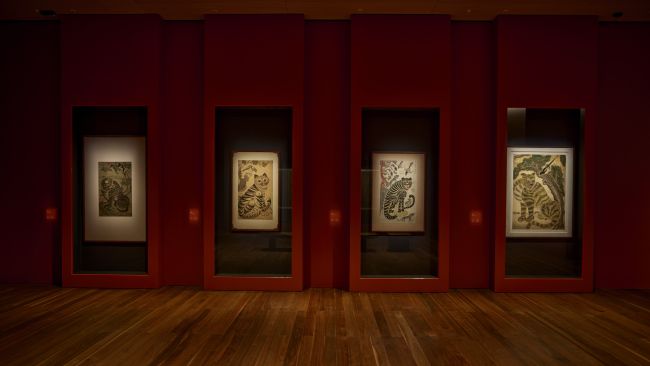
Exhibition view of the permanent special exhibition ‘Magpie and Tiger: Hojak’ at the Leeum Museum of Art .
Seoul Museum Pairs K-Pop Anime With Centuries-Old Tiger-and-Magpie Motifs
SEOUL, Sept. 9 (Korea Bizwire) — As Netflix’s animated feature K-Pop Demon Hunters continues to draw global attention, a Seoul museum is spotlighting the traditional roots behind some of its most popular characters.
The Leeum Museum of Art in Hannam-dong is hosting a special exhibition titled “Tiger and Magpie: Ho-jak,” featuring depictions of tigers and magpies — animals long cherished in Korean culture and central to the film’s characters, Duffy and Suzy. In late Joseon-era folk painting, tigers and magpies were among the most enduring motifs, often paired to symbolize both power and harmony.
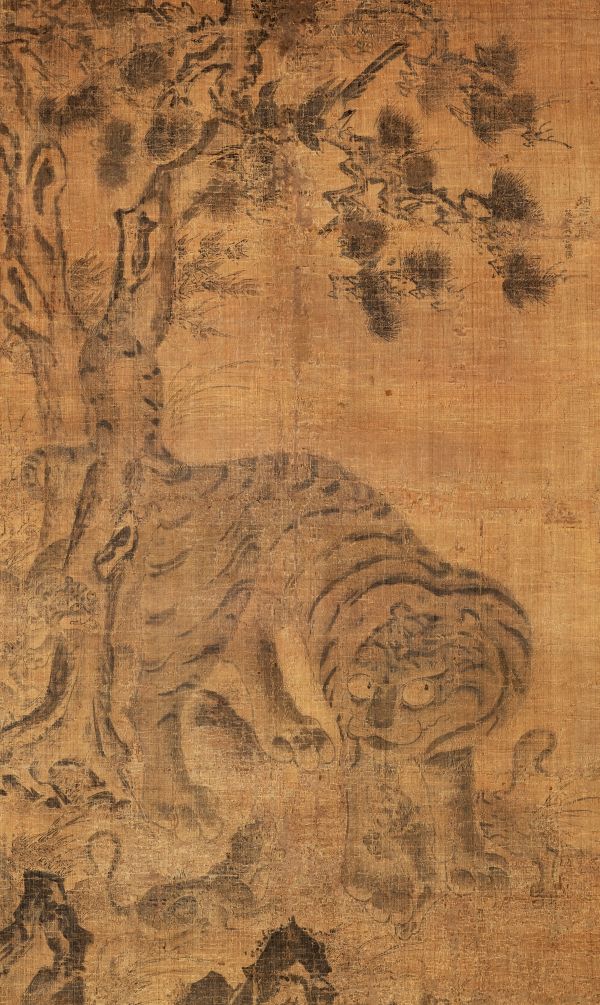
Tiger and Magpie (Hojakdo), 1592
Among the seven works on display is the museum’s own 1592 piece Hojakdo, shown in a domestic exhibition for the first time. The rare painting combines several traditional scenes: a “mountain-descending tiger” correcting imposters, birds reacting to the birth of tiger cubs, and images portraying the tiger as a noble figure from infancy.
An inscription in the corner precisely dates it to the Imjin year, and unlike most folk paintings, it is executed in the style of classical court art.
“The painting is the oldest known tiger-and-magpie work in Korea and illustrates how a format rooted in Yuan dynasty China evolved into a uniquely Korean tradition,” the museum said.
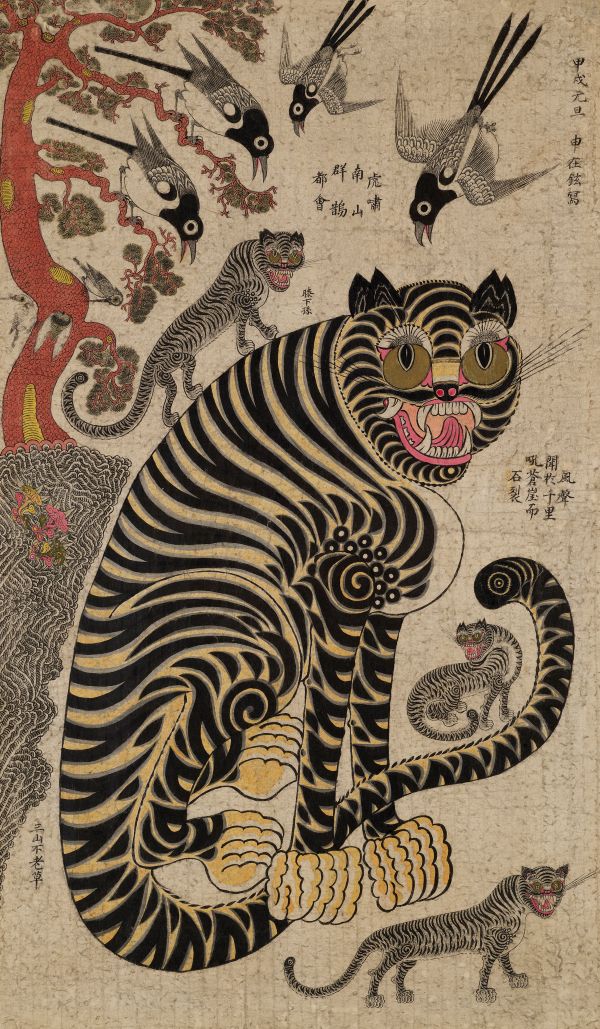
Tiger and Magpie (Hojakdo), ca. 1874 Attributed to Shin Jae-hyun
Also on view is Tiger Under Pine Tree by Danwon Kim Hong-do, a late Joseon master known for his realism. The composition — a tiger twisting its body beneath a pine — echoes the archetypal “mountain-descending tiger” imagery found in later folk paintings.
The exhibition features additional highlights: a 19th-century Hojakdo nicknamed the “Picasso Tiger” for its modernist flair and later adapted into “Hodori,” the mascot of the 1988 Seoul Olympics; another Hojakdo attributed to artist Shin Jae-hyun in 1874; and a Tiger Curtain piece depicting animal-patterned drapery.
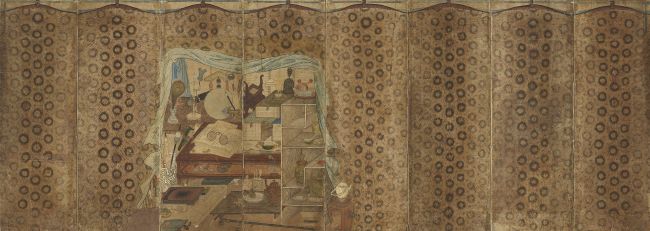
Tiger Skin Tent (Hopi Jangmakdo) Late Joseon Dynasty, Korea
“This is an opportunity to trace the lineage of characters now captivating global audiences and to better understand the depth of Korean traditional culture,” said Cho Ji-yoon, head of the museum’s collections research.
The exhibition runs through November 30, with free admission available by reservation on the Leeum Museum’s website.
Image credit: Leeum Museum of Art / photonews@koreabizwire.com