Seoul Sees 12 Consecutive Months of Rising Births and Marriages, Driven by Post-Pandemic Shift and Pro-Family Policies (Image supported by ChatGPT)
SEOUL, June 8 (Korea Bizwire) — For the first time in years, Seoul has recorded a sustained increase in both births and marriages, signaling a potential turning point in the city’s demographic challenges.
According to data released on June 8 by Statistics Korea and the Seoul Metropolitan Government, the number of births in March 2025 reached 3,786 — an 8.7% rise from the same month in 2024 and the highest March figure since 2022. The city has now seen year-on-year growth in monthly births for 12 consecutive months, beginning in April 2024.
Marriage rates have followed a similar trajectory. In March 2025, Seoul logged 3,814 marriages, up 20.0% from the previous year. This marks the twelfth straight month of growth in marriage registrations since April 2024, when marriages surged 27.8% year-on-year.
The city’s total fertility rate for the first quarter of 2025 also rose to 0.65, an 8.3% increase compared to the first quarter of 2024.

The “New Baby” loan program, introduced on January 29 of last year by the Ministry of Land, Infrastructure and Transport, had received 20,986 applications totaling 5.18 trillion won as of April 29, the ministry said. (Image courtesy of Yonhap)
Seoul officials attribute the uptick in births to a post-pandemic rebound in marriages and the cumulative effect of targeted policies to combat Korea’s record-low birthrate.
Since 2023, the city has expanded support for infertile couples, offering fertility treatment subsidies regardless of income level. Pregnant residents are also entitled to 700,000 won ($520) in transportation subsidies to ease mobility during pregnancy.
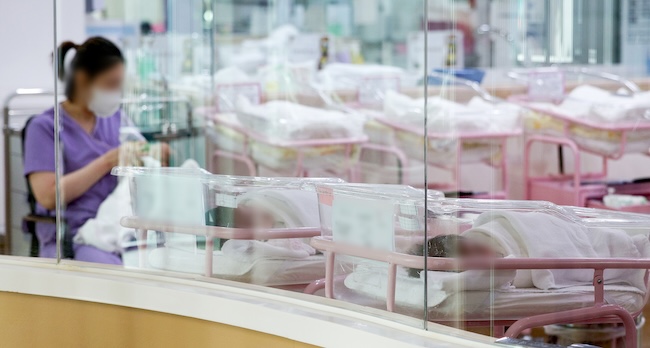
This file photo taken Feb. 28, 2024, shows an official taking care of a baby at a postnatal care center in Seoul. (Image courtesy of Yonhap)
More recently, Seoul has opened a discount marketplace for baby products and introduced pioneering housing subsidies for new parents. In April 2025, the city launched a first-of-its-kind initiative to provide up to 7.2 million won ($5,400) in housing support over two years to newly childbearing, housing-insecure households.
Eligible families must fall below 180% of the median income and live in homes with either a monthly rent of up to 1.3 million won or a jeonse (lump-sum lease) of up to 300 million won.
“Post-pandemic, we’re seeing more marriages, and births are following,” a city official said. “We will continue strengthening policies that support marriage, childbirth, and parenting.”
M. H. Lee (mhlee@koreabizwire.com)