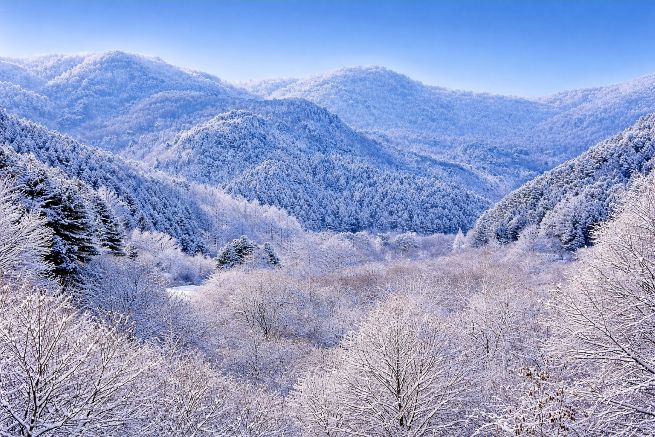
On the morning of February 2, the area known as the “Secret Garden” in Gapdun-ri, Nam-myeon, Inje County, Gangwon Province, is blanketed in pristine white scenery after heavy snowfall that poured down from the previous day.
SEOUL, Feb. 2 (Korea Bizwire) — Heavy snowfall swept across much of South Korea early Monday, blanketing central and northern regions and creating hazardous conditions as icy roads formed amid subzero temperatures, weather officials said.
Snow fell nationwide except in the Yeongnam region and Jeju Island, with the heaviest accumulations recorded in Gangwon Province. As of 8 a.m., Cheorwon County’s Dongsong-eup saw up to 17.3 centimeters (6.8 inches) of fresh snow over the previous 24 hours, while nearby Gwangdeok Pass in Hwacheon briefly recorded 16.6 centimeters.
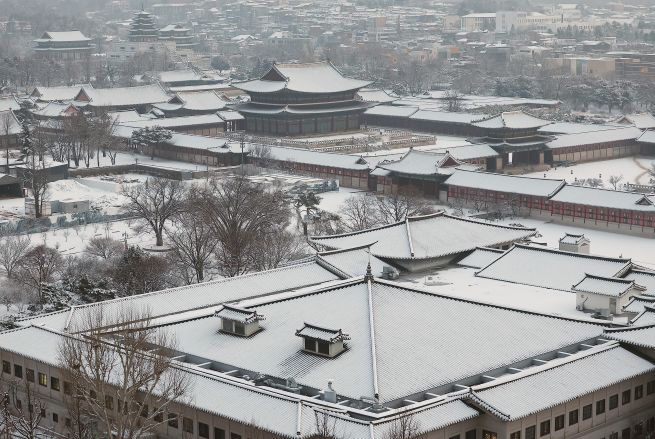
Snow has accumulated at Gyeongbokgung Palace in Jongno District, Seoul. (Yonhap)
Parts of Gyeonggi Province, including Namyangju and Yeoncheon, reported accumulations of around 7.5 centimeters, and Seoul’s Nowon District saw as much as 7.3 centimeters, according to the Korea Meteorological Administration.
The official weather station in central Seoul measured a 24-hour peak snowfall of 6.2 centimeters. Snowfall of 6 to 8 centimeters was also reported in parts of South Chungcheong and North Jeolla provinces.
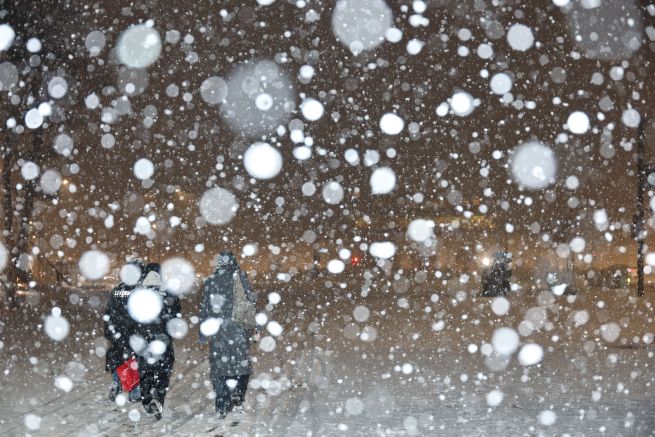
Heavy snow is falling across the Gwanghwamun Square area in Jongno District, central Seoul.
By midmorning, snow clouds were moving southward and weakening. Additional snowfall was expected to be limited, with up to 8 centimeters forecast for Ulleungdo and Dokdo, and smaller amounts—generally under 5 centimeters—for southern inland areas and Jeju’s mountainous regions.
Temperatures remained below freezing across most of the country in the morning, exacerbating icy conditions. At 8 a.m., Seoul registered minus 3.6 degrees Celsius (25.5°F), while Daegu fell to minus 4.2 degrees. Daytime highs were forecast to range between minus 1 and 6 degrees.
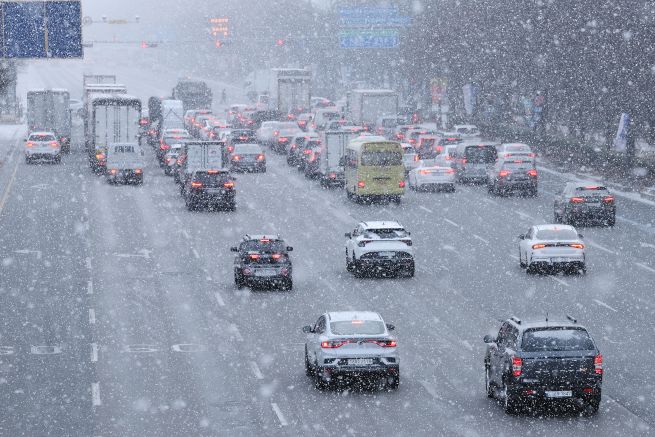
A line of commuter vehicles heading to work amid heavy snowfall
Strong winds along coastal areas, with gusts reaching up to 55 kilometers per hour, further lowered perceived temperatures. Dry air conditions were expected in parts of the east coast and southern regions where snowfall was minimal, raising the risk of fires.
Weather officials said temperatures would gradually rise beginning Tuesday, returning to seasonal norms through Wednesday morning before climbing above average later in the week. Rough seas were also forecast, with waves of up to 3.5 meters expected in parts of the East Sea, South Sea and waters around Jeju through Monday night.
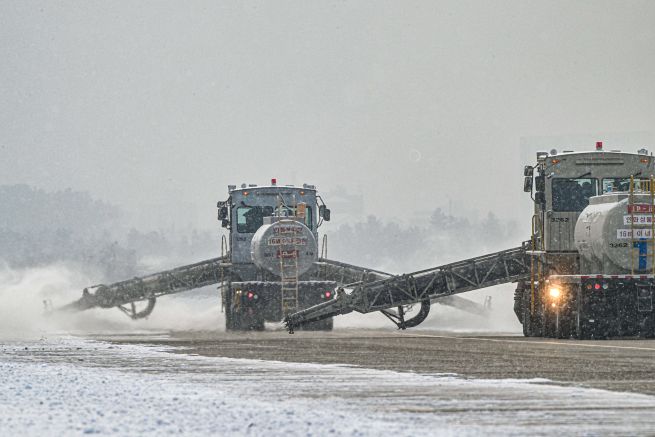
On February 2, engineering personnel from the Air Force’s 11th Fighter Wing deploy snow-removal vehicles (SE-88) to clear a runway at an air base in Dong-gu, Daegu.
Image credit: Yonhap, Inje-gun, the Public Affairs Office of the Air Force 11th Fighter Wing / photonews@koreabizwire.com