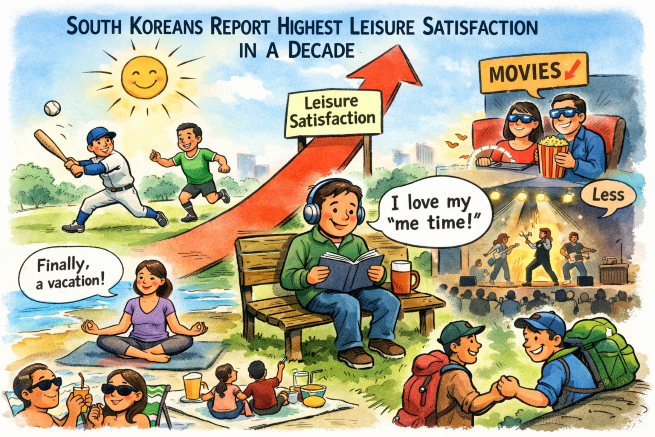
Leisure Satisfaction in South Korea Rebounds to Post-2016 High as Habits Shift (Image supported by ChatGPT)
SEOUL, Dec. 26 (Korea Bizwire) — South Koreans are reporting their highest levels of satisfaction with leisure life in nearly a decade, reflecting a shift toward more meaningful and self-directed use of free time, according to a government survey released on Friday.
The Ministry of Culture, Sports and Tourism and the Korea Culture & Tourism Institute said 64 percent of respondents described themselves as satisfied with their leisure lives in the 2025 National Leisure Activity Survey, up 2.4 percentage points from a year earlier and the highest reading since the survey began in 2016.
Leisure satisfaction had slipped sharply during the COVID-19 pandemic, falling to 49.7 percent in 2021, but has steadily rebounded in the years since. Officials attributed the improvement less to an increase in free time than to changes in how leisure time is spent.
While the average number of different leisure activities per person declined to 15.7 from 16.4 last year, the share of people who regularly engaged in ongoing activities rose to 43.2 percent from 38.5 percent. Monthly leisure time also edged up, and participation in sports and cultural activities increased.
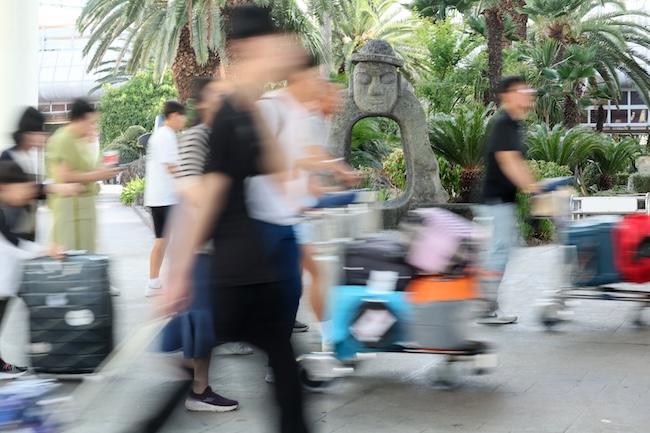
This file photo shows people arriving at Jeju International Airport on the southern island of Jeju on Sept. 14, 2024. (Image courtesy of Yonhap)
More than half of respondents said they now enjoy leisure activities alone, a figure that rose to 56.6 percent. Time spent with family, friends or romantic partners declined slightly, while participation with colleagues or club members increased modestly. The most common reasons for leisure activities were personal enjoyment and emotional rest.
A separate worker vacation survey showed the highest use of paid leave since data collection began in 2018. Employees used an average of 13.2 out of 16.7 allotted vacation days, or nearly 80 percent. Travel was the most common reason for taking leave, followed by rest and household responsibilities. Spending during vacations continued to rise, averaging about 2.21 million won.
Cultural participation showed a more mixed picture. Attendance at live cultural and arts events fell to 60.2 percent, down 2.8 percentage points from last year, with moviegoing accounting for the largest decline.
Lee Jung-woo, a senior official at the culture ministry, said the findings suggest that Koreans are moving toward more autonomous and personally fulfilling forms of leisure, even as overall participation patterns continue to evolve.
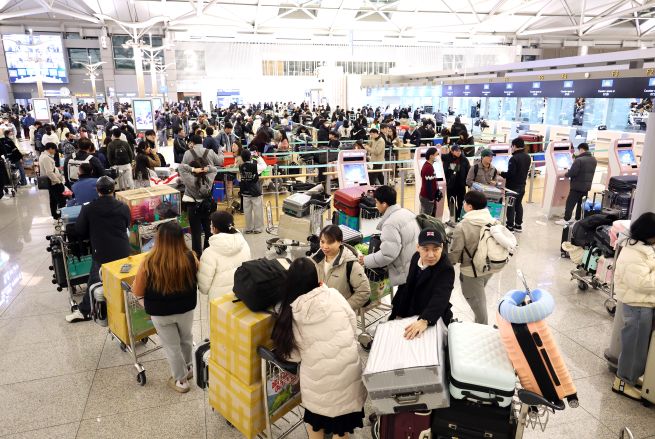
A crowded scene at Incheon International Airport (Yonhap)
Lina Jang (linajang@koreabizwire.com)