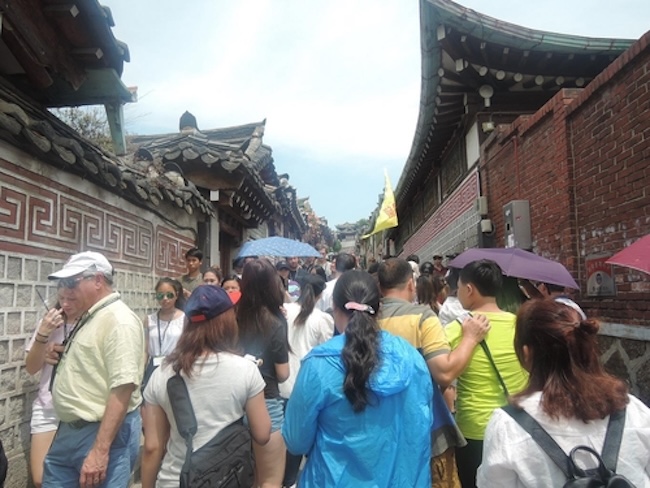
Tourists in Seoul’s Bukchon Hanok Village (Image provided by the Jongno Ward Office)
SEOUL, Jan. 19 (Korea Bizwire) — The South Korean government is moving to expand traditional hanok architecture as part of a broader effort to strengthen regional tourism and revive smaller cities, officials said Monday, amid growing global interest in Korean culture.
The Ministry of Land, Infrastructure and Transport said demand for hanok-based experiences has risen alongside the popularity of Korean content overseas, drawing more visitors to historic villages and traditional homes. Cafés, guesthouses and weekend residences built in renovated hanok houses have gained traction, particularly among travelers seeking cultural immersion.
Under the plan, the government aims to transform regional cities into destinations that are “worth visiting and staying in” by integrating traditional architecture into local development strategies.
A central focus will be training skilled professionals. Beginning next month, the ministry will solicit institutions to operate programs to train 100 specialists in hanok design and construction management, supported by 300 million won in state funding.
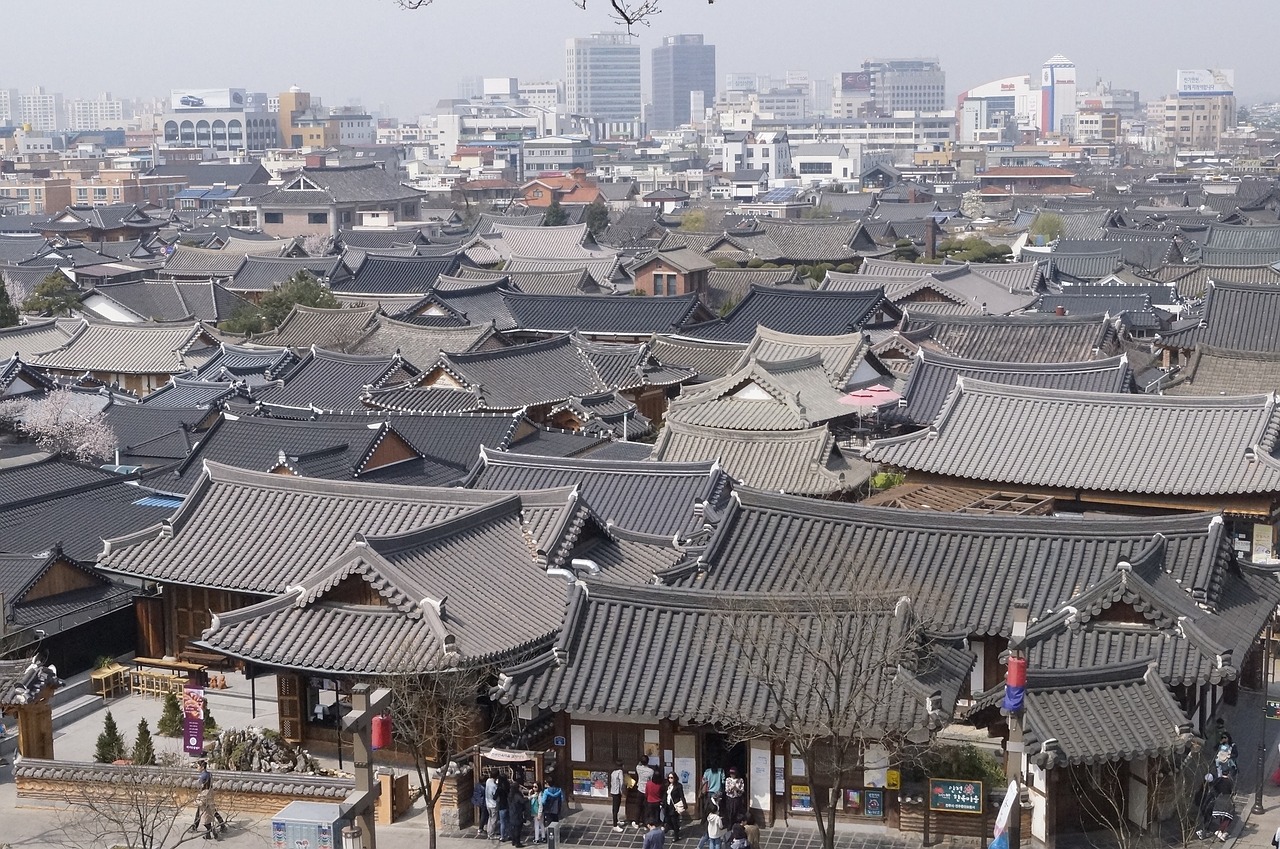
South Korea’s traditional city of Jeonju has been reauthorized as a slow city by Cittaslow International in recognition of its efforts to preserve traditions and nature. (image: Pixabay)
Since launching the initiative in 2011, the government has trained more than 1,500 professionals, many of whom have gone on to win design competitions and secure construction contracts, including overseas projects.
The ministry is also seeking to modernize hanok construction standards, long criticized for high costs and rigid regulations. A research project launched in December will run through June and examine ways to update building criteria, expand the hanok registration system, promote modular construction methods and standardize materials to reduce expenses.
Officials said outdated regulations and the lack of standardization have discouraged wider adoption of traditional housing, despite rising consumer interest.
As part of the administration’s regional development agenda, the government also plans to create design-focused hanok landmarks that reflect local identity and strengthen tourism appeal.
Over the longer term, authorities aim to establish a hanok industry cluster that integrates architectural design, materials production and distribution, technical training, and maintenance services in a single ecosystem.
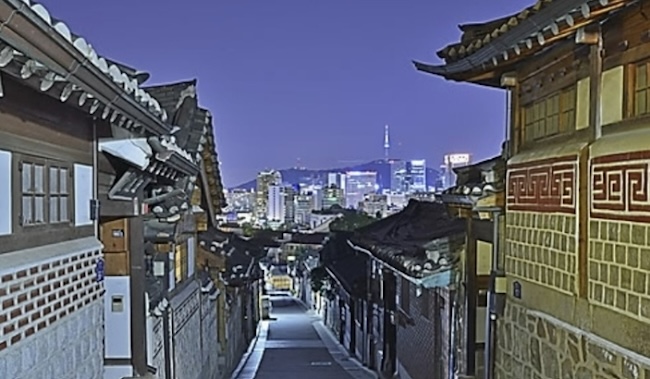
The new measures will limit tourist access to Bukchon Hanok Village and impose fines for violations. (Image courtesy of Yonhap)
The measures will be incorporated into the government’s third Basic Plan for Architectural Heritage Promotion, covering the 2026–2030 period, which is scheduled to be finalized next month.
As South Korea grapples with regional population decline and uneven development, officials see traditional architecture not only as cultural preservation, but as an economic tool — linking heritage with place-making in an era shaped increasingly by cultural tourism.
Lina Jang (linajang@koreabizwire.com)